
Solar Generators: Power Station and Solar Panel Kits Explained
A solar generator is a portable power station sold together with one or more solar panels. A kit is worth it when the included panel is matched to the station’s connector and input range and is big enough to refill the battery in one or two sunny days.
A solar generator is a portable power station and a solar panel sold as one bundle. The station stores energy and powers your devices; the panel refills it without a wall socket. This page explains when a kit makes sense and compares the five kits in our US catalog.
What exactly is a solar generator?
It is a marketing name for a station-plus-panel kit, not a different machine. Inside you get the same LiFePO4 battery, inverter and outlets as the standalone station. The only difference is the panel (or panels) in the box and, usually, a matching cable.
To understand the station half, read our portable power stations overview. For the panel half, see portable solar panels.
When is a kit better than buying separately?
Buy the kit when you want a guaranteed match and the included panel is large enough. A kit removes the two most common mistakes: a connector that does not fit and a panel voltage outside the station’s range.
Buy separately when:
- You want a lighter or smaller panel than the one bundled, for example for backpacking.
- You need more solar than one panel gives. A single panel on a 2 kWh battery is slow.
- You already own panels with a compatible connector.
A simple test is the panel-to-battery ratio. Divide panel watts by battery watt-hours: 0.15 or higher means the kit can realistically refill in one or two good days.
How long does each kit take to refill from its own panel?
Divide capacity by panel watts × 0.75. The 0.75 reflects typical real output of a portable panel (70-80 percent of its rating).
| Kit | Capacity | Included panel | Math | Peak sun hours |
|---|---|---|---|---|
| EcoFlow DELTA 3 + 160W | 1,024 Wh | 160 W | 1,024 ÷ (160 × 0.75) | ≈ 8.5 h |
| EcoFlow DELTA 3 + 220W | 1,024 Wh | 220 W | 1,024 ÷ (220 × 0.75) | ≈ 6.2 h |
| Growatt INFINITY 2000 Pro + 200W | 2,048 Wh | 200 W | 2,048 ÷ (200 × 0.75) | ≈ 13.7 h |
| Jackery Explorer 2000 v2 + 2x 200W | 2,042 Wh | 400 W | 2,042 ÷ (400 × 0.75) | ≈ 6.8 h |
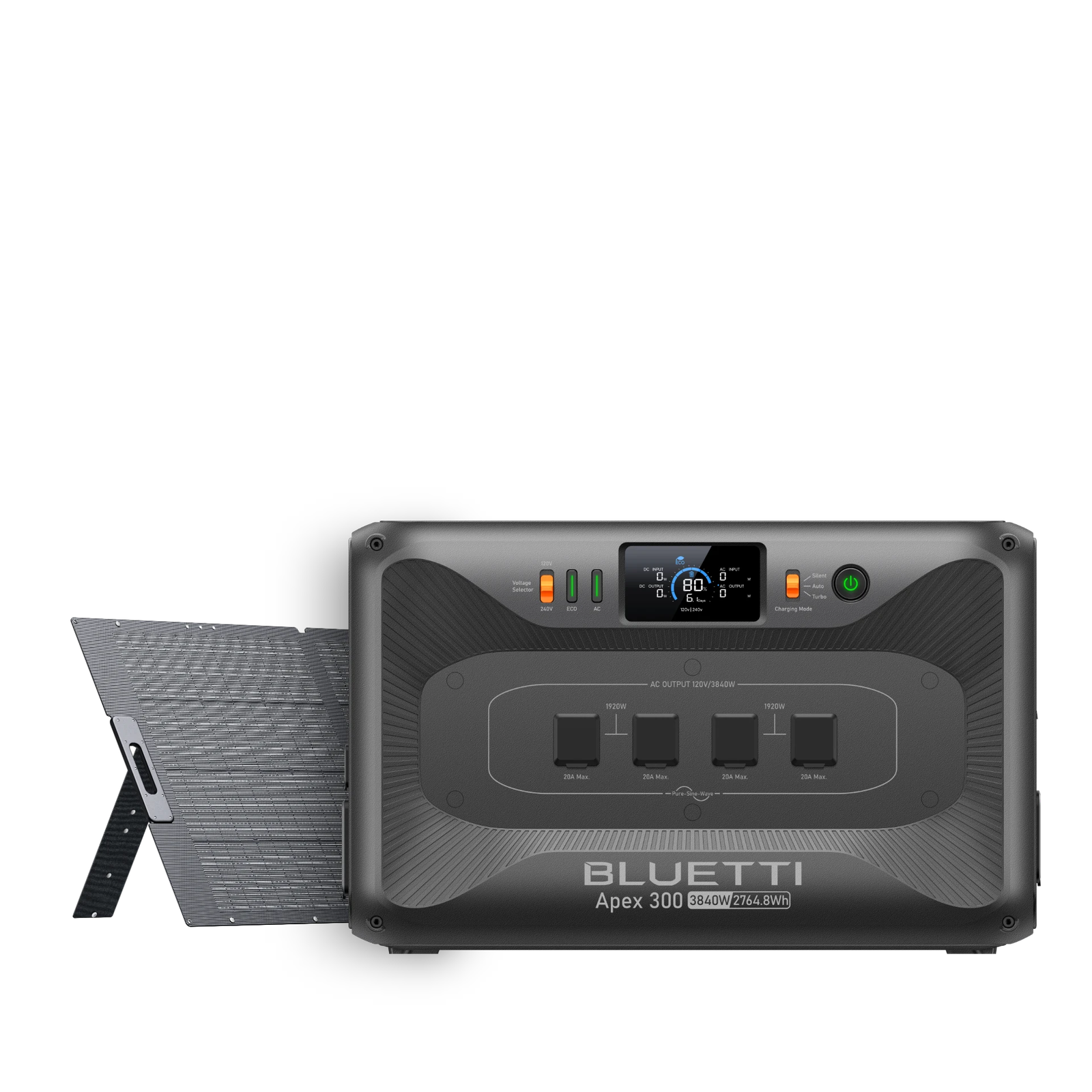
| Bluetti Apex 300 + 350W | 2,764.8 Wh | 350 W | 2,764.8 ÷ (350 × 0.75) | ≈ 10.5 h |
With about 5 peak sun hours a day, a common value for much of the US in summer, the DELTA 3 + 220W and the Jackery 2000 v2 kit refill in a little over a day. The Growatt kit needs close to three days. Peak sun hours are approximate; see how many solar watts you need for regional values.
How do the five kits compare?
These are the solar generator kits in our US catalog. Figures come from each bundle listing; empty cells mean the bundle page does not publish them.
| Model | Capacity (Wh) | Panels (W) | AC output (W) | Max solar input (W) | Cycles | Warranty (years) | WilderWatt score | Best for | |
|---|---|---|---|---|---|---|---|---|---|
| 1,024 | 160 | 1,800 | 500 | 4,000 | 5 | 9 | Lighter panel | ||
| 1,024 | 220 | 1,800 | 500 | 4,000 | 5 | 9 | Best balance | ||
| 2,048 | 200 | 2,400 | — | 4,000 | 5 | 8 | Expandable 2 kWh | ||
| 2,042 | 400 | 2,200 | — | — | 5 | 9 | Fast 2 kWh refill | ||
| 2,764.8 | 350 | 3,840 | 2,400 | 6,000 | 1 | 8 | Whole-home power |
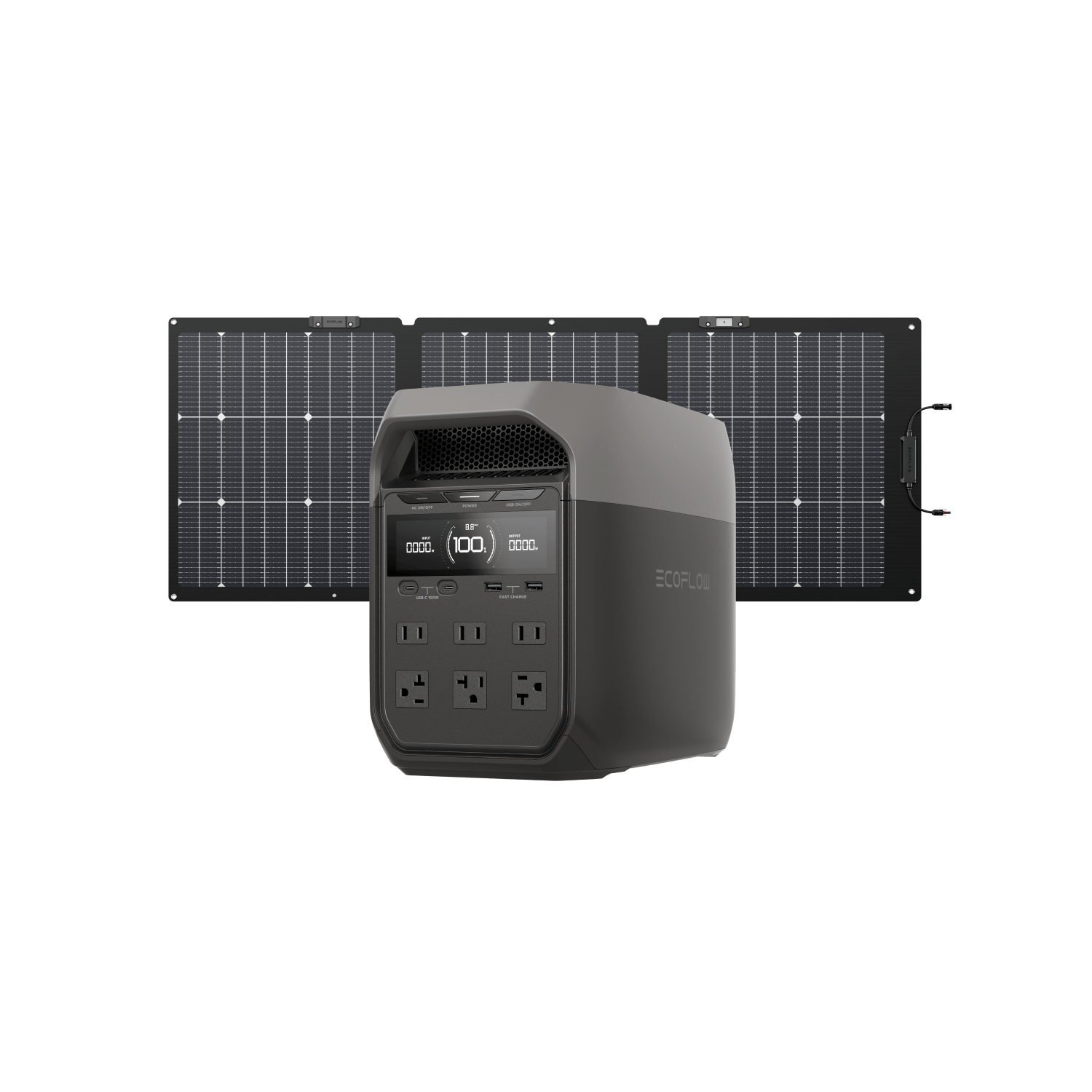
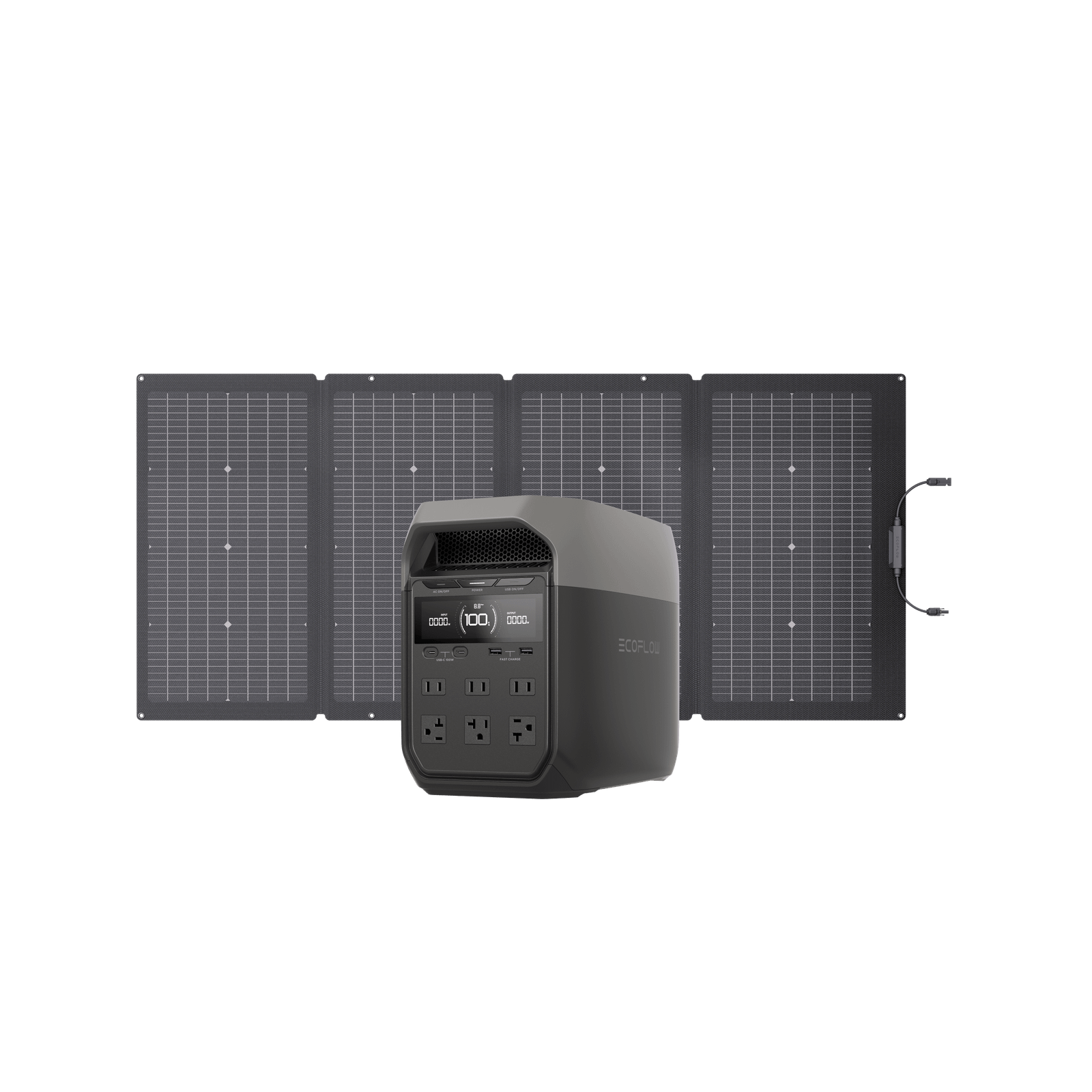
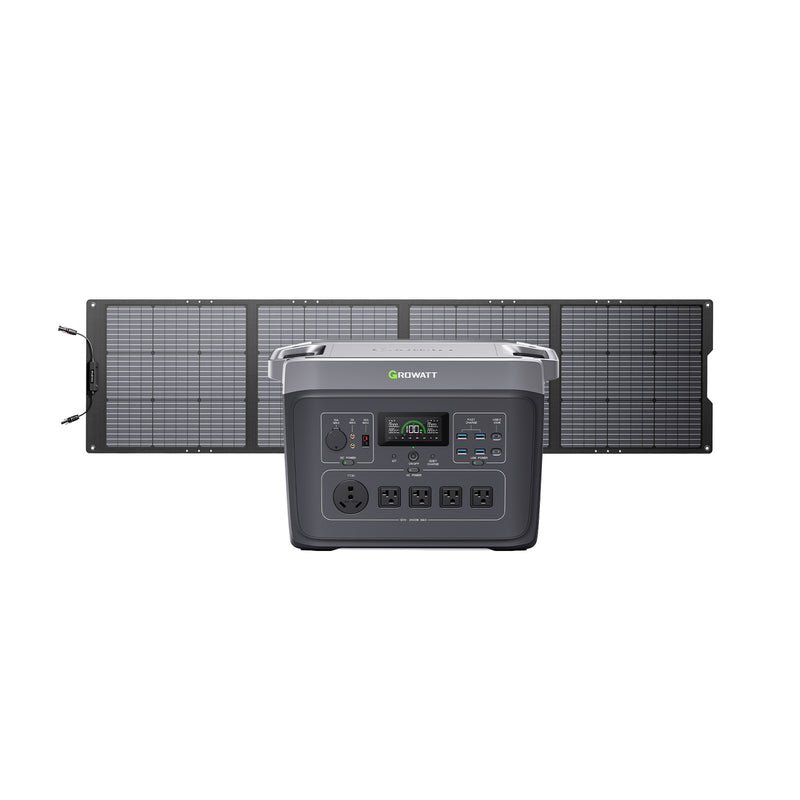
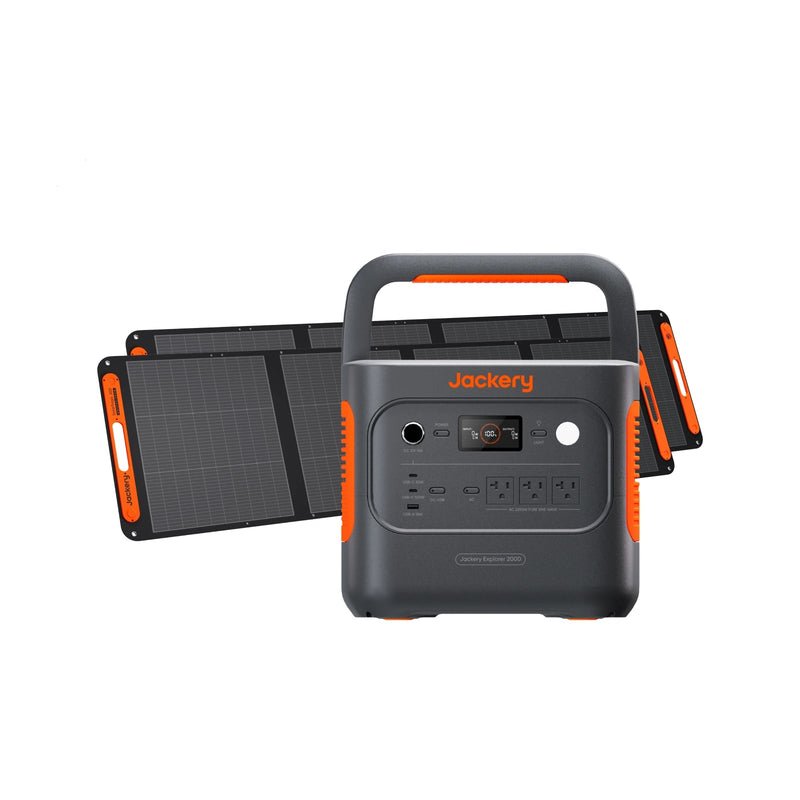
(affiliate link) · Data from the Amazon listing; offers may change.
Two gaps are worth knowing before you buy. None of the five bundle listings publishes a total weight. And the Bluetti Apex 300 kit lists a 1-year warranty, against 5 years for the other four.
What should I check before buying a kit?
Check four things: panel-to-battery ratio, maximum solar input, warranty and total weight.
- Ratio: 0.15 or more (panel W ÷ battery Wh) for a one-to-two-day refill. The Growatt kit sits at 200 ÷ 2,048 ≈ 0.10.
- Solar input headroom: can you add panels later? Only three of the five bundle listings publish it.
- Warranty: four kits list 5 years; the Bluetti Apex 300 kit lists 1 year.
- Weight: no bundle listing publishes it, so check the station’s own listing if you will carry it.
Which kit should I look at first?
- For camping and short outages: the EcoFlow DELTA 3 + 220W. It has the best panel-to-battery ratio in the group: 220 ÷ 1,024 ≈ 0.21.
- For RV trips and longer outages: the Jackery Explorer 2000 v2 + 2x 200W, with 400 W of panels on a 2 kWh battery (ratio ≈ 0.20).
- For heavy home loads: the Bluetti Apex 300 + 350W, with 3,840 W of AC output and 2,400 W of solar input to grow into.
The full ranking, with pros, cons and a verdict for each, is in the best solar generator kits. If you prefer to build your own, compare stations in the best portable power stations and panels in the best portable solar panels, or size your system with the solar calculator.
All about solar generators (kits)
Rankings and picks
Guides and calculators
Frequently asked questions
Is a solar generator the same as a gas generator?
No. A solar generator stores energy in a battery and refills it from panels. It is silent and safe indoors, but its output is limited by battery size and sunshine.
How long does a solar generator take to charge?
Divide the battery capacity by 75 percent of the panel wattage to get peak sun hours. A 1,024 Wh station with a 220 W panel needs about 6 peak sun hours.
Can I add more panels to a solar generator kit?
Usually yes, up to the station’s maximum solar input. The DELTA 3 kits list 500 W and the Bluetti Apex 300 kit lists 2,400 W; other kits do not publish the figure.
Is it cheaper to buy a solar generator kit?
Often, but not always. Bundle pricing changes often, so compare the kit against the station plus a panel you choose yourself on the day you buy.