
Portable Power Stations: What They Are and Which Size You Need
A portable power station is a rechargeable battery with a built-in inverter and 120 V outlets. Around 700 Wh to 1 kWh covers camping and short outages, about 2 kWh suits RV trips, and 3 kWh or more is for whole-home backup circuits and heavy appliances.
A portable power station is a battery, an inverter and a set of outlets in one box. You charge it from the wall, a car socket or solar panels, then run 120 V appliances, USB devices and 12 V gear from it. This page explains the size classes and compares six models we cover in depth.
What is a portable power station used for?
It replaces a noisy gas generator for camping, RV trips, job sites and power outages. Because nothing burns, you can use it indoors and at night. The trade-off is finite energy: once the battery is empty, you need a wall socket, a car or the sun to refill it.
Every station in our US catalog that declares its chemistry uses LiFePO4 (lithium iron phosphate) cells. That chemistry trades some weight for a long cycle life and good thermal stability; our LiFePO4 vs NMC guide explains the difference.
Which size do I need?
Pick by watt-hours (how long) first, then check watts (how much at once). Runtime is roughly capacity × 0.85 ÷ load, where 0.85 covers typical inverter losses.
| Size class | Example from our catalog | 45 W fridge | 60 W CPAP | Typical use |
|---|---|---|---|---|
| About 300 Wh | Anker SOLIX C300X DC (288 Wh) | 288 × 0.85 ÷ 45 ≈ 5.4 h | 288 × 0.85 ÷ 60 ≈ 4.1 h | Phones, lights, a DC fridge for an afternoon |
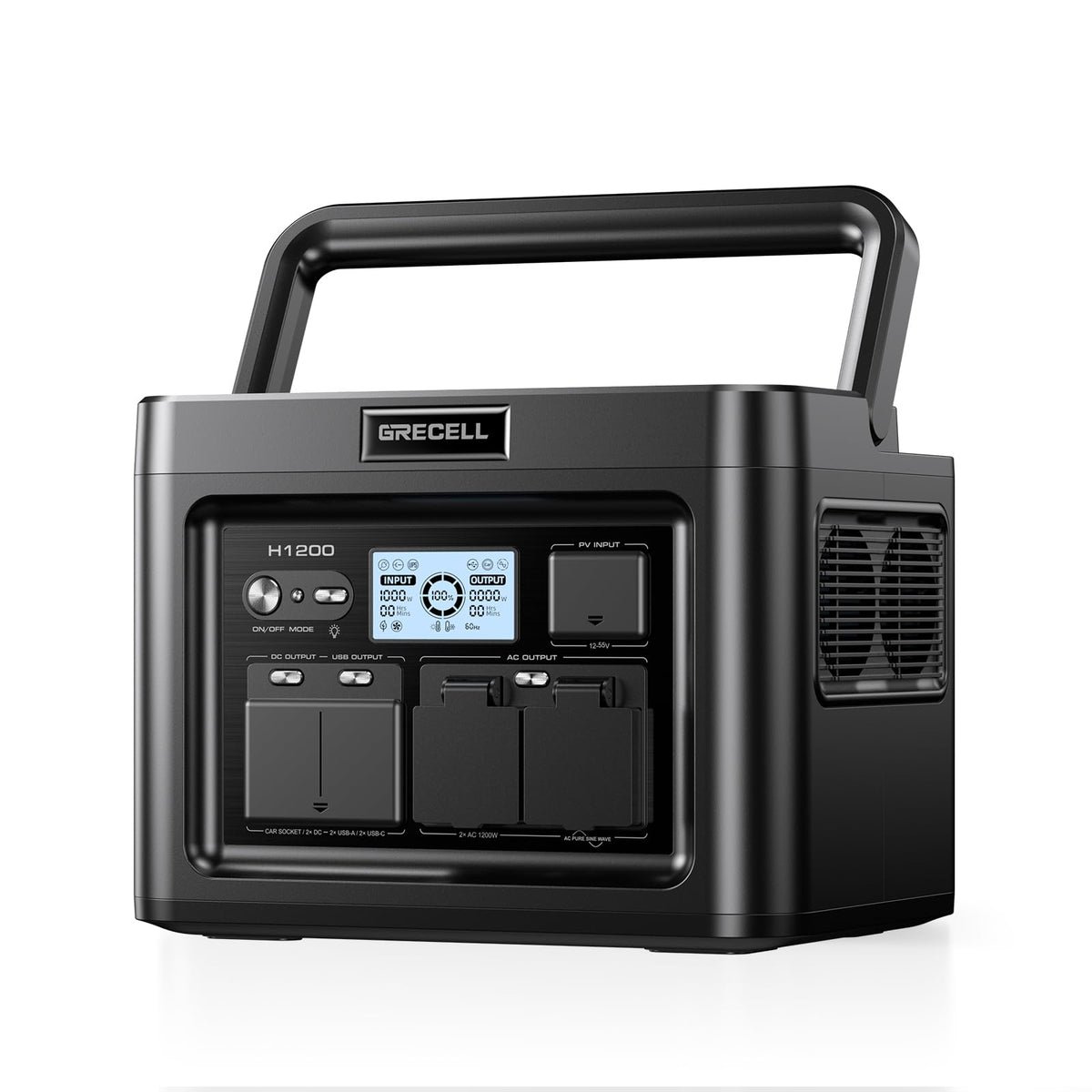
| About 700 Wh | Grecell H1200 (672 Wh) | ≈ 12.7 h | ≈ 9.5 h | Weekend camping, a night of CPAP |
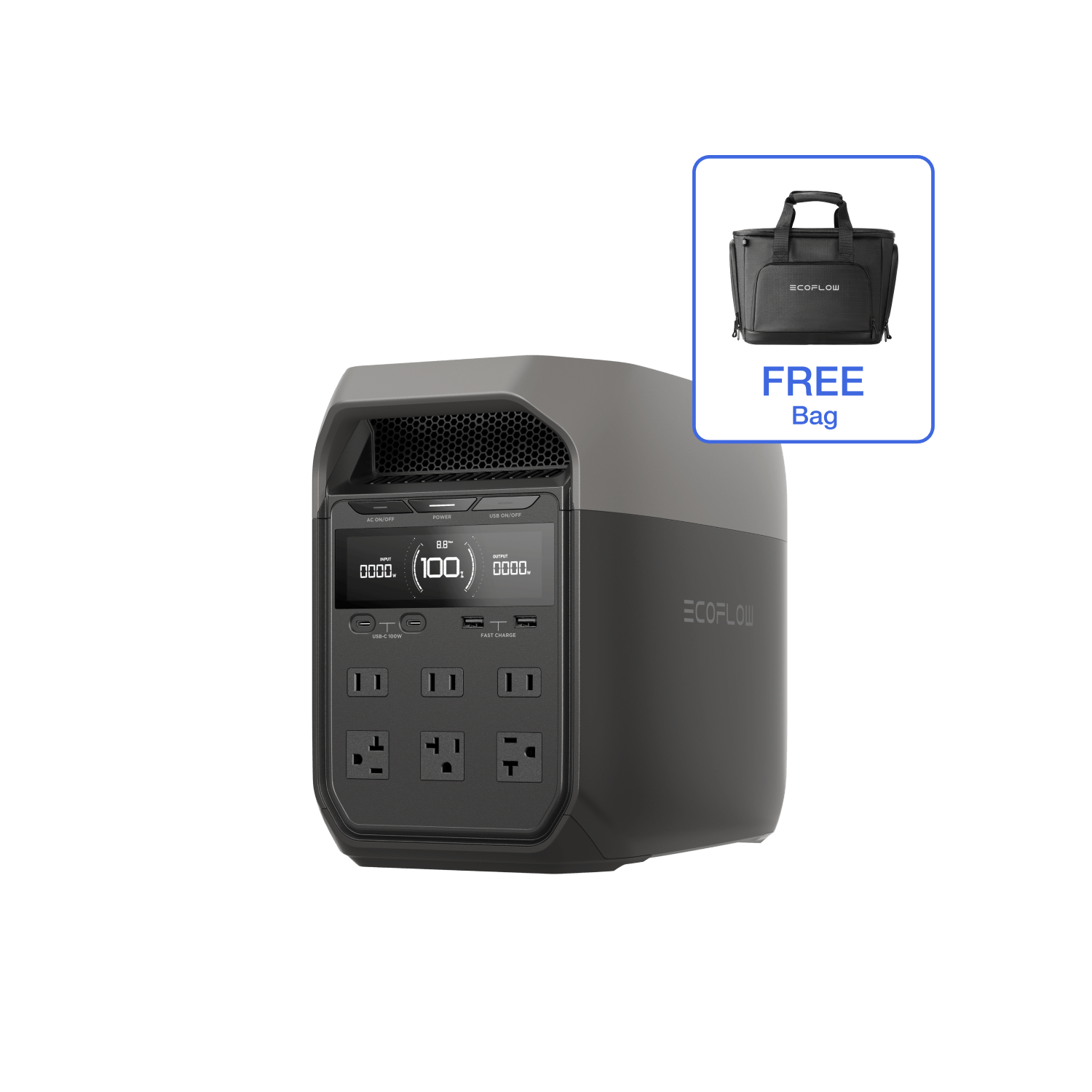
| About 1 kWh | EcoFlow DELTA 3 (1,024 Wh) | ≈ 19.3 h | ≈ 14.5 h | Camping trips, short outages |
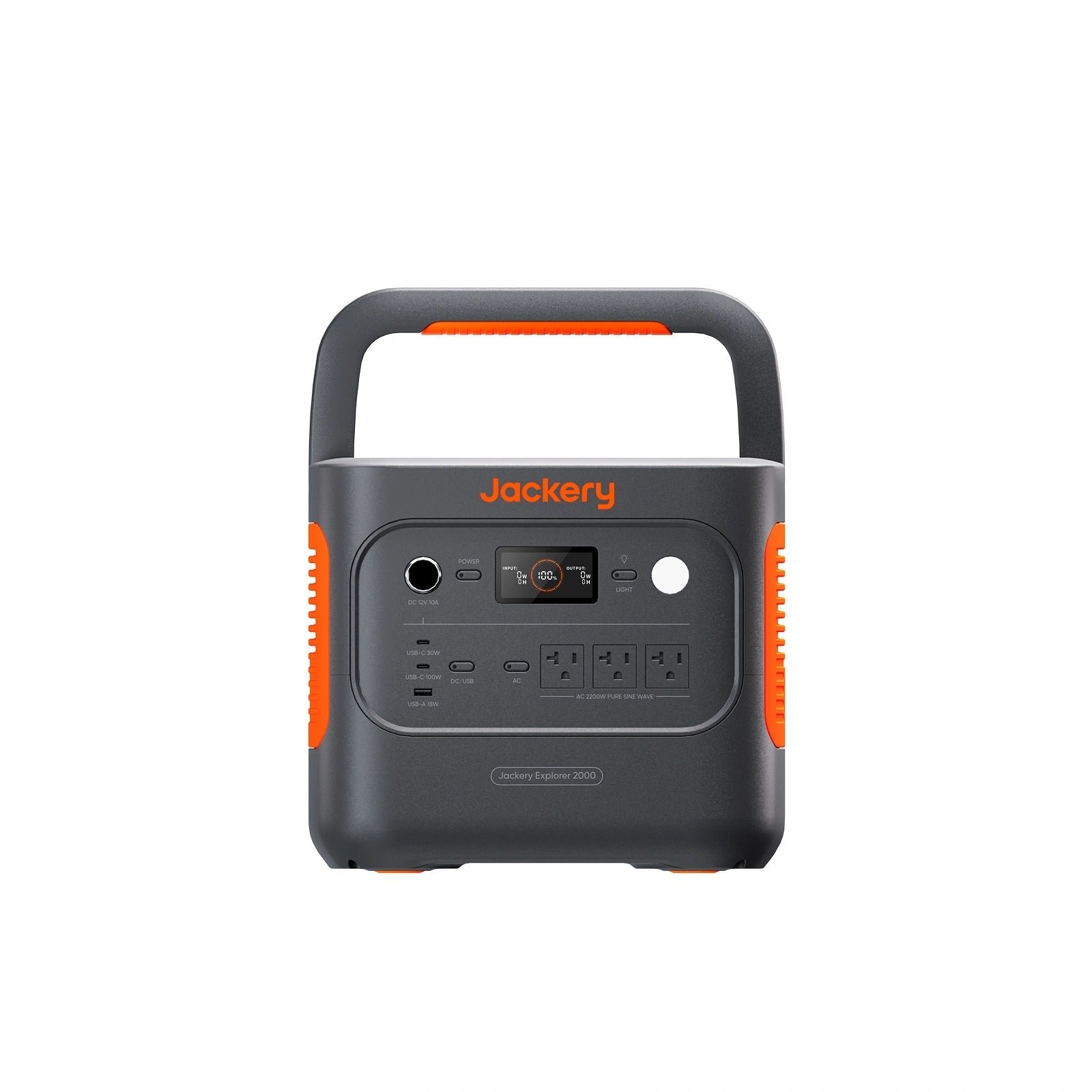
| About 2 kWh | Jackery Explorer 2000 v2 (2,042 Wh) | ≈ 38.6 h | ≈ 28.9 h | RV trips, fridge through an outage |
| 3 kWh and up | Anker SOLIX F3000 (3,072 Wh) | ≈ 58 h | ≈ 43.5 h | Home backup, power tools, several days off-grid |
Be aware that our US catalog is thin on small, light AC stations. The only unit near 300 Wh with a published weight is the C300X DC, and it has no AC outlets. If you need something under 5 kg (11 lb), you will have to compromise on capacity or AC output.
How do the main models compare?
These six stations cover the useful range from compact to whole-home. Every figure comes from the Amazon listing; an empty cell means the manufacturer does not publish it there.
| Model | Capacity (Wh) | AC output (W) | UPS (ms) | Weight (kg) | Max solar input (W) | Warranty (years) | WilderWatt score | Best for | |
|---|---|---|---|---|---|---|---|---|---|
| 672 | 1,200 | 10 | 9.5 | 400 | 2 | 8.5 | Compact camping | ||
| 1,024 | 1,800 | — | 12.5 | 500 | 5 | 8.5 | All-rounder | ||
| 2,042 | 2,200 | 20 | 17.9 | — | 5 | 9 | Light 2 kWh | ||
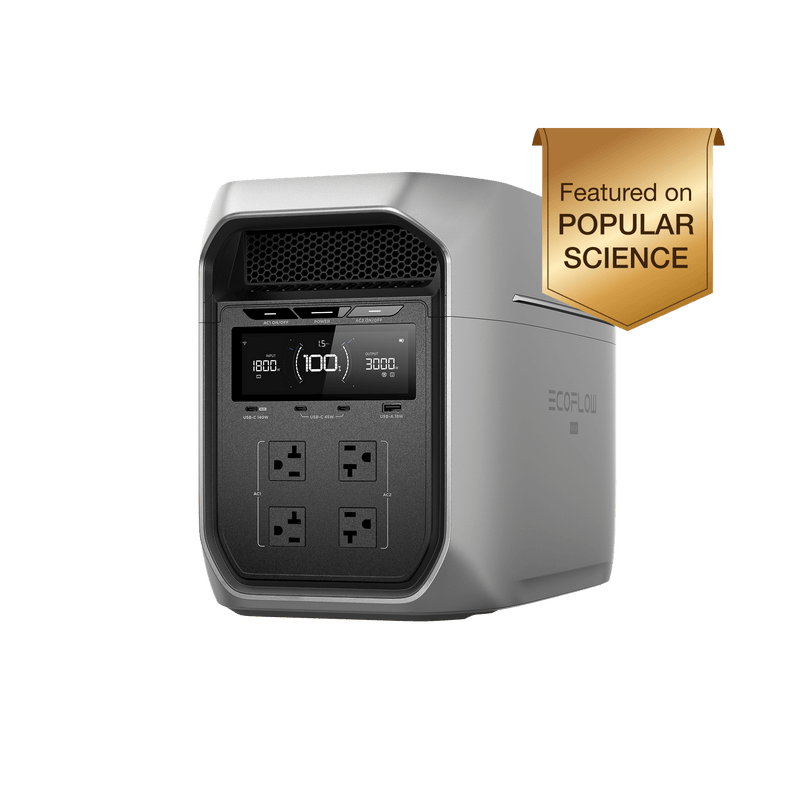
| 2,048 | 3,000 | 10 | 22.2 | — | 5 | 9 | High output | ||
| 2,304 | 2,400 | 10 | 32.7 | 1,200 | 5 | 9.5 | Solar-heavy setups | ||
| 3,072 | 3,600 | — | 41.5 | 2,400 | 5 | 9 | Whole-home backup |
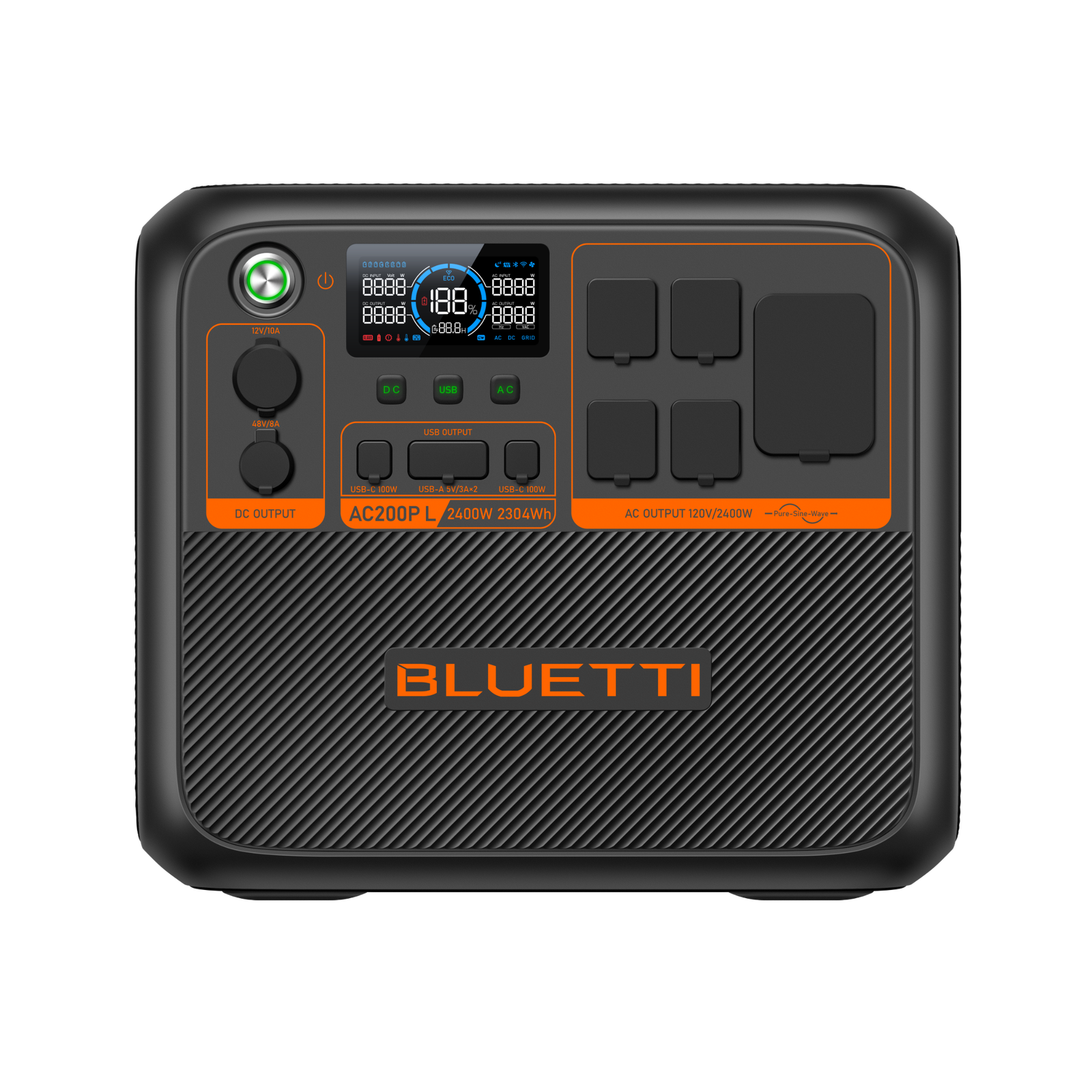
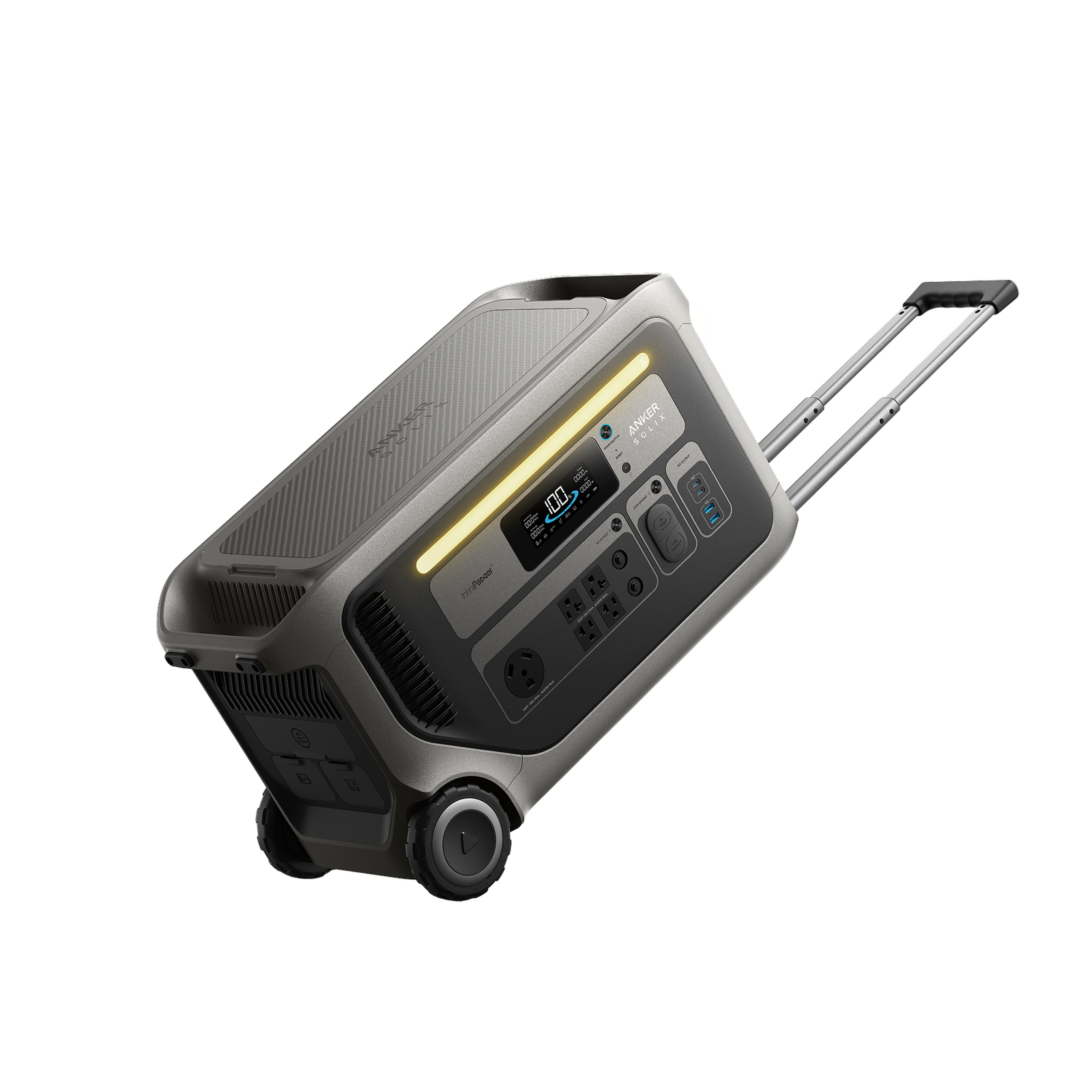
(affiliate link) · Data from the Amazon listing; offers may change.
Two numbers stand out. The Jackery Explorer 2000 v2 packs 2,042 Wh into 17.9 kg (39.5 lb), about 114 Wh/kg, while the Bluetti AC200PL carries 2,304 Wh at 32.7 kg (72.1 lb), about 70 Wh/kg. That gap matters if you move the unit often.
What specs matter most?
Capacity, continuous AC output, solar input and UPS switchover time decide most purchases.
- Capacity (Wh): how long it runs. Use the formula above.
- AC output (W): the most it can power at once. A microwave or a space heater needs 1,200 W or more.
- Surge (W): short peaks for motors and compressors. Several listings do not publish it.
- Solar input (W): how fast the sun can refill it. At full input, the DELTA 3 needs 1,024 ÷ 500 ≈ 2 hours of ideal sun; real panels deliver about 70-80 percent of their rating.
- UPS (ms): how fast it takes over when the grid drops. 10-20 ms keeps most electronics running.
- Weight: anything over 20 kg (44 lb) is a two-hand or wheeled carry.
For the full walkthrough, with a built-in calculator, read how to choose a portable power station.
Where should I go next?
Pick the page that matches your use:
- The 8 best portable power stations, ranked with pros, cons and runtime math.
- Best power stations for RV and van camping.
- Best power stations for home backup.
- In-depth reviews: EcoFlow DELTA 3, Jackery Explorer 2000 v2 and Anker SOLIX F3000.
- Head-to-heads: Jackery 2000 v2 vs EcoFlow DELTA 3 Max Plus and DELTA 3 Ultra Plus vs Anker F3000.
- Problems: station not charging from solar.
Want to recharge off-grid? Browse portable solar panels or buy a matched solar generator kit.
All about portable power stations
Rankings and picks
- The Best Portable Power Stations for Home Backup in 2026The best portable power stations for home backup and outages, with UPS times, fridge, router and CPAP runtimes and expansion math for each model.
- The Best Portable Power Stations for RV and Van Camping in 2026The best portable power stations for RV and van camping, sized for a 12 V fridge, laptop and lights, with runtime math and vehicle-charging tips.
- Portable Power Stations of 2,000 Wh and Up: 9 Models ComparedAll nine portable power stations of 2,000 Wh or more in our US catalog, compared on output, weight, UPS and expansion, with fridge runtime math for each.
- Portable Power Stations of 3,000 Wh and Up: 4 Home Backup Units ComparedThe four portable power stations of 3,000 Wh or more in our US catalog, compared on output, surge, UPS, solar input and weight, with outage runtime math.
- The Best Expandable Portable Power Stations in 2026The best expandable power stations of 2026, from 1 kWh units that grow to 5 kWh to 4 kWh systems that reach 48 kWh, with days-of-backup math for each.
- The Best Portable Power Stations for Camping in 2026The best portable power stations for tent and car camping, from 192 Wh DC-only units to 1 kWh, with runtime math for coolers, CPAPs and phones.
- Lightweight Portable Power Stations: Every Model Under 13 kg (29 lb)The lightest portable power stations in our US catalog: every model with a published weight of 13 kg (29 lb) or less, with Wh-per-kg math.
- Portable Power Stations With UPS: 8 Models With a Declared Switchover TimeEvery portable power station in our US catalog with a declared UPS switchover time, from 10 to 20 ms, compared on capacity, output and weight.
- The 8 Best Portable Power Stations of 2026The 8 best portable power stations of 2026, from 672 Wh to 3,072 Wh, compared on capacity, output, UPS and weight, with runtime math for each.
Comparisons
- Bluetti AC200PL vs Growatt INFINITY 2000 Pro: Which 2 kWh Station?Bluetti AC200PL vs Growatt INFINITY 2000 Pro compared on official specs: capacity, solar input, UPS, cycles, expansion and weight, with a clear pick.
- EcoFlow DELTA 3 Ultra Plus vs Anker SOLIX F3000: Which 3 kWh Home Backup?EcoFlow DELTA 3 Ultra Plus vs Anker SOLIX F3000 on official specs: UPS, surge, solar input, weight and expansion for 3 kWh home backup, with a clear pick.
- EcoFlow DELTA 3 vs Grecell H1200: Which Mid-Size Station?EcoFlow DELTA 3 vs Grecell H1200 compared on official specs: capacity, output, UPS, solar, weight and warranty, with runtime math and a clear pick.
- EcoFlow DELTA Pro 3 vs DELTA 3 Ultra Plus: Which Home Backup?EcoFlow DELTA Pro 3 vs DELTA 3 Ultra Plus compared on official specs: capacity, output, surge, weight and expansion, with outage runtime math and a pick.
- Jackery Explorer 2000 v2 vs EcoFlow DELTA 3 Max Plus: Which 2 kWh Station?Jackery Explorer 2000 v2 vs EcoFlow DELTA 3 Max Plus compared on official specs: output, weight, UPS speed, expansion and charging, with a clear pick.
- Jackery HomePower 3000 vs Anker SOLIX F3000: Which 3 kWh Backup?Jackery HomePower 3000 vs Anker SOLIX F3000 compared on official specs: weight, UPS, surge, solar input, expansion and charging, with a clear pick.
Guides and calculators
- How Long Does a Portable Power Station Last? Runtime Formula and Appliance TableHow long a portable power station runs a fridge, CPAP, TV or laptop: the runtime formula, an appliance table, a calculator and battery lifespan.
- How to Choose a Portable Power Station: Capacity, Output and Solar MathHow to choose a portable power station: size Wh and W with simple formulas, then check surge, LiFePO4, solar input, UPS, ports and weight. US examples.
- Portable Power Station vs Gas Generator: Noise, Fumes, Maintenance and RuntimePortable power station vs gas generator on noise, fumes, indoor safety, maintenance, runtime and output, with advice for camping and outages.
Troubleshooting and care
- LiFePO4 vs NMC: Which Battery Is Better in a Power Station?LiFePO4 vs NMC batteries in portable power stations: cycle life, weight, safety and cold-weather behavior, plus which models in our US catalog use each.
- How to Store a Portable Power Station and Care for Its BatteryHow to store a portable power station: charge level, temperature, check-ups every few months and care habits that extend battery life, with a fix table.
- Power Station AC Outlets Not Working? Causes and FixesPower station AC outlets not working? Check the AC switch, eco mode, battery level, overload, heat and settings with our checklist and symptom-fix table.
- Power Station Not Charging From a Solar Panel? Causes and FixesPower station not charging from your solar panel? Check connectors, voltage (Voc), shade, heat, charge mode and cables with our checklist and fix table.
- Power Station Shuts Off When You Plug Something In? Overload and Surge FixesPower station shuts off when you plug something in? Learn how continuous and surge ratings work, size motor loads and fix overloads with our checklist.
Frequently asked questions
What can a portable power station run?
Anything whose running watts stay under the station’s AC output rating, for as long as the battery lasts. Runtime is roughly capacity × 0.85 ÷ device watts.
Is a portable power station the same as a generator?
No. It stores energy in a battery instead of burning fuel, so it is silent and safe indoors, but it only delivers what you charged into it from the wall, a car or solar panels.
How long does a portable power station last?
The LiFePO4 stations in our catalog are rated for 3,000 to 6,000 cycles depending on the model, which is many years of regular use.
Can I charge a power station with solar panels?
Yes, they are built for it, but several listings in our catalog do not publish the maximum solar watts. Confirm the input range and connector before you buy a panel.
Do I need a UPS function?
Only if a device must never lose power, such as a CPAP, a desktop PC or a network router. Look for a declared switchover time of 20 ms or less.