
The 5 Best Solar Generator Kits of 2026
- Data from official spec sheets
- Public scoring formula
- No paid placements
The EcoFlow DELTA 3 with a 220 W panel is the best solar generator kit for most people: 1,024 Wh, 1,800 W and a panel that refills it in about 6 peak sun hours. For 2 kWh, the Jackery Explorer 2000 v2 with two 200 W panels refills fastest; for heavy home loads, the Bluetti Apex 300 kit.
On this page (10)
- How do the 5 kits compare?
- How long does the kit’s panel take to fill the battery?
- How long will each kit run a fridge or a CPAP?
- Should I buy a kit or the parts separately?
- Which kit fits your situation?
- The 5 best solar generator kits, reviewed
- How do I choose the right solar generator kit?
- What are the most common buying mistakes?
- How do they rank by price tier?
- What is our verdict?
The EcoFlow DELTA 3 with a 220 W panel is the best solar generator kit for most people. It pairs 1,024 Wh of LiFePO4 storage and 1,800 W of output with a panel that can refill it in about 6.2 peak sun hours. For 2 kWh, the Jackery Explorer 2000 v2 with two 200 W panels refills fastest in its class. For heavy home loads and room to add solar, the Bluetti Apex 300 kit leads.
We ranked the five station-plus-panel bundles in our US catalog using the specs on each Amazon listing. We have not tested them ourselves; we show the refill math and flag what each bundle page leaves out.
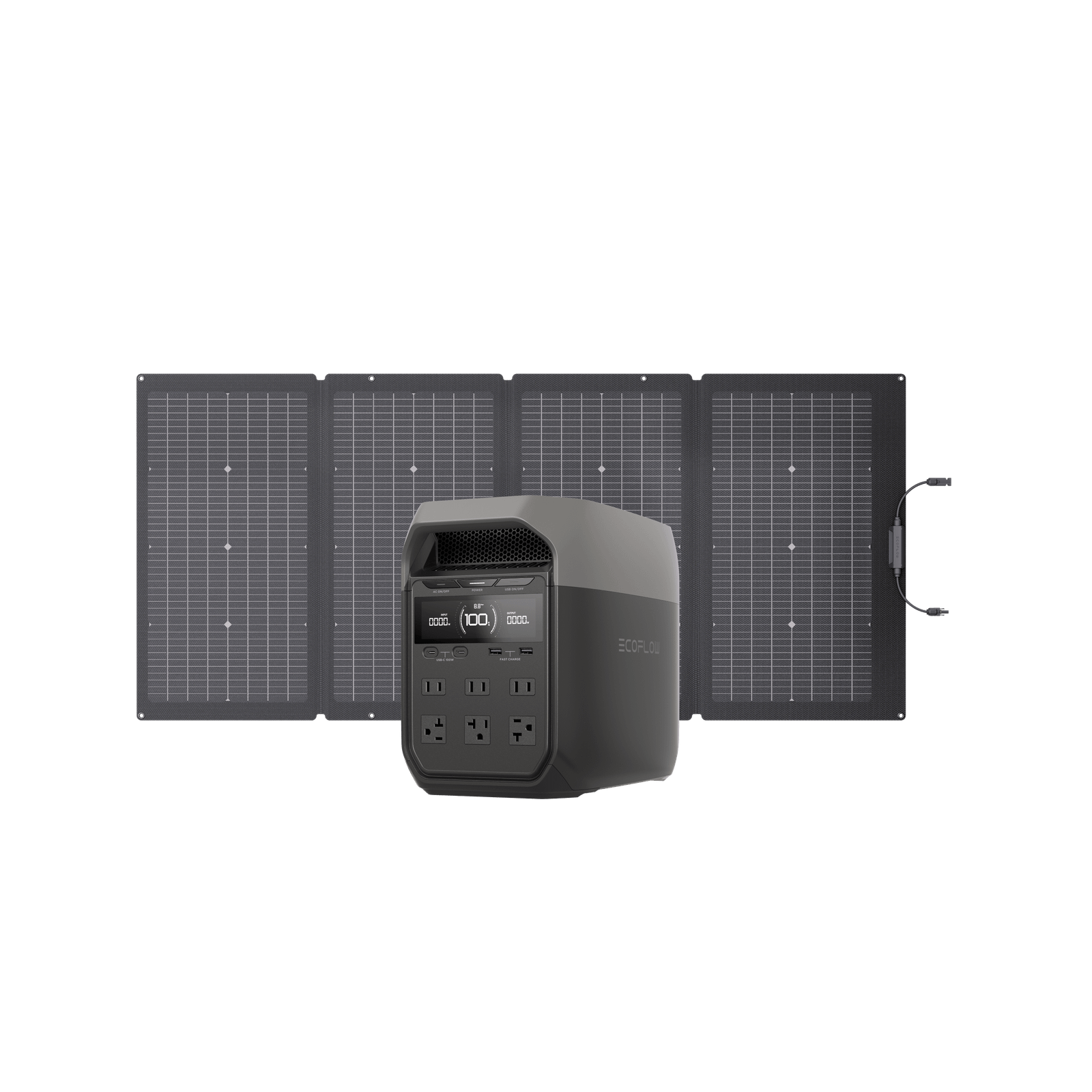
EcoFlow DELTA 3 + 220W panel
1,024 Wh · 1,800 W
1,024 Wh and 1,800 W with a 220 W panel: about 6.2 peak sun hours to refill.
The catch: Bundle listing publishes neither weight nor surge.
In the box: DELTA 3 station and one 220 W panel
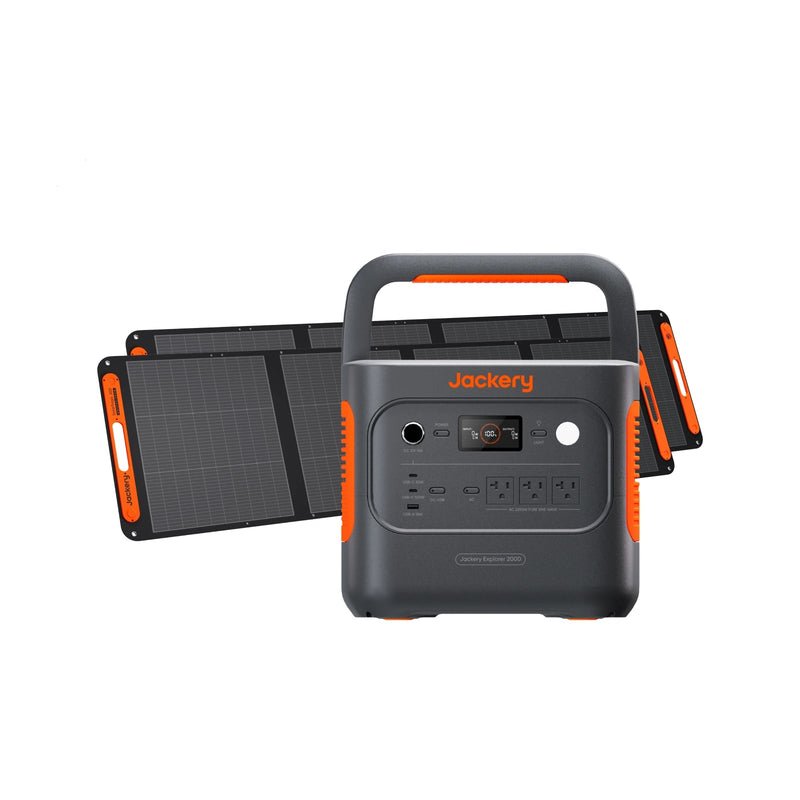
Jackery Explorer 2000 v2 + 2x 200W panels
2,042 Wh · 2,200 W
2,042 Wh with 400 W of panels: about 6.8 peak sun hours to refill, fastest among the 2 kWh-plus kits.
The catch: Maximum solar input and surge are not published.
In the box: Explorer 2000 v2 station and two 200 W panels
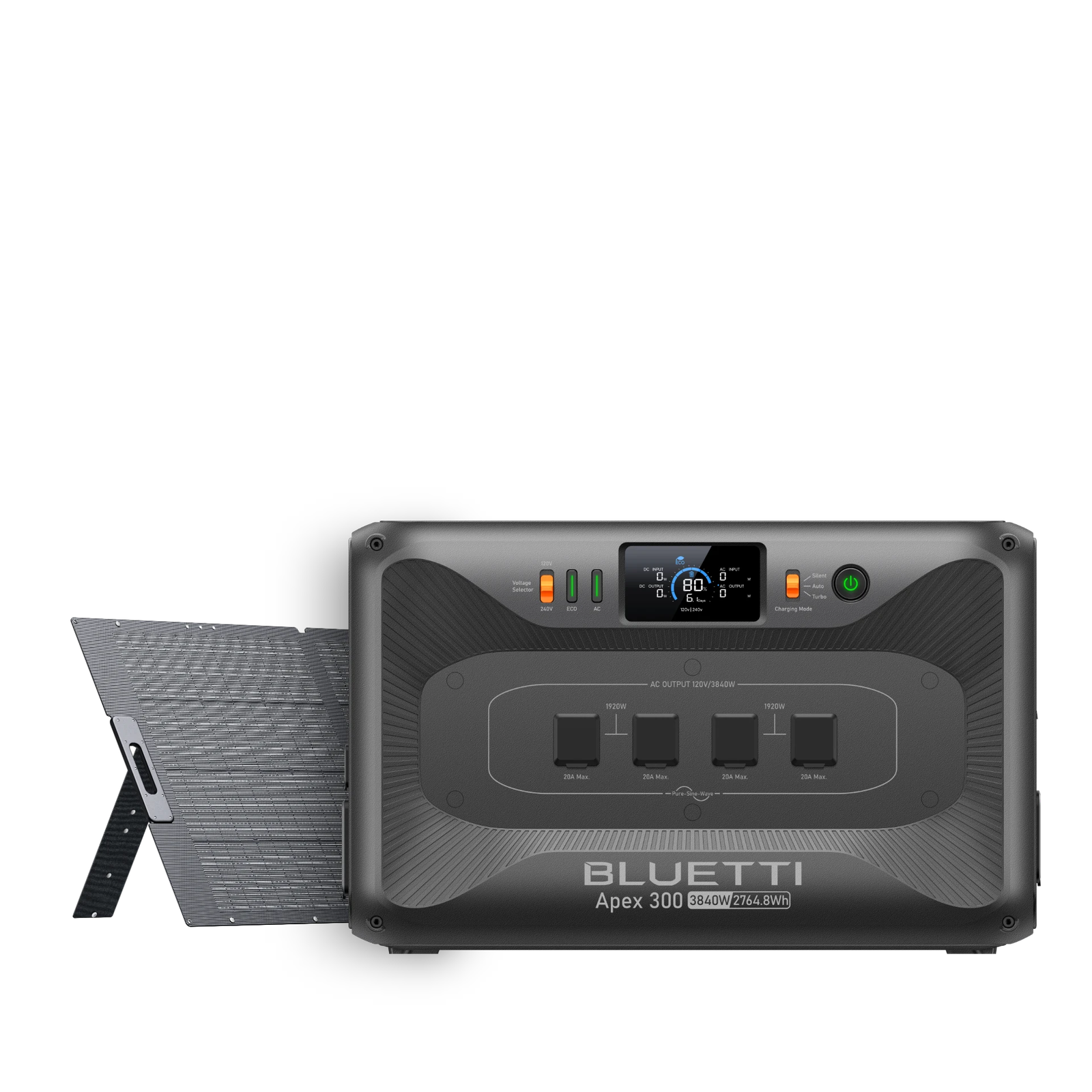
Bluetti Apex 300 + 350W panel
2,764.8 Wh · 3,840 W
2,764.8 Wh, 3,840 W continuous, 7,680 W surge and 2,400 W solar input to grow into.
The catch: 1-year warranty on the listing, against 5 years for the others.
In the box: Apex 300 station and one 350 W panel
How do the 5 kits compare?
They split into two 1 kWh EcoFlow kits and three kits of 2 kWh or more. Empty cells mean the bundle listing does not publish that figure.
| Model | Capacity (Wh) | Panels (W) | AC output (W) | Surge (W) | Max solar input (W) | Warranty (years) | WilderWatt score | Best for | |
|---|---|---|---|---|---|---|---|---|---|
| 1,024 | 220 | 1,800 | — | 500 | 5 | 9 | Most people | |
| 2,042 | 400 | 2,200 | — | — | 5 | 9 | Fast 2 kWh refill | ||
| 2,764.8 | 350 | 3,840 | 7,680 | 2,400 | 1 | 8 | Home loads | ||
| 1,024 | 160 | 1,800 | — | 500 | 5 | 9 | Lighter panel | ||
| 2,048 | 200 | 2,400 | 3,100 | — | 5 | 8 | Expandable 2 kWh |
(affiliate link) · Data from the Amazon listing; offers may change.
How long does the kit’s panel take to fill the battery?
Use capacity ÷ (panel watts × 0.75) to get peak sun hours. The 0.75 reflects typical real output of a portable panel, which delivers about 70-80 percent of its label rating once heat, sun angle and cable losses are counted.
| Kit | Math | Peak sun hours | Days at 5 h/day |
|---|---|---|---|
| EcoFlow DELTA 3 + 220W | 1,024 ÷ (220 × 0.75) | ≈ 6.2 h | ≈ 1.2 |
| Jackery Explorer 2000 v2 + 2x 200W | 2,042 ÷ (400 × 0.75) | ≈ 6.8 h | ≈ 1.4 |
| EcoFlow DELTA 3 + 160W | 1,024 ÷ (160 × 0.75) | ≈ 8.5 h | ≈ 1.7 |
| Bluetti Apex 300 + 350W | 2,764.8 ÷ (350 × 0.75) | ≈ 10.5 h | ≈ 2.1 |
| Growatt INFINITY 2000 Pro + 200W | 2,048 ÷ (200 × 0.75) | ≈ 13.7 h | ≈ 2.7 |
Five peak sun hours is a typical summer figure for much of the US; winter and northern states see less. Our guide on how many solar watts you need lists approximate regional values.
The daily view matters more for camping. A 45 W fridge uses 45 × 24 = 1,080 Wh a day. The 220 W panel supplies about 220 × 0.75 × 5 = 825 Wh, roughly three quarters of that, so the battery slowly drains. With 400 W of panels (about 1,500 Wh a day), the Jackery kit covers the fridge and has energy to spare.
How long will each kit run a fridge or a CPAP?
Multiply capacity by 0.85 for inverter losses, then divide by the load. These figures assume a full battery and no sun; solar input during the day extends them.
| Kit | 45 W fridge | 60 W CPAP | Nights of CPAP (8 h) |
|---|---|---|---|
| EcoFlow DELTA 3 kits (1,024 Wh) | 1,024 × 0.85 ÷ 45 ≈ 19.3 h | ≈ 14.5 h | ≈ 1.8 |
| Jackery Explorer 2000 v2 kit (2,042 Wh) | ≈ 38.6 h | ≈ 28.9 h | ≈ 3.6 |
| Growatt INFINITY 2000 Pro kit (2,048 Wh) | ≈ 38.7 h | ≈ 29.0 h | ≈ 3.6 |
| Bluetti Apex 300 kit (2,764.8 Wh) | ≈ 52.2 h | ≈ 39.2 h | ≈ 4.9 |
A CPAP with a heated humidifier can draw more than 60 W, so check your machine’s power supply label. For a full breakdown of backup runtimes, see the best power stations for home backup.
Should I buy a kit or the parts separately?
Buy the kit when its panel is at least 15 percent of the battery in watts; otherwise consider building your own. Three kits here pass that test (the two DELTA 3 bundles and the Jackery). The Apex 300 (≈ 0.13) and Growatt (≈ 0.10) kits are better seen as a station with a starter panel. Our solar generators overview explains the trade-offs in more detail.
Which kit fits your situation?
Choose by how much you use per day and how much solar you want. Tap a card to jump to the full entry.
Pick by what you need
- Camping and short outagesEcoFlow DELTA 3 + 220W
- Smaller panel, same stationEcoFlow DELTA 3 + 160W
- 2 kWh that refills in about a dayJackery Explorer 2000 v2 + 2x 200W
- Heavy home loads and future solarBluetti Apex 300 + 350W
- 2 kWh with a 5-year warranty and 3,100 W starting wattsGrowatt INFINITY 2000 Pro + 200W
The 5 best solar generator kits, reviewed
This kit has the best balance of battery and panel in our catalog. The DELTA 3 station stores 1,024 Wh and delivers 1,800 W, and the included 220 W panel gives a panel-to-battery ratio of 220 ÷ 1,024 ≈ 0.21. In practice, one good sunny day refills it: 1,024 ÷ (220 × 0.75) ≈ 6.2 peak sun hours.
The station accepts 500 W of solar, so you can add a second panel of up to 280 W later. Runtime is about 19 hours on a 45 W fridge. The bundle listing does not publish surge or total weight; the standalone DELTA 3 lists 3,600 W surge and 12.5 kg (27.6 lb). Read our EcoFlow DELTA 3 review for the station in detail.
Pros
- 220 W panel refills the 1,024 Wh battery in about 6.2 peak sun hours
- 500 W solar input leaves 280 W of room for a second panel
- LiFePO4 rated for 4,000 cycles and a 5-year warranty
Cons
- The bundle listing publishes neither total weight nor surge
- 1 kWh covers about a day of a 45 W fridge, not a long outage
- Best for
- Camping, van weekends and short outages with solar top-ups
- Skip it if
- Multi-day outages that need 2 kWh or more
Specifications
| Capacity (Wh) | 1,024 |
|---|---|
| AC output (W) | 1,800 |
| Chemistry | LiFePO4 |
| Max solar input (W) | 500 |
| Panels (W) | 220 |
| Panels | 1 |
| Cycles | 4,000 |
| Warranty (years) | 5 |
Two 200 W panels make this the best-matched 2 kWh kit here. The panel-to-battery ratio is 400 ÷ 2,042 ≈ 0.20, about the same as the DELTA 3 + 220W, so it also refills in a little over a day of good sun (≈ 6.8 peak sun hours). That is twice as fast as the Growatt kit with one 200 W panel.
The station runs a 45 W fridge for about 38 hours (2,042 × 0.85 ÷ 45) and a 60 W CPAP for about 29 hours, with 2,200 W of AC output. At 17.9 kg (39.5 lb), it is also the lightest 2 kWh station in our catalog with a published weight. The listing does not publish solar input, surge or cycle count. For the station alone, see our Jackery Explorer 2000 v2 review.
Pros
- 400 W of panels: about 6.8 peak sun hours for 2,042 Wh
- Station weighs 17.9 kg (39.5 lb), about 114 Wh per kg
- LiFePO4 and a 5-year warranty
Cons
- Maximum solar input is not published, so headroom for more panels is unknown
- Surge and cycle life are missing from the bundle listing
- Best for
- RV trips, off-grid cabins and fridge-plus-CPAP setups
- Skip it if
- Buyers who plan to add panels and need a published solar limit
Specifications
| Capacity (Wh) | 2,042 |
|---|---|
| AC output (W) | 2,200 |
| Chemistry | LiFePO4 |
| Weight (kg) | 17.9 |
| Panels (W) | 400 |
| Panels | 2 |
| Warranty (years) | 5 |
The Apex 300 kit is for people who want to run real household loads. The station stores 2,764.8 Wh and delivers 3,840 W continuous with a 7,680 W surge, enough headroom for a well pump or a fridge compressor starting while other things run. Its 6,000-cycle rating is the highest of the five kits.
The included 350 W panel is small for that battery: 2,764.8 ÷ (350 × 0.75) ≈ 10.5 peak sun hours, about two days. The good news is 2,400 W of solar input, so you can add around 2,050 W more. The drawback is clear: the listing shows a 1-year warranty.
Pros
- 3,840 W continuous and 7,680 W surge: the most powerful kit here
- 2,400 W solar input, so the 350 W panel is only a start
- 6,000 cycles, the highest cycle rating of the five kits
Cons
- 1-year warranty, against 5 years for the other four kits
- Bundle listing does not publish weight
- Best for
- Home backup with heavy appliances and a plan to add more panels
- Skip it if
- Camping or anyone who wants a long warranty
Specifications
| Capacity (Wh) | 2,764.8 |
|---|---|
| AC output (W) | 3,840 |
| Surge (W) | 7,680 |
| Chemistry | LiFePO4 |
| Max solar input (W) | 2,400 |
| Panels (W) | 350 |
| Panels | 1 |
| Cycles | 6,000 |
| Warranty (years) | 1 |
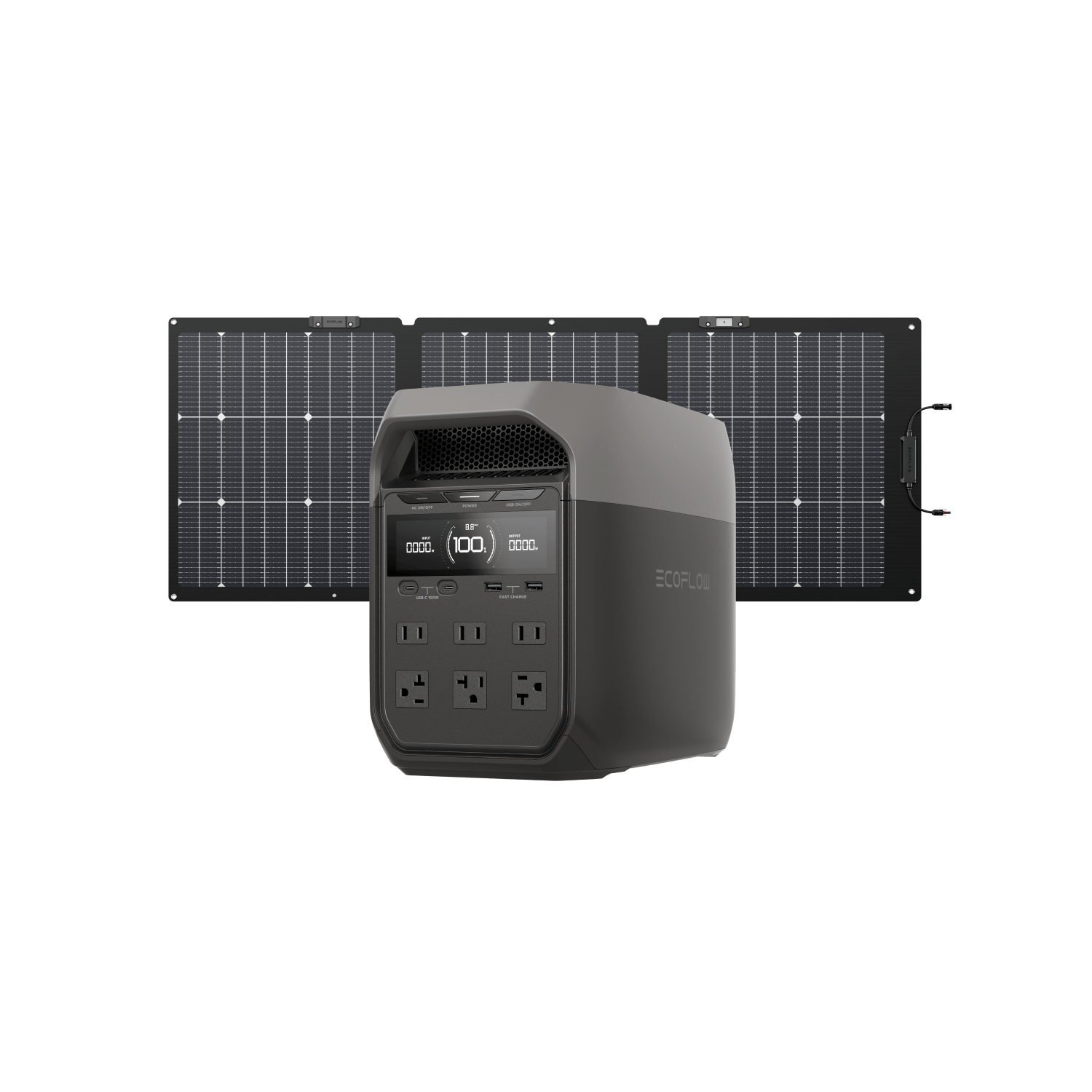
This is the same DELTA 3 station with a smaller 160 W panel. The panel-to-battery ratio drops to 160 ÷ 1,024 ≈ 0.16, still above the 0.15 we treat as a one-to-two-day refill. The math: 1,024 ÷ (160 × 0.75) ≈ 8.5 peak sun hours, or about 1.7 days at 5 hours of sun.
On a sunny day the panel adds about 600 Wh (160 × 0.75 × 5), enough for lights, phones, a laptop and part of a fridge. The listing notes the station and panel ship in separate packages. Choose it over the 220 W kit only if the smaller panel suits how you carry gear.
Pros
- Same 1,024 Wh, 1,800 W DELTA 3 station as our top pick
- 500 W solar input leaves 340 W for extra panels
- 4,000 cycles and a 5-year warranty
Cons
- 160 W panel needs about 8.5 peak sun hours to refill
- No weight or surge on the bundle listing
- Best for
- Buyers who want a smaller panel to carry and a DELTA 3
- Skip it if
- Daily heavy use that depends on solar alone
Specifications
| Capacity (Wh) | 1,024 |
|---|---|
| AC output (W) | 1,800 |
| Chemistry | LiFePO4 |
| Max solar input (W) | 500 |
| Panels (W) | 160 |
| Panels | 1 |
| Cycles | 4,000 |
| Warranty (years) | 5 |
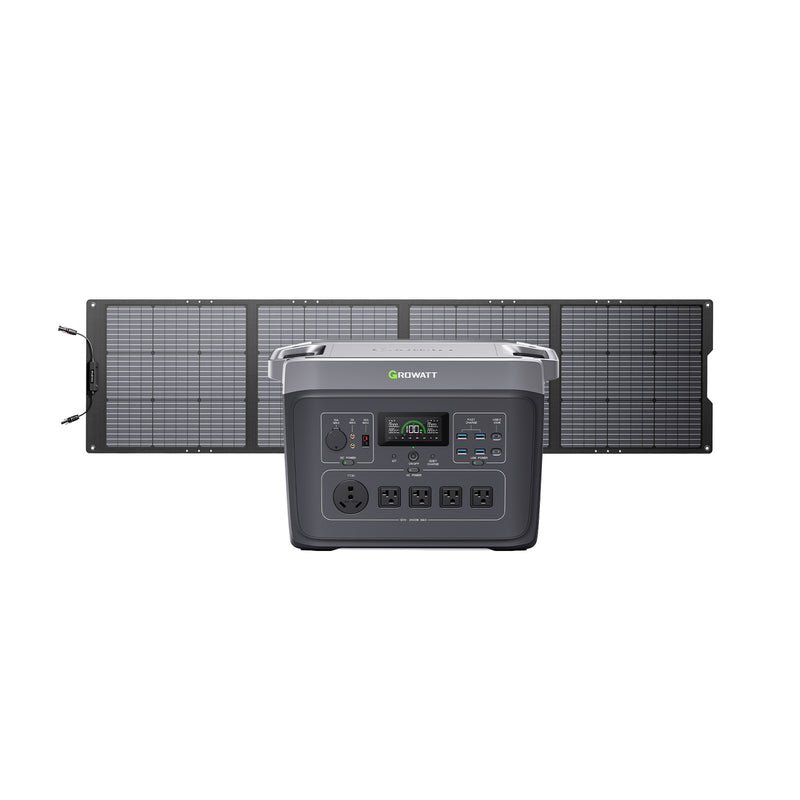
The Growatt kit has a strong station and an undersized panel. The INFINITY 2000 Pro stores 2,048 Wh, delivers 2,400 W continuous and lists 3,100 W starting wattage, with 4,000 cycles and a 5-year warranty. That runs a 45 W fridge for about 38.7 hours.
The single 200 W panel gives a ratio of 200 ÷ 2,048 ≈ 0.10, the lowest here: 2,048 ÷ 150 ≈ 13.7 peak sun hours, or close to three days. The listing does not publish solar input, so we cannot say how many panels you can add. Weight is also missing.
Pros
- 2,048 Wh, 2,400 W continuous and 3,100 W starting watts
- 4,000 cycles and a 5-year warranty
- LiFePO4 station that the standalone listing says expands to 6,144 Wh
Cons
- One 200 W panel on 2 kWh: about 13.7 peak sun hours to refill
- No weight and no maximum solar input on the listing
- Best for
- Home backup that recharges mostly from the wall, with solar as a top-up
- Skip it if
- Off-grid use that depends on solar every day
Specifications
| Capacity (Wh) | 2,048 |
|---|---|
| AC output (W) | 2,400 |
| Surge (W) | 3,100 |
| Chemistry | LiFePO4 |
| Panels (W) | 200 |
| Panels | 1 |
| Cycles | 4,000 |
| Warranty (years) | 5 |
How do I choose the right solar generator kit?
Size the station to your daily use, then check that the panel can replace that energy in one or two days. Add up your devices’ watts × hours, add 20 percent, and pick the station. Then aim for a panel-to-battery ratio of at least 0.15.
If no kit matches, build your own from the best portable power stations and the best portable solar panels. Our guide on how to choose a portable power station and the solar calculator walk through the sizing step by step.
What are the most common buying mistakes?
The most common mistake is assuming one panel is enough for a 2 kWh battery. Watch for these five:
- Undersized panels. A 200 W panel on a 2,048 Wh station needs close to three sunny days to refill.
- Planning with the label watts. Use 75 percent of the panel rating; a 350 W panel is closer to 260 W in practice.
- Not checking solar headroom. If you want to add panels, pick a kit whose listing publishes maximum solar input: the DELTA 3 kits (500 W) or the Apex 300 kit (2,400 W).
- Skipping the warranty line. Four kits list 5 years; the Apex 300 kit lists 1 year.
- Ignoring weight. None of the bundle listings state total weight. Check the station’s own listing if you will carry it.
If the panel connects but the station shows no input, see our not charging from solar troubleshooting guide.
How do they rank by price tier?
Cost level follows battery size first and panel watts second. We do not show prices because they change daily.
- Entry: EcoFlow DELTA 3 + 160W and DELTA 3 + 220W. The 220 W kit is the better buy for solar users.
- Mid: Growatt INFINITY 2000 Pro + 200W and Jackery Explorer 2000 v2 + 2x 200W. The Jackery kit has twice the panel watts.
- Premium: Bluetti Apex 300 + 350W, for the highest output and solar input.
What is our verdict?
Frequently asked questions
What is the best solar generator kit?
For most buyers, the EcoFlow DELTA 3 with a 220 W panel. It balances 1,024 Wh of storage with a panel big enough to refill it in about 6.2 peak sun hours.
How long does a solar generator take to charge from its panel?
Divide capacity by the panel watts × 0.75. For the Jackery 2000 v2 kit that is 2,042 ÷ (400 × 0.75) ≈ 6.8 peak sun hours.
Can a solar generator run a house?
It can run key circuits for a while, not a whole house indefinitely. The Bluetti Apex 300 kit offers 2,764.8 Wh and 3,840 W: about 100 W of fridge, lights and router runs for roughly 23 hours (2,764.8 × 0.85 ÷ 100).
Can I add more solar panels to a kit?
Yes, up to the station’s solar input limit. The DELTA 3 kits accept 500 W and the Apex 300 kit 2,400 W; the Jackery and Growatt bundle listings do not publish the figure.
Is a solar generator kit better than buying the parts separately?
A kit guarantees the panel fits the station. Buy separately if you want a lighter panel or more solar than the bundle includes.
Based on official spec sheets, manuals and published owner feedback. We have not physically tested every model. How we review.