
Portable Power Stations of 2,000 Wh and Up: 9 Models Compared
- Data from official spec sheets
- Public scoring formula
- No paid placements
Nine stations in our US catalog hold 2,000 Wh or more, from 2,042 Wh to 4,096 Wh. The Jackery Explorer 2000 v2 is the lightest at 17.9 kg; the EcoFlow DELTA 3 Max Plus has the most output at 2 kWh; the EcoFlow DELTA Pro 3 is the largest.
Nine portable power stations in our US catalog hold 2,000 Wh or more. That is the size class where a station stops being a camping accessory and becomes real outage backup: about a day of a full-size fridge plus lights, a router and phones. We filtered the catalog for a declared capacity of at least 2,000 Wh; every figure comes from the Amazon listings.
The main trade-off in this class is weight. It ranges from 17.9 kg (39.5 lb) to 52.2 kg (115.1 lb), so decide early whether you need to carry the unit or can roll it.
Which stations have 2,000 Wh or more?
Capacities run from 2,042 Wh to 4,096 Wh, and all nine use LiFePO4. Empty cells mean the listing does not publish that figure.
| Model | Capacity (Wh) | AC output (W) | UPS (ms) | Weight (kg) | Expandable to (Wh) | Warranty (years) | WilderWatt score | Best for | |
|---|---|---|---|---|---|---|---|---|---|
 | 2,042 | 2,200 | 20 | 17.9 | — | 5 | 9 | Lightest | |
| 2,048 | 3,000 | 10 | 22.2 | 10,000 | 5 | 9 | High output | ||
| 2,048 | 2,400 | — | 18.4 | 12,000 | — | 7.5 | Cycle life | ||
| 2,048 | 2,400 | 15 | — | 6,144 | 5 | 8.5 | 2 kWh backup | ||
| 2,304 | 2,400 | 10 | 32.7 | 8,448 | 5 | 9.5 | Big solar input | ||
| 3,072 | 3,600 | 20 | 27 | — | 5 | 9 | Light 3 kWh | ||
| 3,072 | 3,600 | — | 41.5 | 24,000 | 5 | 9 | Solar-heavy backup | ||
| 3,072 | 3,600 | 10 | 33.6 | 11,000 | 5 | 9 | 3 kWh with UPS | ||
| 4,096 | 4,000 | 10 | 52.2 | 48,000 | 5 | 8 | Largest |

(affiliate link) · Data from the Amazon listing; offers may change.
| Station | Wh/kg | 60 W fridge (Wh × 0.85 ÷ 60) |
|---|---|---|
| Jackery Explorer 2000 v2 (2,042 Wh) | ≈ 114 | ≈ 28.9 h |
| EcoFlow DELTA 3 Max Plus (2,048 Wh) | ≈ 92 | ≈ 29.0 h |
| Jackery HomePower 2000 Plus v2 (2,048 Wh) | ≈ 111 | ≈ 29.0 h |
| Growatt INFINITY 2000 Pro (2,048 Wh) | weight not published | ≈ 29.0 h |
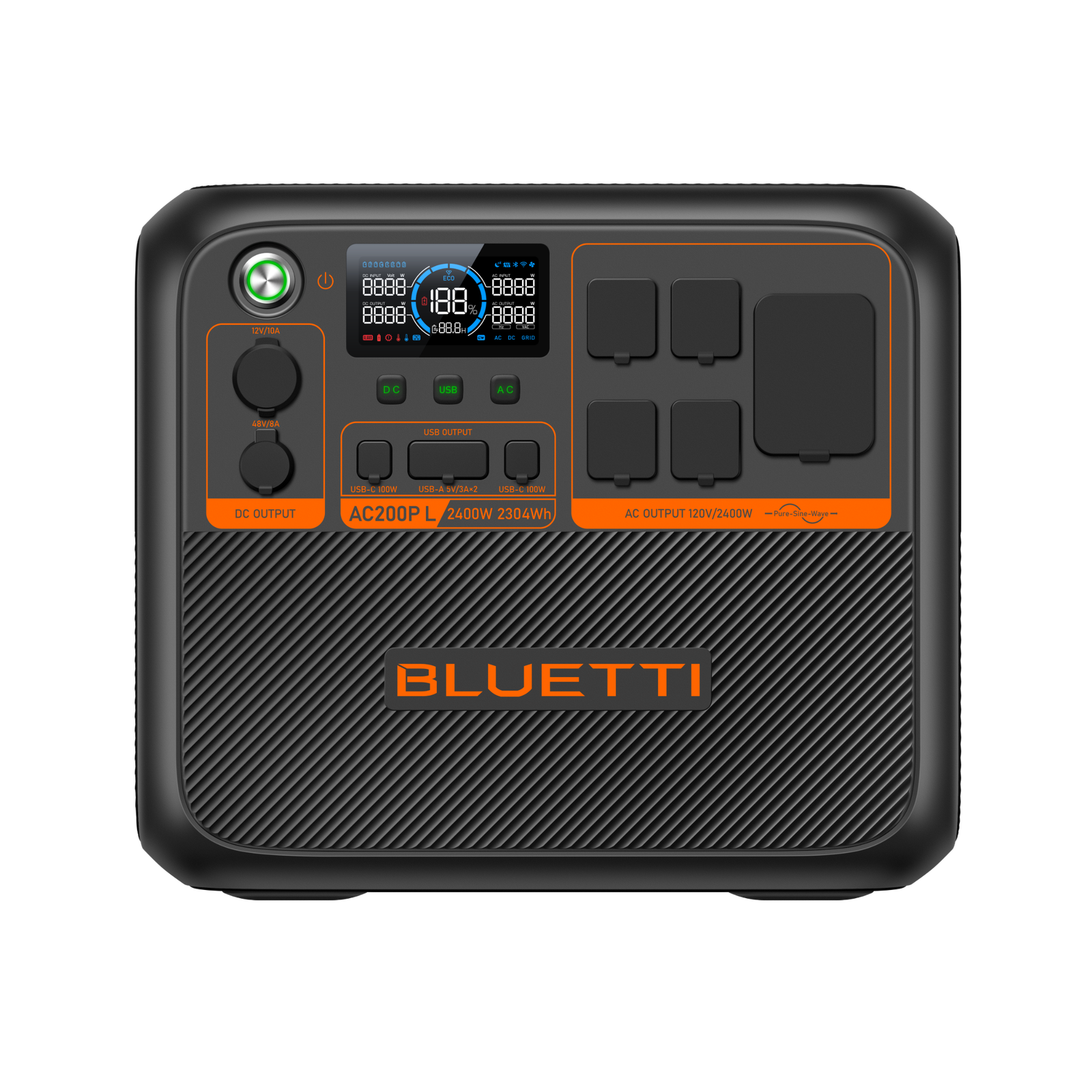
| Bluetti AC200PL (2,304 Wh) | ≈ 70 | ≈ 32.6 h |
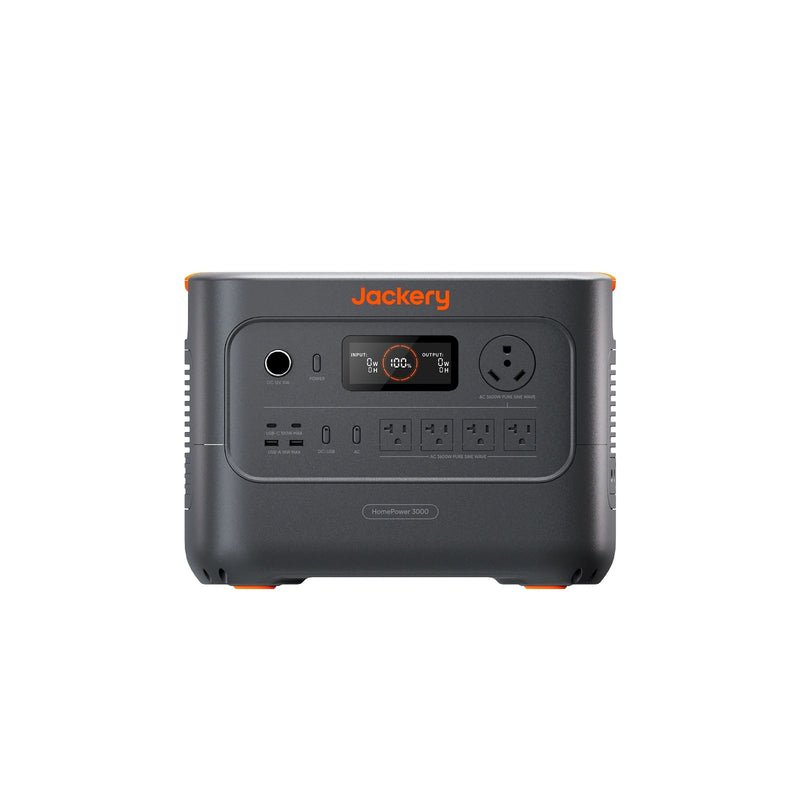
| Jackery HomePower 3000 (3,072 Wh) | ≈ 114 | ≈ 43.5 h |
| Anker SOLIX F3000 (3,072 Wh) | ≈ 74 | ≈ 43.5 h |
| EcoFlow DELTA 3 Ultra Plus (3,072 Wh) | ≈ 91 | ≈ 43.5 h |
| EcoFlow DELTA Pro 3 (4,096 Wh) | ≈ 78 | ≈ 58.0 h |
Pick by what you need
What can 2 kWh run during an outage?
About a day of essentials for a typical home. Here is a sample outage budget:
| Device | Watts | Hours | Wh |
|---|---|---|---|
| Full-size fridge (average) | 60 W | 24 | 1,440 |
| Router and modem | 15 W | 24 | 360 |
| LED lights | 30 W | 5 | 150 |
| Phones and laptop | – | – | 150 |
| Total | 2,100 |
A 2,042 Wh station delivers about 1,736 Wh after 0.85 losses, so it covers roughly 80 percent of that day. Skip the lights during daylight or cycle the fridge and you get through a full day. Our runtime guide walks through your own list.
How much solar does 2 kWh need?
About 550 W of panels to refill 2 kWh on a 5-peak-sun-hour day (2,048 ÷ (5 × 0.75)). Only the Bluetti AC200PL (1,200 W) and Anker F3000 (2,400 W) in this class publish their solar input; for the others, check the manual before you buy panels.
Our picks at 2,000 Wh and up
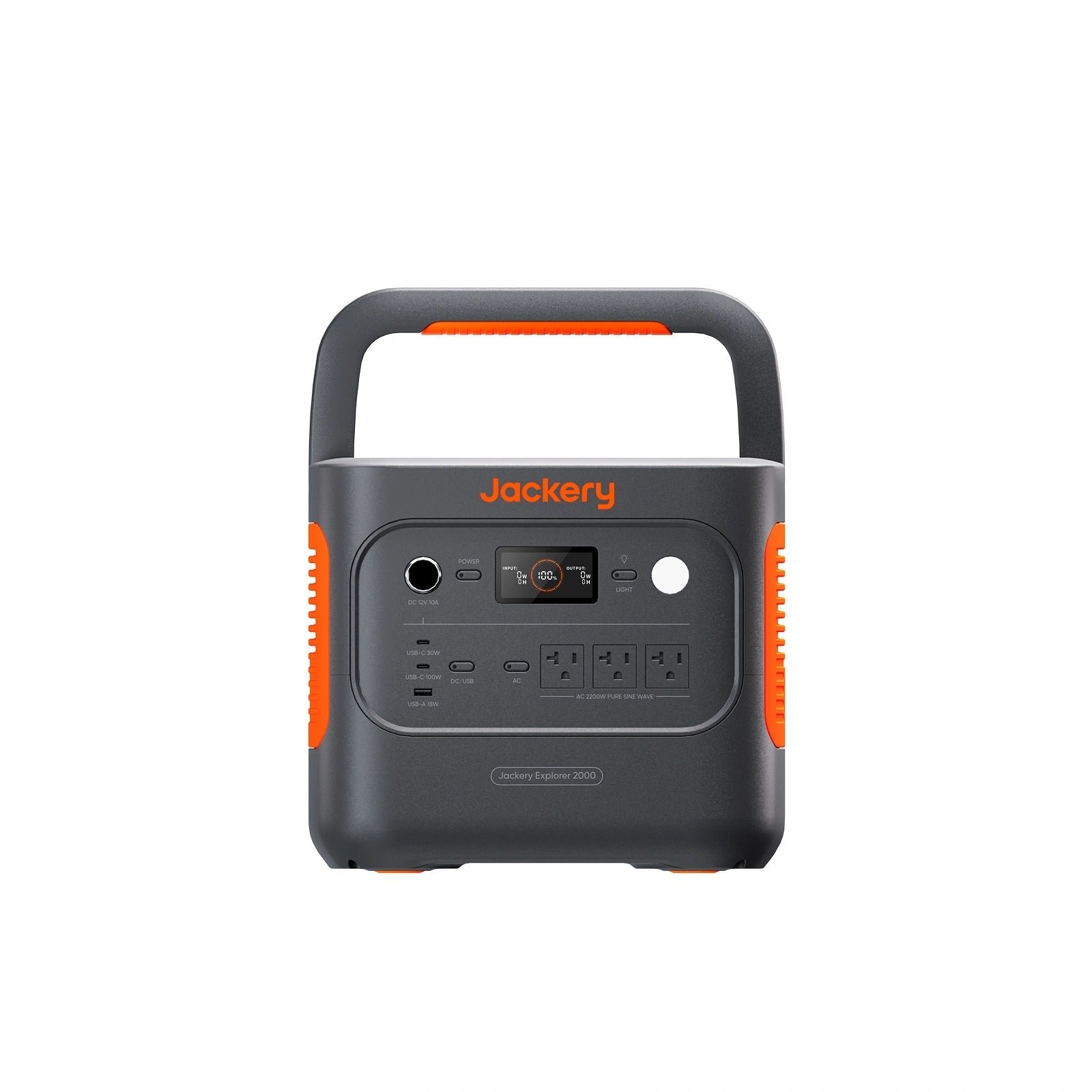
The lightest station in this class, and the best energy-to-weight ratio alongside the HomePower 3000. It runs a 60 W fridge for about 29 hours and recharges from the wall in 102 minutes, according to the listing.
Pros
- 17.9 kg (39.5 lb), about 114 Wh/kg
- 20 ms UPS and 102-minute AC recharge
- 5-year warranty
Cons
- Solar input, surge and cycles not published
- Only 3 AC outlets
- Best for
- RV trips and outage backup you can carry
- Skip it if
- Sizing a large solar array from the listing
Specifications
| Capacity (Wh) | 2,042 |
|---|---|
| AC output (W) | 2,200 |
| Chemistry | LiFePO4 |
| Weight (kg) | 17.9 |
| AC outlets | 3 |
| Full wall charge (min) | 102 |
| UPS (ms) | 20 |
| Warranty (years) | 5 |
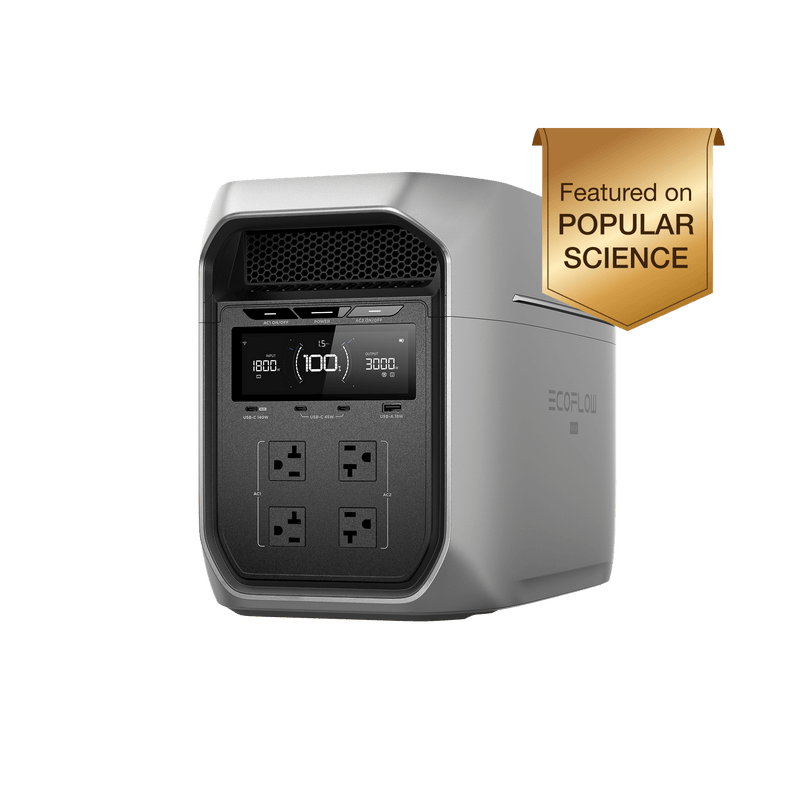
The Max Plus has the highest output of the 2 kWh units, 3,000 W, plus a 10 ms UPS. The trade-off is 4.3 kg more than the Jackery. See Jackery 2000 v2 vs DELTA 3 Max Plus.
Pros
- 3,000 W continuous, 3,800 W surge
- 10 ms UPS
- Expandable to 10,000 Wh
Cons
- 22.2 kg (48.9 lb)
- Solar input and cycles not published
- Best for
- Workshops, RVs with a microwave and home offices
- Skip it if
- Carrying often
Specifications
| Capacity (Wh) | 2,048 |
|---|---|
| AC output (W) | 3,000 |
| Surge (W) | 3,800 |
| Chemistry | LiFePO4 |
| Weight (kg) | 22.2 |
| UPS (ms) | 10 |
| Expandable to (Wh) | 10,000 |
| Warranty (years) | 5 |
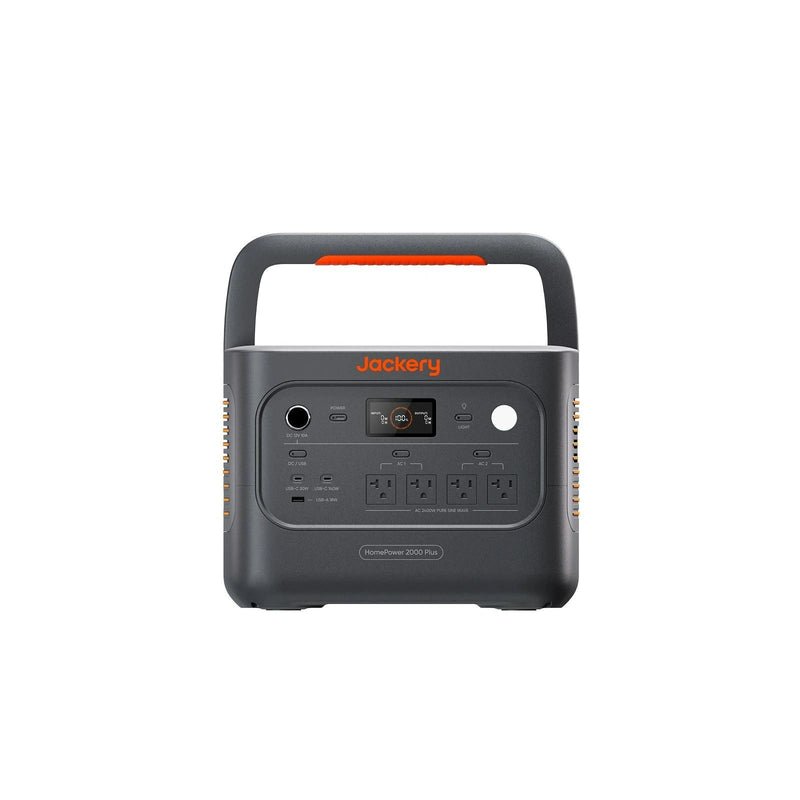
The HomePower 2000 Plus v2 declares 6,000 cycles, the most in this class, at just 18.4 kg (40.6 lb). The listing leaves out warranty, UPS and solar input.
Pros
- 6,000 declared cycles
- 18.4 kg (40.6 lb)
- Expandable to 12,000 Wh
Cons
- No warranty period on the listing
- UPS, surge and solar input not published
- Best for
- Backup that cycles often over many years
- Skip it if
- Buyers who need a documented UPS
Specifications
| Capacity (Wh) | 2,048 |
|---|---|
| AC output (W) | 2,400 |
| Chemistry | LiFePO4 |
| Cycles | 6,000 |
| Weight (kg) | 18.4 |
| Expandable to (Wh) | 12,000 |
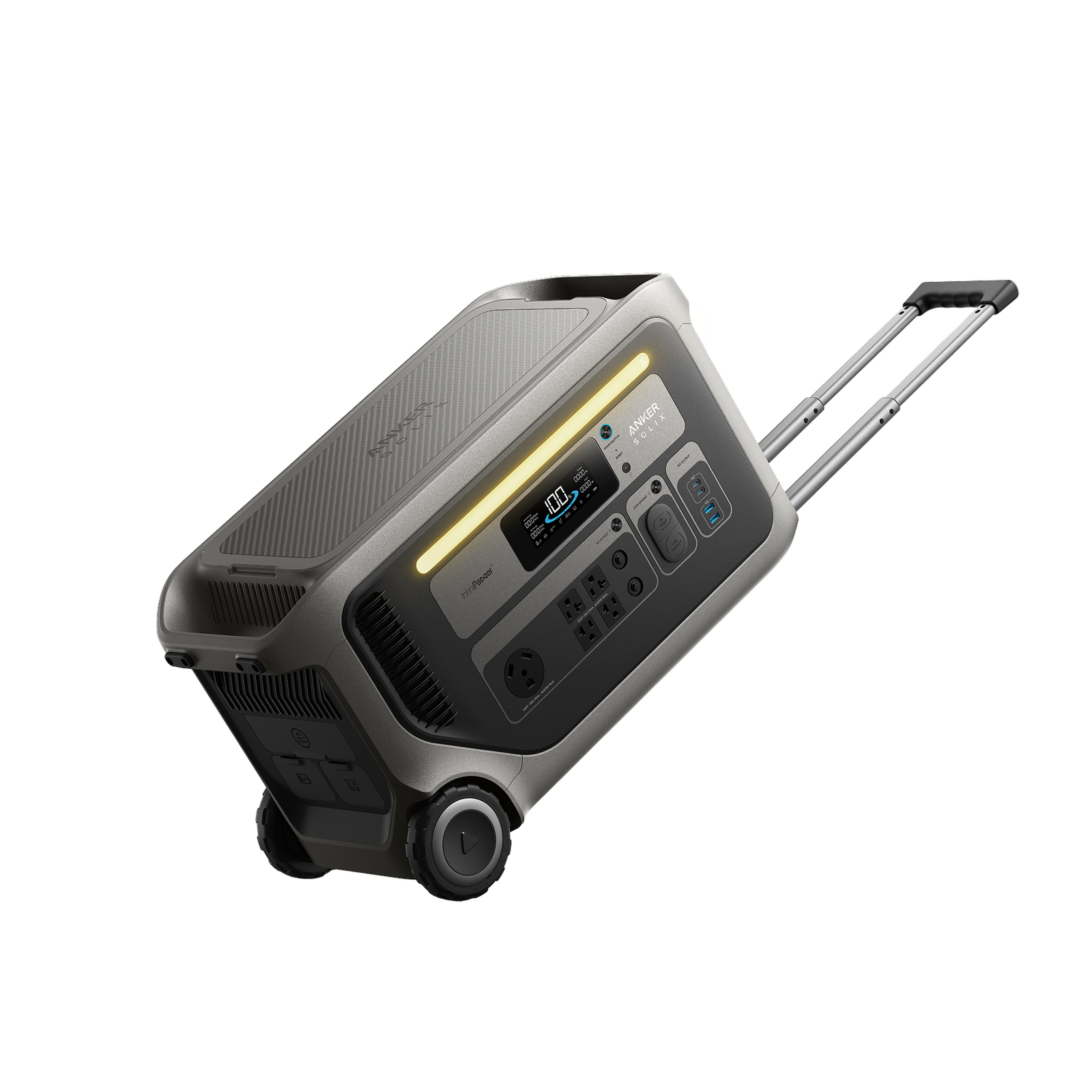
The F3000 refills fastest from the sun, with 2,400 W of declared solar input. That matters more as capacity grows. It weighs 41.5 kg (91.5 lb) and the listing does not state a UPS time.
Pros
- 2,400 W solar input
- 3,072 Wh and 3,600 W
- Expandable to 24,000 Wh
Cons
- 41.5 kg (91.5 lb)
- No UPS time or surge on the listing
- Best for
- Homes pairing backup with many solar panels
- Skip it if
- Portable use
Specifications
| Capacity (Wh) | 3,072 |
|---|---|
| AC output (W) | 3,600 |
| Chemistry | LiFePO4 |
| Weight (kg) | 41.5 |
| Max solar input (W) | 2,400 |
| Expandable to (Wh) | 24,000 |
| Warranty (years) | 5 |
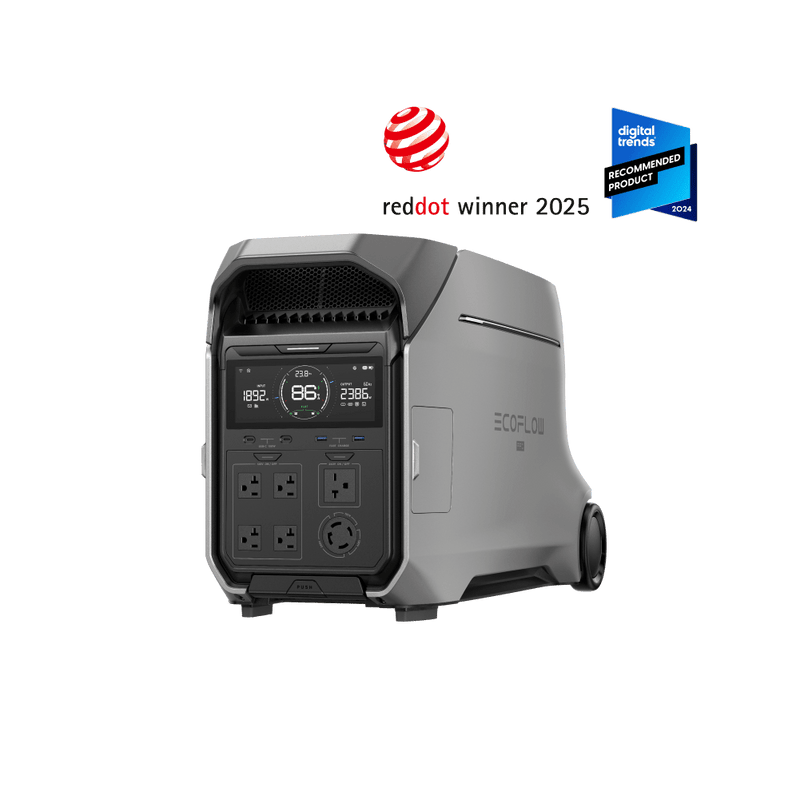
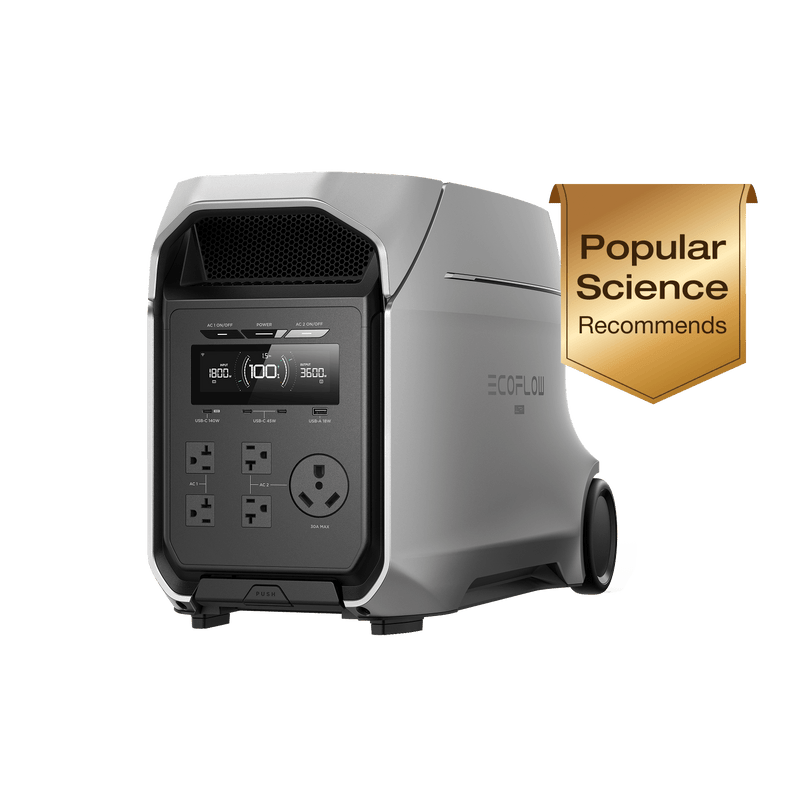
The DELTA Pro 3 is the biggest single unit we list, with 4,096 Wh and 4,000 W. At 52.2 kg (115.1 lb), it is a unit you place once and leave, more home battery than portable station.
Pros
- 4,096 Wh, 4,000 W and 6,000 W surge
- 10 ms UPS
- Expandable to 48,000 Wh
Cons
- 52.2 kg (115.1 lb)
- Solar input not published
- Best for
- Whole-home backup plans
- Skip it if
- Anything portable
Specifications
| Capacity (Wh) | 4,096 |
|---|---|
| AC output (W) | 4,000 |
| Surge (W) | 6,000 |
| Chemistry | LiFePO4 |
| Weight (kg) | 52.2 |
| UPS (ms) | 10 |
| Expandable to (Wh) | 48,000 |
| Warranty (years) | 5 |
For 3 kWh and up only, see power stations of 3,000 Wh and up. Solar bundles in this class are in the best solar generator kits, and outage picks are in the best power stations for home backup.
Frequently asked questions
What can a 2,000 Wh power station run?
A full-size fridge averaging 60 W for about 28 hours (2,000 × 0.85 ÷ 60), or a CPAP, router and lights for several days. The output rating, 2,200-4,000 W here, sets what can run at the same time.
How heavy is a 2 kWh power station?
In our catalog, from 17.9 kg (39.5 lb) for the Jackery Explorer 2000 v2 to 32.7 kg (72.1 lb) for the 2,304 Wh Bluetti AC200PL. Above 3 kWh, weights climb to 27-52 kg.
Is 2,000 Wh enough for home backup?
For essentials through a one-day outage, usually yes. For longer outages, add solar or choose an expandable model or a 3 kWh unit.
Can a 2,000 Wh station run a microwave?
Yes, if its continuous output exceeds the microwave’s draw. Every station here lists 2,200 W or more, which covers most household microwaves.
Based on official spec sheets, manuals and published owner feedback. We have not physically tested every model. How we review.