Portable Solar Panels: Watts, Efficiency, Connectors and Weight
A portable solar panel is a foldable panel that recharges a power station or 12 V battery off-grid. Choose 100 W for light camping and small stations, 200 W or more for stations over 1 kWh, and always check that the panel’s connector and voltage fit your station.
A portable solar panel is a foldable set of solar cells with a kickstand and a cable, built to recharge a power station or a 12 V battery away from the grid. This page explains the specs that matter and compares six panels from our US catalog.
What does a portable solar panel do?
It turns sunlight into DC power that your power station stores for later. The station’s charge controller (MPPT) takes the panel’s output and fills the battery. Plug a panel straight into a phone and you only get what its USB port provides, which is why most people pair panels with a station.
If you would rather buy both in one box, see our solar generator kits.
How many watts should I buy?
Size the panel to refill what you use in one day. A panel rarely delivers its rated watts: heat, sun angle and cable losses usually cut output to about 70-80 percent. Using 75 percent and 5 peak sun hours:
- 100 W panel: 100 × 0.75 × 5 ≈ 375 Wh per day.
- 200 W panel: 200 × 0.75 × 5 ≈ 750 Wh per day.
- 400 W (two 200 W panels): ≈ 1,500 Wh per day.
Peak sun hours vary a lot across the US and through the year. Our guide on how many solar watts you need gives approximate regional values.
Which specs matter most?
Wattage, weight, connector and water rating matter more than the headline efficiency.
- Efficiency (%): how much sunlight becomes power. Higher efficiency means a smaller, lighter panel for the same watts. Our six picks range from 23 to 26.7 percent.
- Weight per 100 W: the fairest portability metric. The FlexSolar 100 W weighs 1.9 kg (4.2 lb); the Jackery SolarSaga 200W works out to 6.5 ÷ 2 = 3.25 kg (7.2 lb) per 100 W.
- IP rating: IP67 and IP68 resist immersion, IP65 resists water jets.
- Bifacial: the Jackery SolarSaga 200W is the only panel in this table listed as bifacial. The extra yield depends on reflective ground, so we do not put a number on it.
- Open-circuit voltage (Voc): none of these listings publish it. Voc decides whether a panel, or two in series, stays inside your station’s solar input limits, so check the label on the panel or the manual.
Which connector do I need?
Match the panel’s plug to your station’s solar port, or budget for an adapter. The common types are XT60, DC7909 (8 mm), DC5521, Anderson, MC4 and Jackery’s DC8020.
- Panels with multi-plug cables, like the FlexSolar (DC5521, DC7909, Anderson, XT60) or HQST (XT60, DC7909, DC5521), fit the widest range of stations.
- The Renogy panels list MC4 output only, so most stations need an MC4 adapter cable.
- The Jackery SolarSaga 200W uses DC8020, designed for Jackery stations; other brands need an adapter.
If a panel connects but the station shows no input, the cause is often voltage, shade or the connector. Our not charging from solar troubleshooting guide goes through each case.
How do the main panels compare?
These six panels cover light 100 W units and full 200 W units. Figures come from each Amazon listing; empty cells are not published there.
| Model | Power (W) | Efficiency (%) | Weight (kg) | IP rating | Connector | Warranty (years) | WilderWatt score | Best for | |
|---|---|---|---|---|---|---|---|---|---|
| 100 | 25 | 4 | IP67 | MC4 | 3 | 8.5 | Best warranty at 100 W | ||
| 100 | 25 | 2.7 | IP67 | XT60, DC7909, DC5521 | — | 8.5 | Light and versatile | ||
| 100 | 23 | 1.9 | IP67 | DC5521, DC7909, Anderson, XT60 | — | 9 | Lightest | ||
| 200 | 25 | 6.3 | — | MC4 | 2 | 8 | 200 W with USB ports | ||
| 200 | 26.7 | 6.5 | IP68 | DC8020 | 5 | 9.5 | Highest efficiency | ||
| 200 | 25 | 6.3 | IP65 | XT60, DC7909 | — | 8 | 200 W with XT60 |
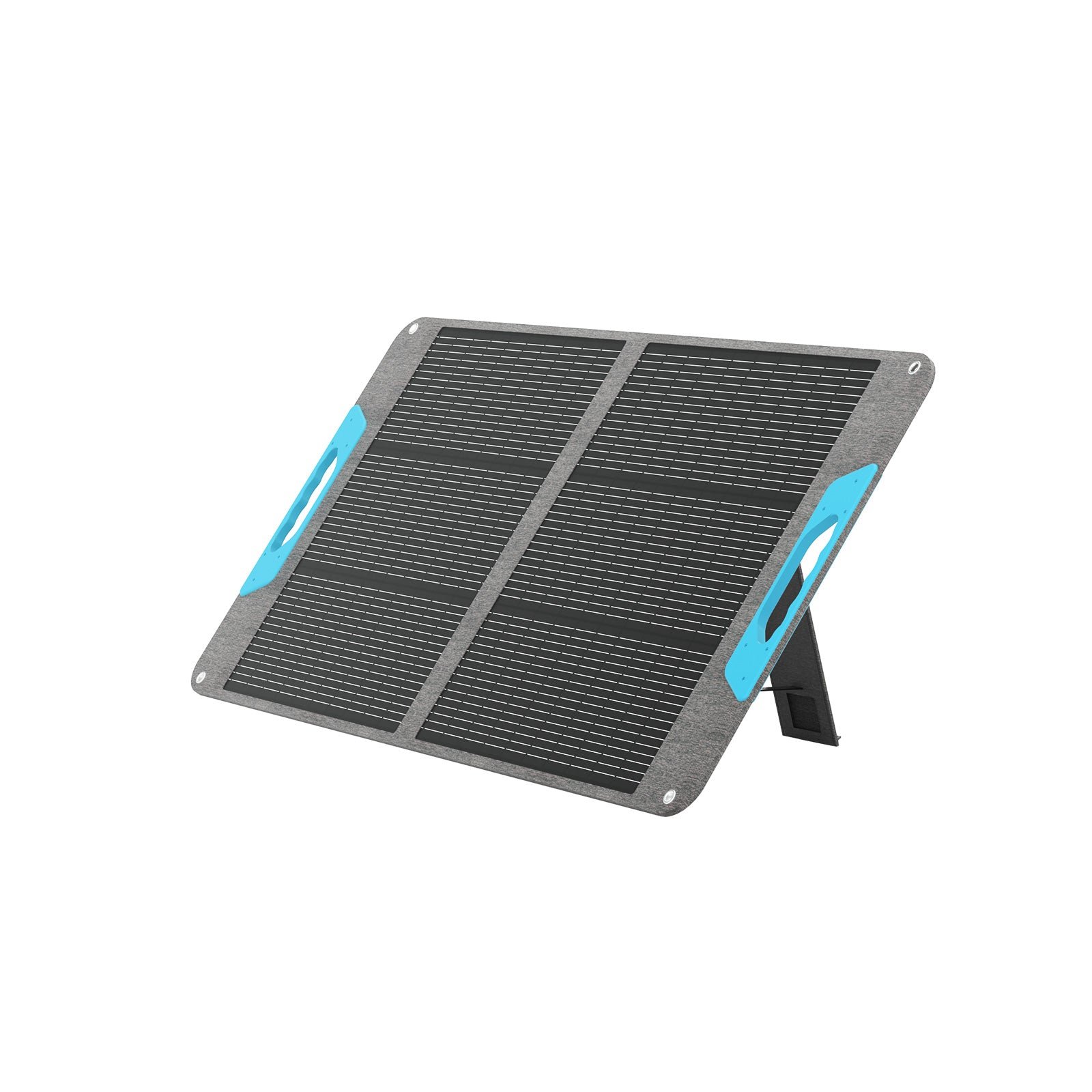
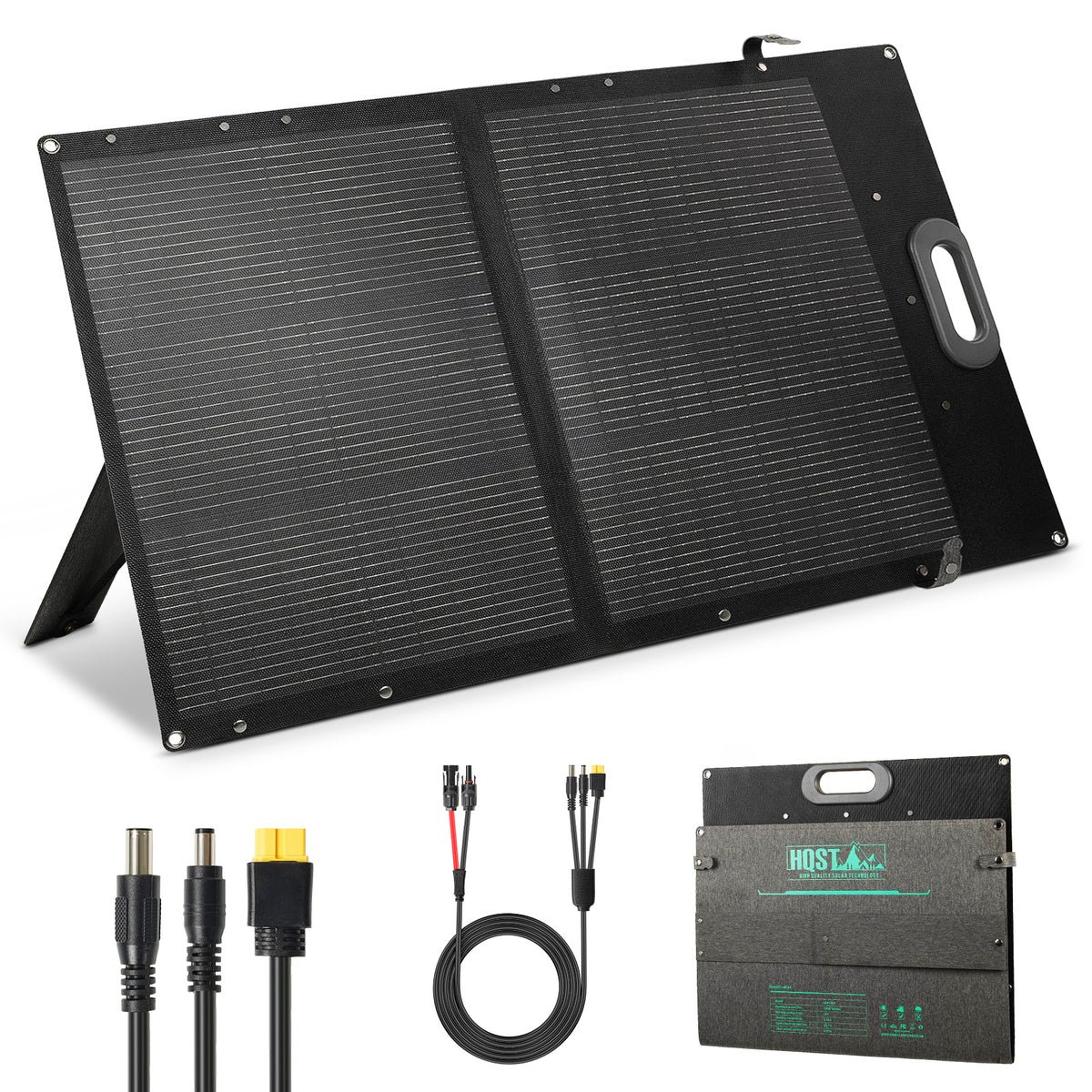
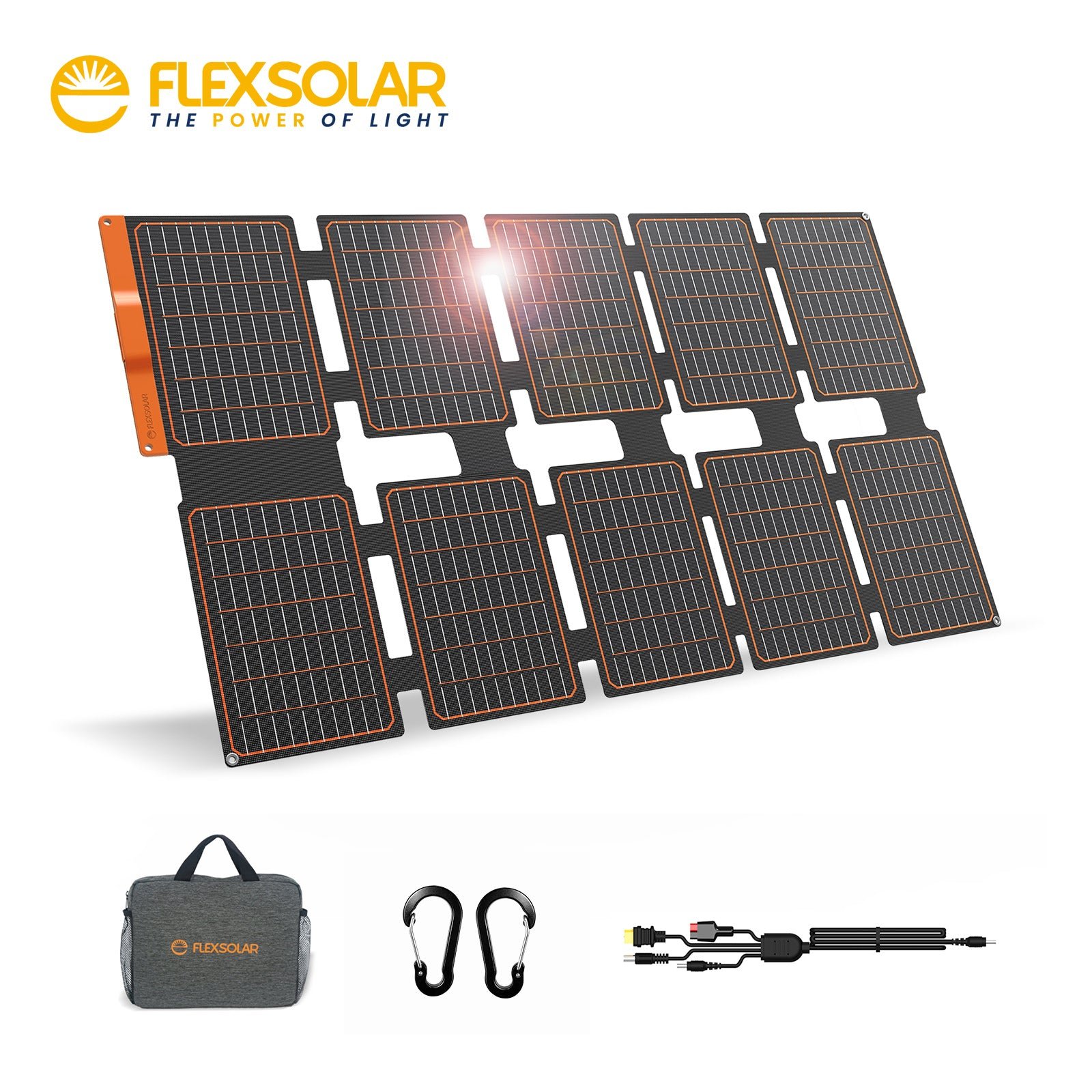

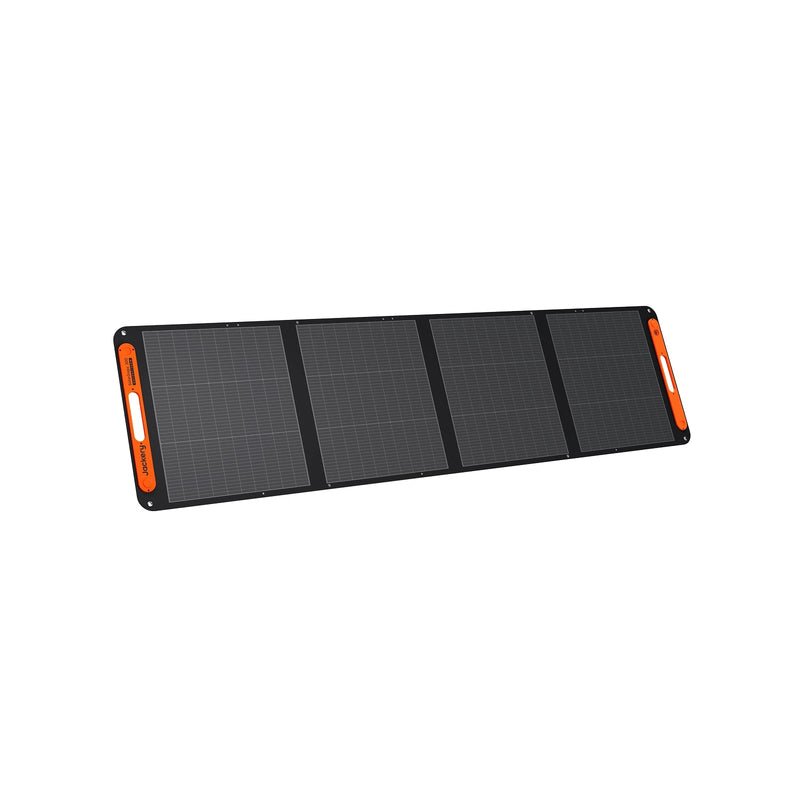
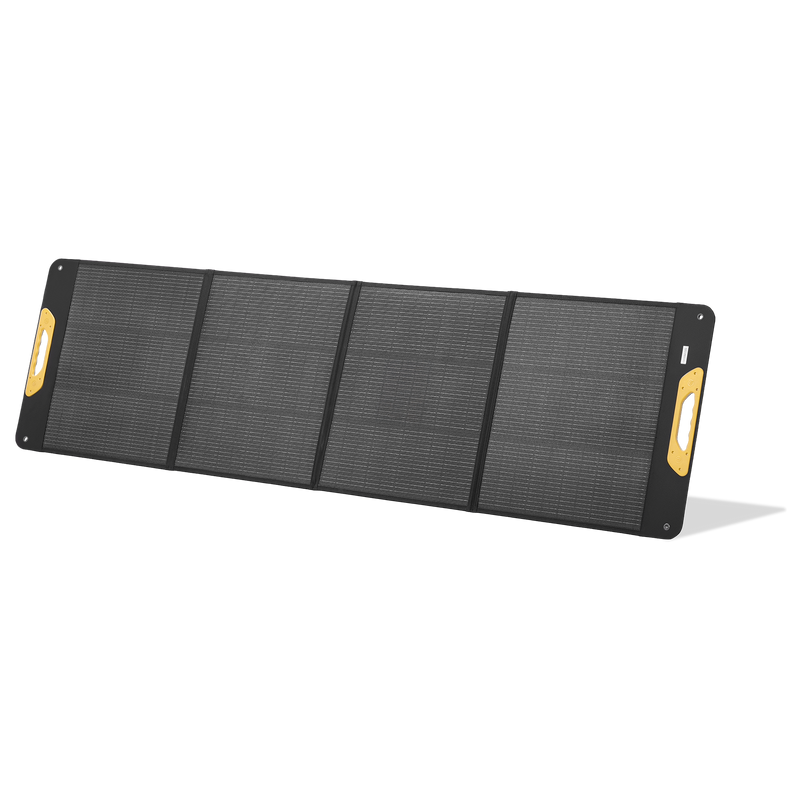
(affiliate link) · Data from the Amazon listing; offers may change.
The biggest spread is weight. At 100 W, the FlexSolar weighs 1.9 kg (4.2 lb) and the Renogy 4.0 kg (8.8 lb), more than twice as much, while both list IP67. The 200 W panels sit close together at 6.3-6.5 kg (13.9-14.3 lb).
Which panel size fits my station?
Aim for panel watts equal to at least 20 percent of your station’s watt-hours. That ratio refills the battery in about one sunny day. Some quick pairings:
- Up to about 700 Wh (for example the Grecell H1200): one 200 W panel, or two 100 W panels. 672 ÷ (200 × 0.75) ≈ 4.5 peak sun hours.
- About 1 kWh (for example the EcoFlow DELTA 3): 200-400 W. With 200 W, 1,024 ÷ 150 ≈ 6.8 peak sun hours.
- 2 kWh and up: 400 W or more, within your station’s maximum solar input and voltage range.
Where should I go next?
- The 7 best portable solar panels, ranked with pros, cons and connector notes.
- Best solar panels for camping, where weight and folding size come first.
- Full review: Renogy EFLEX 200W.
- Need a station to go with it? Start at portable power stations or run your numbers in the solar calculator.
All about portable solar panels
Rankings and picks
- The Best Portable Solar Panels for Camping in 2026The best portable solar panels for camping, ranked by weight per watt, water rating and connectors, with daily energy math for phones and stations.
- The Best 100W Portable Solar Panels: 4 Models ComparedAll four 100W portable solar panels in our US catalog compared on weight, efficiency, connectors and warranty, with daily energy and recharge-time math.
- The Best 200W Portable Solar Panels: 5 Models ComparedAll five 200W portable solar panels in our US catalog compared on efficiency, weight, IP rating, connectors and warranty, with daily energy math.
- The Best Portable Solar Panels for RVs in 2026The best portable solar panels for RVs and trailers, compared on efficiency, weight, connectors and weather rating, with daily energy math for each size.
- The 7 Best Portable Solar Panels of 2026The 7 best portable solar panels of 2026, 100 W and 200 W, compared on efficiency, weight, IP rating and connectors, with daily energy math for each.
Comparisons
Guides and calculators
- How Many Solar Watts Do I Need? Peak Sun Hours, Formula and ExamplesHow many solar panel watts you need for a power station: US peak sun hours by region, one simple formula, worked examples and series vs parallel limits.
- Solar Panels in Series vs Parallel: How to Connect Two or More Portable PanelsSeries vs parallel for portable solar panels: how each changes voltage and current, staying inside station limits, cold-weather Voc and shade.
Troubleshooting and care
Frequently asked questions
How much power does a 100 W portable solar panel really produce?
In good sun, expect about 70-80 W, not the full 100 W. Over a day with 5 peak sun hours that is roughly 375 Wh.
Will any portable solar panel work with my power station?
Only if the connector matches (or you use an adapter) and the panel’s voltage falls inside the station’s solar input range. Check both before buying.
Is a higher efficiency panel better?
It is smaller and lighter for the same watts, but it does not produce more than its wattage rating. Compare watts first, then efficiency and weight.
Can portable solar panels get wet?
Panels rated IP67 or IP68 resist dust and water immersion, IP65 handles rain splashes. Keep the connection points and any USB ports dry either way.
What is a bifacial panel?
A panel that also captures light reflected onto its back side. The gain depends on the ground under it, so treat it as a bonus, not a guaranteed figure.