
The 8 Best Portable Power Stations of 2026
- Data from official spec sheets
- Public scoring formula
- No paid placements
The EcoFlow DELTA 3 is the best portable power station for most people: 1,024 Wh of LiFePO4, 1,800 W output and 500 W solar input at 12.5 kg. For 2 kWh at a liftable weight, pick the Jackery Explorer 2000 v2. For whole-home backup with heavy solar, the Anker SOLIX F3000.
On this page (9)
- How do the 8 stations compare?
- Which one fits your situation?
- The 8 best portable power stations, reviewed
- How fast can each station refill from solar?
- What does 120 V mean for US buyers?
- How do I choose the right portable power station?
- What are the most common buying mistakes?
- How do they rank by price tier?
- What is our verdict?
The EcoFlow DELTA 3 is the best portable power station for most people, with 1,024 Wh of LiFePO4 storage, 1,800 W of AC output and 500 W of solar input in a 12.5 kg (27.6 lb) box. If you need twice the energy and can still carry it, the Jackery Explorer 2000 v2 packs 2,042 Wh into 17.9 kg (39.5 lb). For whole-home backup with a big solar array, the Anker SOLIX F3000 is the one to beat.
We ranked eight stations sold on Amazon.com using only the specs on each official listing. We have not bench-tested them. Where a listing leaves out a figure, such as surge or UPS time, we say so rather than guess.
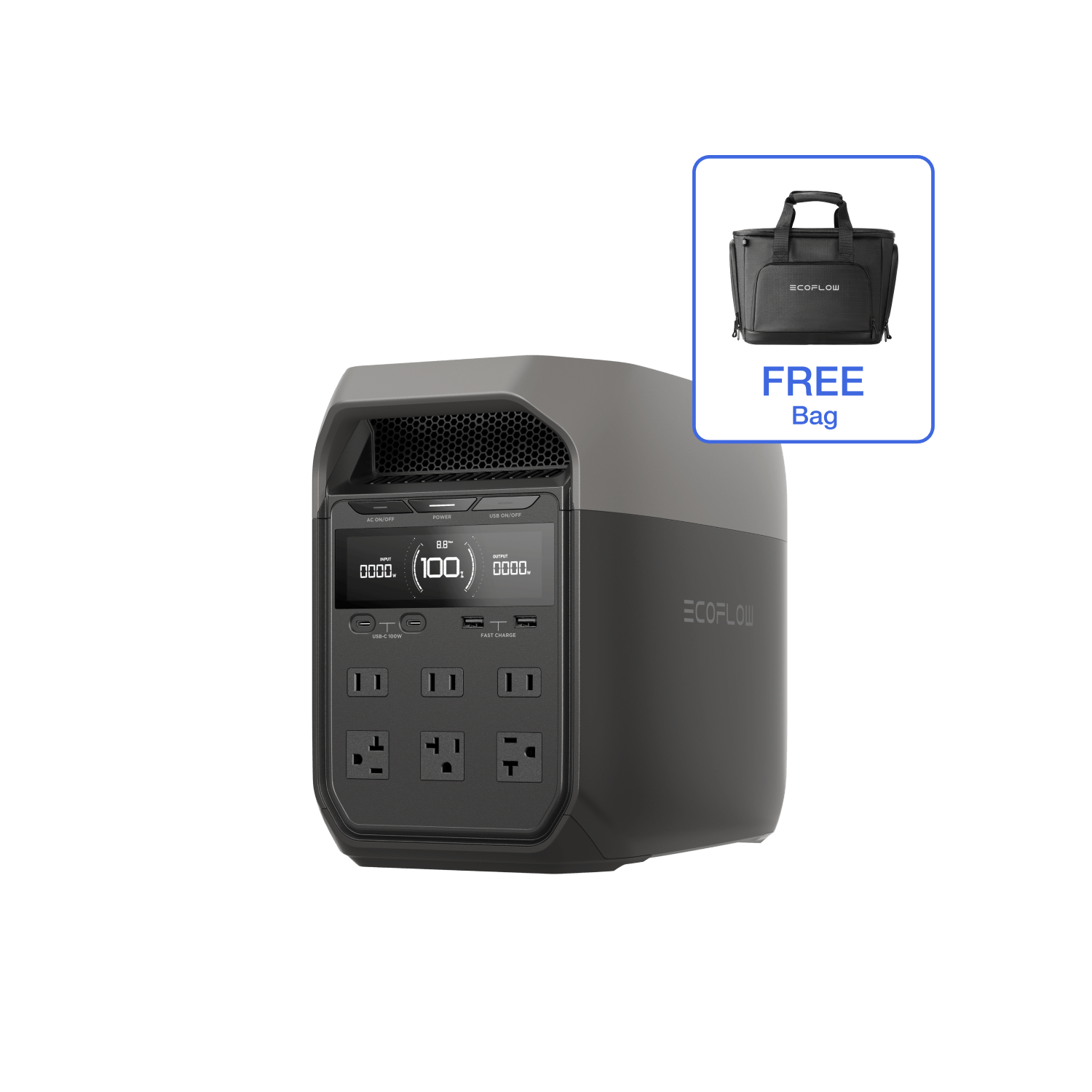
EcoFlow DELTA 3
1,024 Wh · 1,800 W
1,024 Wh, 1,800 W and 500 W solar input at 12.5 kg (27.6 lb), expandable to 5,000 Wh.
The catch: The listing does not declare a UPS switchover time.
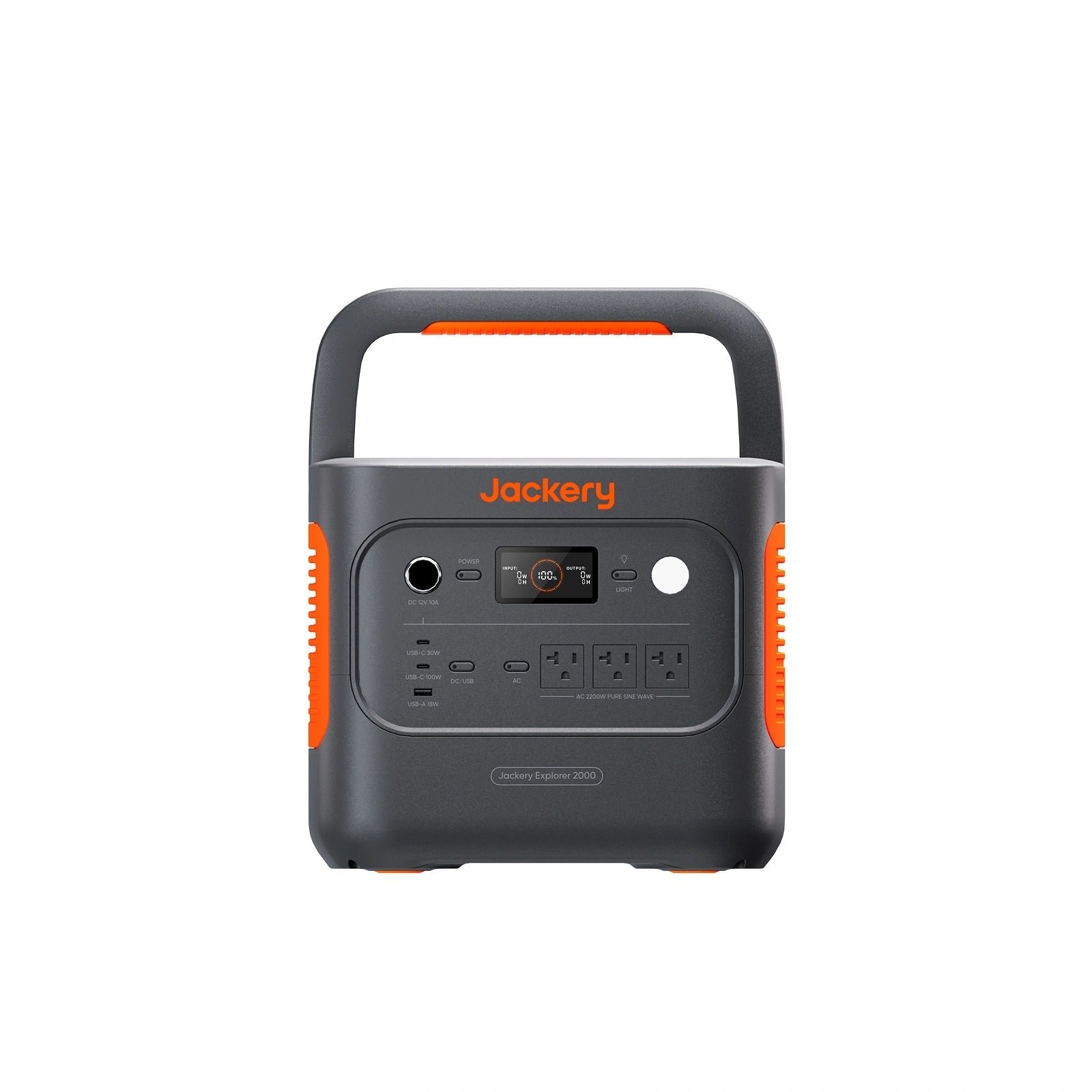
Jackery Explorer 2000 v2
2,042 Wh · 2,200 W
2,042 Wh at 17.9 kg (39.5 lb): about 114 Wh per kg, the densest in this list, with a 20 ms UPS.
The catch: Solar input, surge and cycle life are not published on the listing.
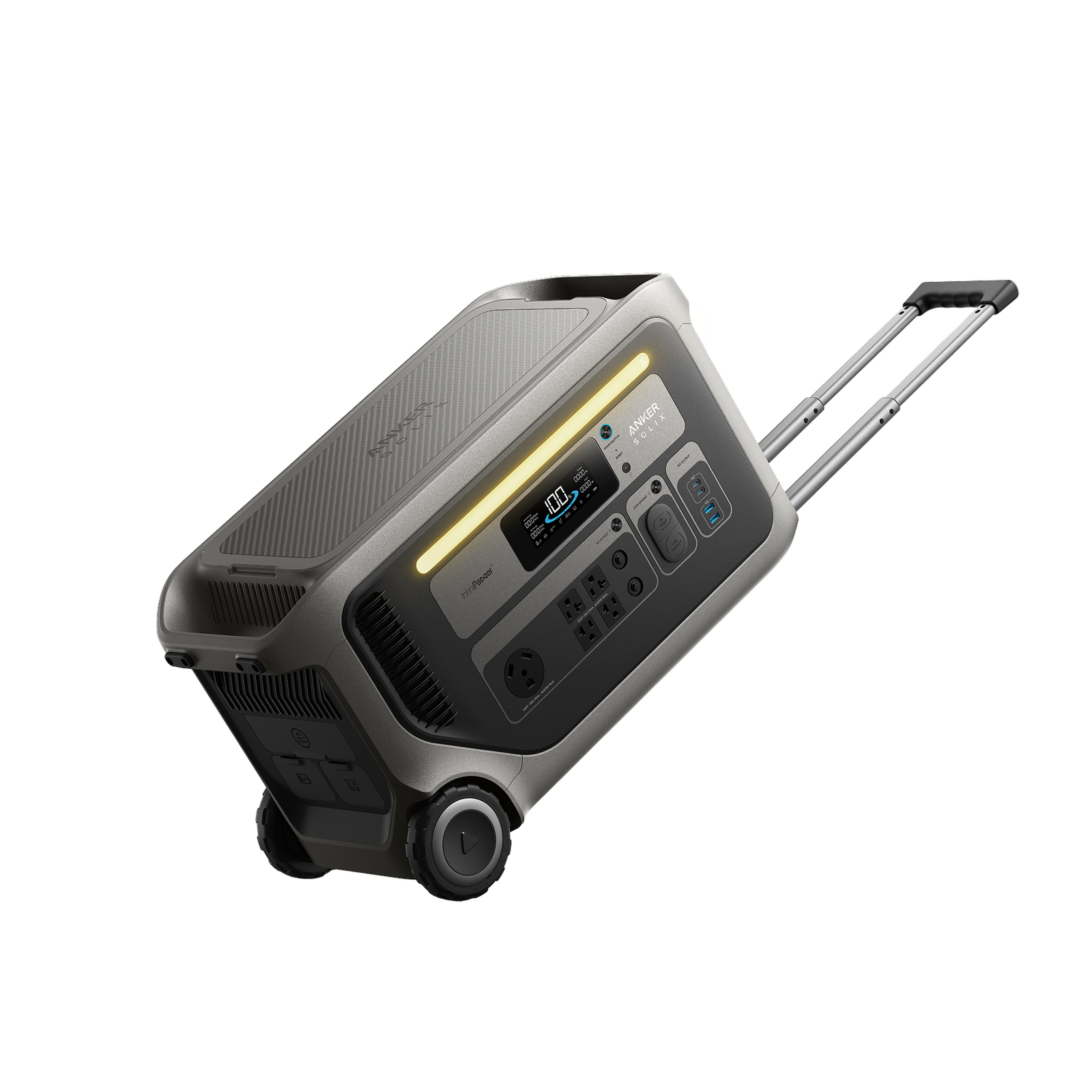
Anker SOLIX F3000
3,072 Wh · 3,600 W
3,072 Wh and 3,600 W, 2,400 W of solar input and expansion up to 24,000 Wh.
The catch: Weighs 41.5 kg (91.5 lb) and the listing does not state a UPS time.
How do the 8 stations compare?
They span 672 Wh to 3,072 Wh and 1,200 W to 3,600 W of continuous output. All eight use LiFePO4 cells and output US-standard 120 V AC. Empty cells mean the manufacturer does not publish that figure on the listing.
| Model | Capacity (Wh) | AC output (W) | Surge (W) | UPS (ms) | Weight (kg) | Max solar input (W) | WilderWatt score | Best for | |
|---|---|---|---|---|---|---|---|---|---|
| 1,024 | 1,800 | 3,600 | — | 12.5 | 500 | 8.5 | Most people | |
| 2,042 | 2,200 | — | 20 | 17.9 | — | 9 | Light 2 kWh | ||
| 3,072 | 3,600 | — | — | 41.5 | 2,400 | 9 | Whole-home backup | ||
| 2,048 | 3,000 | 3,800 | 10 | 22.2 | — | 9 | High output | ||
| 672 | 1,200 | — | 10 | 9.5 | 400 | 8.5 | Compact camping | ||
| 3,072 | 3,600 | 7,200 | 10 | 33.6 | — | 9 | 3 kWh with UPS | ||
| 2,048 | 2,400 | — | 15 | — | — | 8.5 | Expandable 2 kWh | ||
| 2,304 | 2,400 | 3,600 | 10 | 32.7 | 1,200 | 9.5 | Big solar input |
(affiliate link) · Data from the Amazon listing; offers may change.
Here is what the capacity means in practice. We use capacity × 0.85 to account for typical inverter and conversion losses, then divide by the load.
| Station | Wh/kg | 45 W fridge | 60 W CPAP |
|---|---|---|---|
| Grecell H1200 (672 Wh, 9.5 kg) | 672 ÷ 9.5 ≈ 71 | ≈ 12.7 h | ≈ 9.5 h |
| EcoFlow DELTA 3 (1,024 Wh, 12.5 kg) | ≈ 82 | ≈ 19.3 h | ≈ 14.5 h |
| Jackery Explorer 2000 v2 (2,042 Wh, 17.9 kg) | ≈ 114 | ≈ 38.6 h | ≈ 28.9 h |
| EcoFlow DELTA 3 Max Plus (2,048 Wh, 22.2 kg) | ≈ 92 | ≈ 38.7 h | ≈ 29.0 h |
| Growatt INFINITY 2000 Pro (2,048 Wh) | weight not published | ≈ 38.7 h | ≈ 29.0 h |
| Bluetti AC200PL (2,304 Wh, 32.7 kg) | ≈ 70 | ≈ 43.5 h | ≈ 32.6 h |
| EcoFlow DELTA 3 Ultra Plus (3,072 Wh, 33.6 kg) | ≈ 91 | ≈ 58.0 h | ≈ 43.5 h |
| Anker SOLIX F3000 (3,072 Wh, 41.5 kg) | ≈ 74 | ≈ 58.0 h | ≈ 43.5 h |
Which one fits your situation?
Match the station to your main use, not to the biggest number. Tap a card to jump to the full entry.
Pick by what you need
- One station that handles most jobsEcoFlow DELTA 3
- 2 kWh you can still carryJackery Explorer 2000 v2
- Whole-home backup with lots of solarAnker SOLIX F3000
- Running 3,000 W loads like toolsEcoFlow DELTA 3 Max Plus
- Smallest and lightest AC unit hereGrecell H1200
- Four AC outlets and 1,200 W solar inputBluetti AC200PL
The 8 best portable power stations, reviewed
The DELTA 3 earns the top spot because it has no weak link in the numbers that matter most. According to the listing, it stores 1,024 Wh in LiFePO4 cells rated for 4,000 cycles and delivers 1,800 W continuous with a 3,600 W surge. That matches a standard 15 A household circuit (120 V × 15 A = 1,800 W), so almost anything you plug into a wall outlet will run.
Its 500 W solar input is about half its capacity, a strong ratio: with 500 W of panels producing a realistic 75 percent, a refill takes about 1,024 ÷ 375 ≈ 2.7 peak sun hours. At 12.5 kg (27.6 lb), density is about 82 Wh/kg. The gap is UPS: the listing does not state a switchover time, so do not rely on it for a desktop PC.
Pros
- 1,800 W continuous and 3,600 W surge cover a microwave, kettle or power tool
- 500 W solar input: about 2 hours of ideal sun for a full charge (1,024 ÷ 500)
- Expandable to 5,000 Wh, 4,000 cycles and a 5-year warranty
Cons
- The listing does not declare a UPS switchover time
- 1 kWh runs a full-size fridge for about a day, not through a long outage
- Best for
- Camping trips, van weekends, job sites and short outages
- Skip it if
- Multi-day outages or anyone who needs a guaranteed UPS
Specifications
| Capacity (Wh) | 1,024 |
|---|---|
| AC output (W) | 1,800 |
| Surge (W) | 3,600 |
| Chemistry | LiFePO4 |
| Cycles | 4,000 |
| Weight (kg) | 12.5 |
| Max solar input (W) | 500 |
| Expandable to (Wh) | 5,000 |
| Warranty (years) | 5 |
The Explorer 2000 v2 is the station to get when 1 kWh is not enough but you still want to lift it into a car. It holds 2,042 Wh and weighs 17.9 kg (39.5 lb), which works out to 2,042 ÷ 17.9 ≈ 114 Wh/kg. The DELTA 3 Max Plus, with the same capacity class, weighs 4.3 kg (9.5 lb) more.
Output is 2,200 W continuous through 3 AC outlets, and the listing declares a 20 ms UPS switchover and a 102-minute AC recharge. That is enough to run a 45 W fridge for about 38 hours. The honest drawback is missing data: the listing does not publish maximum solar input, surge watts or cycle count, so you cannot plan a big array from the listing alone.
Pros
- 2,042 Wh at 17.9 kg (39.5 lb): about 114 Wh per kg, the best ratio in this list
- 20 ms UPS switchover declared on the listing
- Full AC recharge in 102 minutes and a 5-year warranty
Cons
- Solar input, surge rating and cycle life are not published on the listing
- Only 3 AC outlets for a 2,200 W station
- Best for
- RV trips, long camping weekends and fridge backup you can move by hand
- Skip it if
- Buyers who want to size a large solar array from published specs
Specifications
| Capacity (Wh) | 2,042 |
|---|---|
| AC output (W) | 2,200 |
| Chemistry | LiFePO4 |
| Weight (kg) | 17.9 |
| AC outlets | 3 |
| Full wall charge (min) | 102 |
| UPS (ms) | 20 |
| Warranty (years) | 5 |
The F3000 is built to stay put. It stores 3,072 Wh, outputs 3,600 W continuous and accepts up to 2,400 W of solar, the highest solar input of the eight. Its expansion ceiling of 24,000 Wh is more than twice that of the DELTA 3 Ultra Plus (11,000 Wh).
That capacity runs a 45 W fridge for about 58 hours (3,072 × 0.85 ÷ 45). The trade-offs are weight, at 41.5 kg (91.5 lb) or about 74 Wh/kg, and two blanks on the listing: surge watts and UPS switchover time. If you need a documented UPS for medical or computer equipment, compare it with the DELTA 3 Ultra Plus in our DELTA 3 Ultra Plus vs F3000 comparison.
Pros
- 3,072 Wh and 3,600 W continuous for large household loads
- 2,400 W solar input: a full refill in about 1.3 hours of ideal sun (3,072 ÷ 2,400)
- Expandable up to 24,000 Wh with a 5-year warranty
Cons
- 41.5 kg (91.5 lb): the heaviest station here
- No UPS switchover time or surge rating on the listing
- Best for
- Homes that want days of backup and a serious solar array
- Skip it if
- Camping, or anyone who needs to carry the unit without wheels
Specifications
| Capacity (Wh) | 3,072 |
|---|---|
| AC output (W) | 3,600 |
| Chemistry | LiFePO4 |
| Weight (kg) | 41.5 |
| Max solar input (W) | 2,400 |
| Expandable to (Wh) | 24,000 |
| Warranty (years) | 5 |
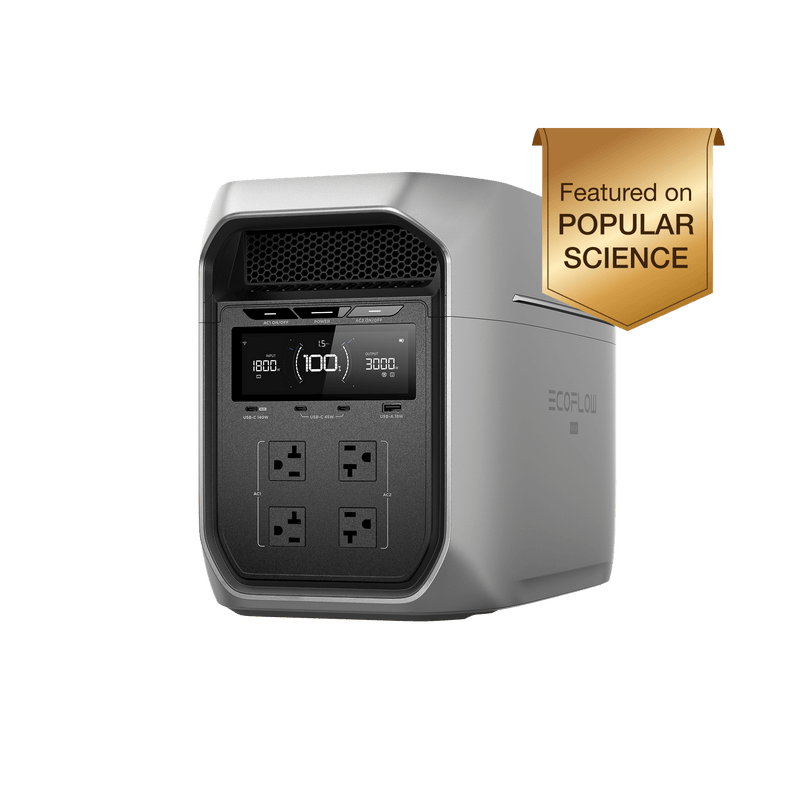
The DELTA 3 Max Plus is the pick when output matters more than weight. It delivers 3,000 W continuous from a 2,048 Wh battery, the highest continuous output of any 2 kWh station in this list. That headroom lets you run a power tool and a kettle together without tripping the inverter.
It also declares a 10 ms UPS switchover and expands to 10,000 Wh. At 22.2 kg (48.9 lb) it lands at about 92 Wh/kg, good but behind the Jackery 2000 v2. If you are choosing between those two, our Jackery 2000 v2 vs DELTA 3 Max Plus comparison goes point by point.
Pros
- 3,000 W continuous and 3,800 W surge in a 2 kWh station
- 10 ms UPS switchover declared on the listing
- Expandable from 2,048 Wh up to 10,000 Wh
Cons
- 22.2 kg (48.9 lb), 4.3 kg heavier than the Jackery 2000 v2
- Solar input and cycle count are not published on the listing
- Best for
- Workshops, RVs with a microwave or AC unit, and 2 kWh home backup
- Skip it if
- Anyone who carries the station often or wants to size solar from the listing
Specifications
| Capacity (Wh) | 2,048 |
|---|---|
| AC output (W) | 3,000 |
| Surge (W) | 3,800 |
| Chemistry | LiFePO4 |
| Weight (kg) | 22.2 |
| UPS (ms) | 10 |
| Expandable to (Wh) | 10,000 |
| Warranty (years) | 5 |
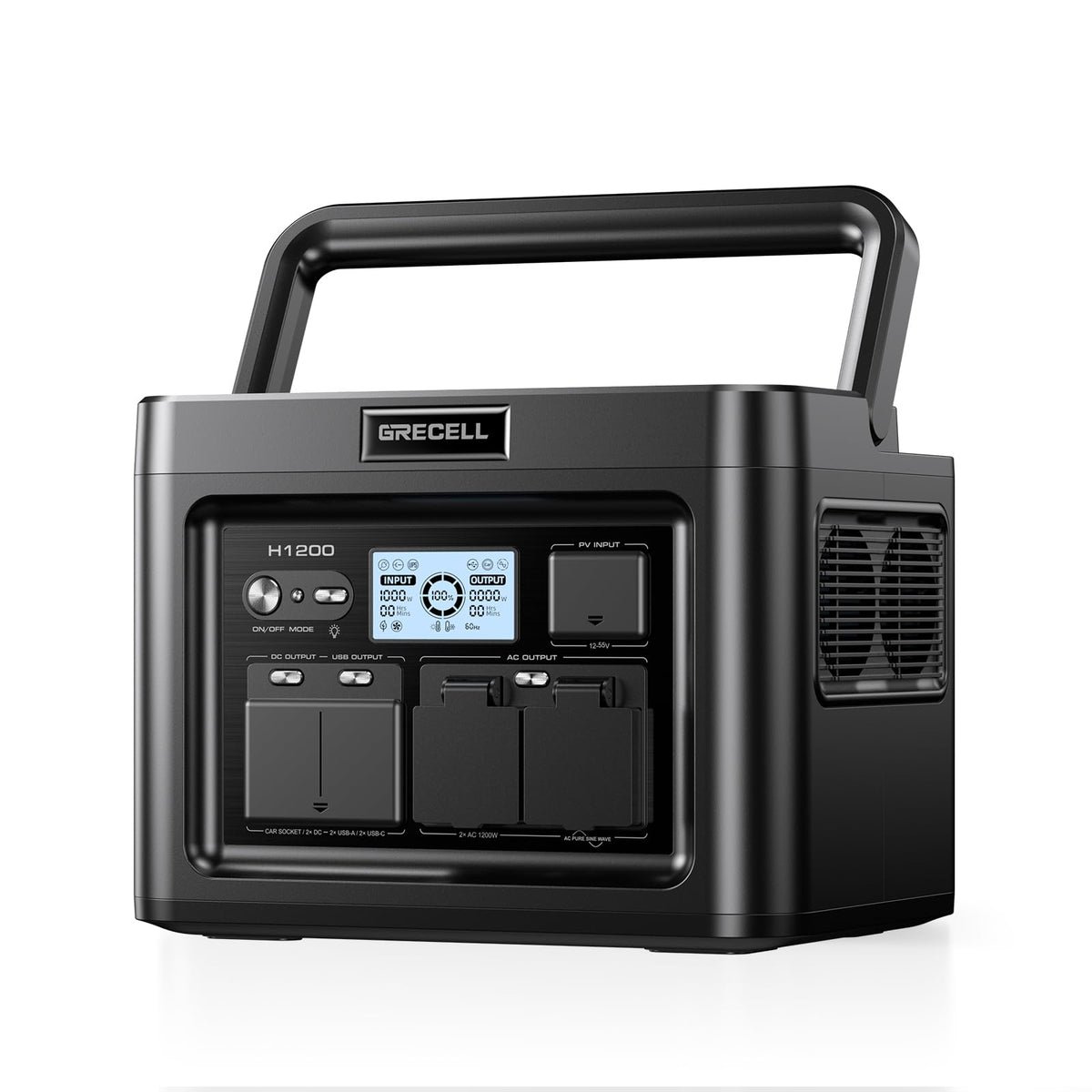
The H1200 is the smallest AC station in our US catalog, and that is the reason it is here. It stores 672 Wh in LiFePO4 cells rated for 3,000 cycles and outputs 1,200 W continuous through 2 AC outlets, with 2 USB-C ports alongside. The listing also declares a 10 ms UPS and a 78-minute wall recharge.
The 400 W solar input is generous for its size: 672 ÷ (400 × 0.75) ≈ 2.2 peak sun hours to refill. The catches are a 2-year warranty and modest density (about 71 Wh/kg). At 9.5 kg (20.9 lb) it is compact, not ultralight: if you hike to camp, pair a small panel with a power bank instead.
Pros
- 9.5 kg (20.9 lb): the lightest AC station in this list
- 10 ms UPS and a 78-minute AC recharge
- 400 W solar input on a 672 Wh battery, a 0.60 ratio
Cons
- 2-year warranty, against 5 years for most rivals here
- Only 2 AC outlets and 672 Wh of capacity
- Best for
- Weekend camping, a CPAP for a night or two, a home office UPS
- Skip it if
- Running a full-size fridge through an outage or backpacking
Specifications
| Capacity (Wh) | 672 |
|---|---|
| AC output (W) | 1,200 |
| Chemistry | LiFePO4 |
| Cycles | 3,000 |
| Weight (kg) | 9.5 |
| AC outlets | 2 |
| USB-C ports | 2 |
| Max solar input (W) | 400 |
| Full wall charge (min) | 78 |
| UPS (ms) | 10 |
| Warranty (years) | 2 |
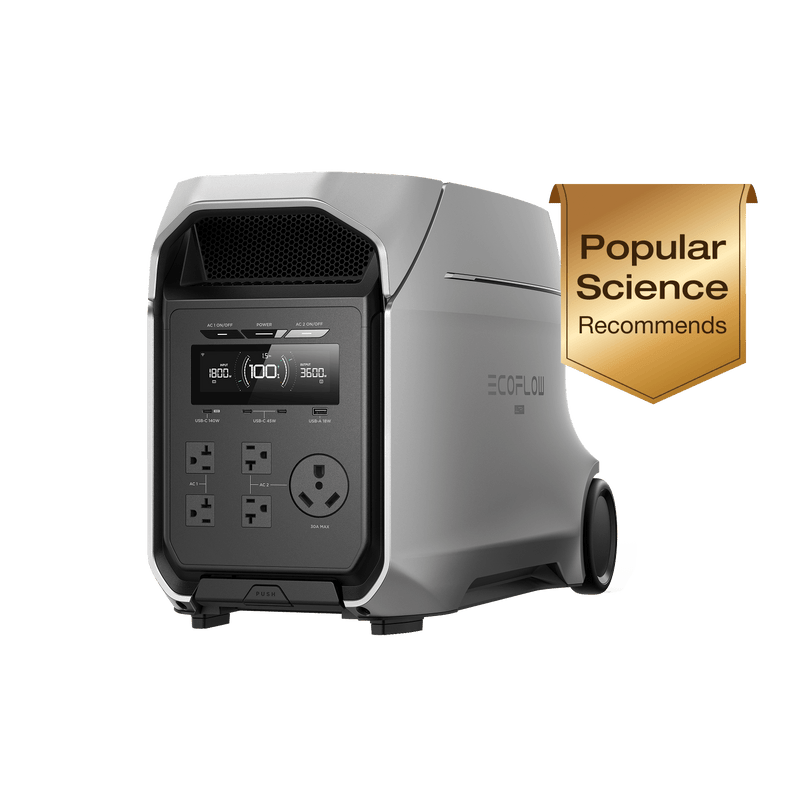
The DELTA 3 Ultra Plus is the documented-UPS alternative to the F3000. Both hold 3,072 Wh and deliver 3,600 W, but EcoFlow’s listing adds a 7,200 W surge rating and a 10 ms UPS switchover. Surge matters for well pumps, fridges and compressors that briefly pull several times their running watts.
It is also lighter, at 33.6 kg (74.1 lb) or about 91 Wh/kg. Runtime on a 60 W CPAP is about 43.5 hours (3,072 × 0.85 ÷ 60). The listing does not publish solar input or cycle life, and expansion tops out at 11,000 Wh.
Pros
- 3,600 W continuous and 7,200 W surge for motor-driven appliances
- 10 ms UPS switchover declared on the listing
- 33.6 kg (74.1 lb): 7.9 kg lighter than the F3000 for the same 3,072 Wh
Cons
- Maximum solar input is not published on the listing
- Expansion stops at 11,000 Wh, against 24,000 Wh for the F3000
- Best for
- Home backup where computers or medical devices must not blink
- Skip it if
- Buyers planning a large solar array from listing specs alone
Specifications
| Capacity (Wh) | 3,072 |
|---|---|
| AC output (W) | 3,600 |
| Surge (W) | 7,200 |
| Chemistry | LiFePO4 |
| Weight (kg) | 33.6 |
| UPS (ms) | 10 |
| Expandable to (Wh) | 11,000 |
| Warranty (years) | 5 |

The INFINITY 2000 Pro offers solid core numbers: 2,048 Wh of LiFePO4 rated for 4,000 cycles, 2,400 W continuous and a 15 ms EPS (emergency power supply) switchover. That runs a 45 W fridge for about 38.7 hours. Expansion to 6,144 Wh is possible, according to the listing.
It ranks lower because too much is missing. The standalone listing does not publish weight, surge or solar input, so we cannot compute density or refill time. The bundle listing for the same unit does state a 3,100 W starting wattage; see our solar generator kits page.
Pros
- 2,400 W continuous from 2,048 Wh
- 15 ms EPS switchover declared on the listing
- 4,000 cycles, 5-year warranty and expansion to 6,144 Wh
Cons
- The listing does not publish the weight
- Solar input and surge are missing from the standalone listing
- Best for
- 2 kWh home backup where the unit mostly stays in one place
- Skip it if
- Anyone who needs to know the carry weight before buying
Specifications
| Capacity (Wh) | 2,048 |
|---|---|
| AC output (W) | 2,400 |
| Chemistry | LiFePO4 |
| Cycles | 4,000 |
| UPS (ms) | 15 |
| Expandable to (Wh) | 6,144 |
| Warranty (years) | 5 |
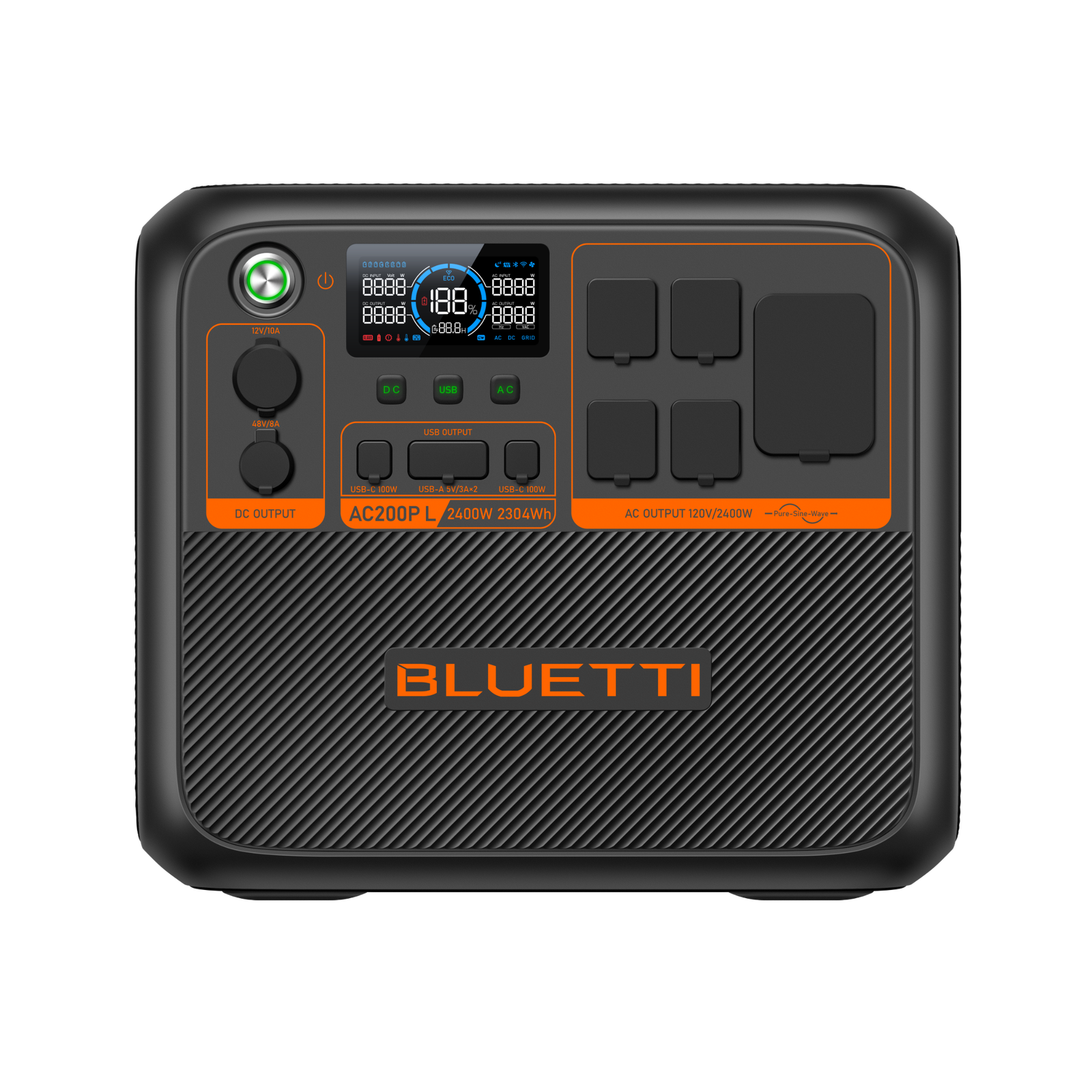
The AC200PL is the most completely documented station in this list: every spec we track is published except USB-C port count and AC charge time. It offers 2,304 Wh, 2,400 W continuous with a 3,600 W surge, 4 AC outlets, a 10 ms UPS and 1,200 W of solar input.
That solar figure is its strength. With 1,200 W of panels at 75 percent real output, a refill takes about 2,304 ÷ 900 ≈ 2.6 peak sun hours. The drawback is weight: 32.7 kg (72.1 lb), almost as much as the 33.6 kg DELTA 3 Ultra Plus, which stores 768 Wh more.
Pros
- 1,200 W solar input: 2,304 ÷ 1,200 ≈ 1.9 hours of ideal sun for a full charge
- 4 AC outlets and a 10 ms UPS
- Expandable to 8,448 Wh with a 5-year warranty
Cons
- 32.7 kg (72.1 lb): about 70 Wh per kg, the lowest density here
- 3,000 cycles, against 4,000 for the DELTA 3 and Growatt
- Best for
- Fixed setups with several appliances and a big solar array
- Skip it if
- Anyone who will lift it regularly
Specifications
| Capacity (Wh) | 2,304 |
|---|---|
| AC output (W) | 2,400 |
| Surge (W) | 3,600 |
| Chemistry | LiFePO4 |
| Cycles | 3,000 |
| Weight (kg) | 32.7 |
| AC outlets | 4 |
| Max solar input (W) | 1,200 |
| UPS (ms) | 10 |
| Expandable to (Wh) | 8,448 |
| Warranty (years) | 5 |
How fast can each station refill from solar?
The ratio of solar input to capacity tells you how quickly the sun can top it up. We divide capacity by maximum solar input for an ideal-sun figure, then by 75 percent of that input for a realistic one. Only five of the eight listings publish solar input.
| Station | Max solar input | Ideal hours (Wh ÷ W) | Realistic hours (Wh ÷ W × 0.75) |
|---|---|---|---|
| Grecell H1200 | 400 W | 672 ÷ 400 ≈ 1.7 | ≈ 2.2 |
| EcoFlow DELTA 3 | 500 W | 1,024 ÷ 500 ≈ 2.0 | ≈ 2.7 |
| Bluetti AC200PL | 1,200 W | 2,304 ÷ 1,200 ≈ 1.9 | ≈ 2.6 |
| Anker SOLIX F3000 | 2,400 W | 3,072 ÷ 2,400 ≈ 1.3 | ≈ 1.7 |
These are peak sun hours with the full input wattage of panels connected, which few people own. With a single 200 W panel, the DELTA 3 needs about 1,024 ÷ 150 ≈ 6.8 peak sun hours instead. The Jackery 2000 v2, DELTA 3 Max Plus, DELTA 3 Ultra Plus and Growatt listings do not publish solar input, so check the manual before buying panels for them.
What does 120 V mean for US buyers?
All eight stations output standard US 120 V AC, so ordinary plugs work without adapters. The limit to watch is continuous watts. A typical 15 A household circuit supplies 1,800 W (120 V × 15 A), and anything you run from a normal outlet today stays under that.
That makes the DELTA 3 (1,800 W) enough for nearly any single plug-in appliance. The 3,000-3,600 W stations let you run two heavy loads together, such as a microwave and a space heater. None of the listings we checked states 240 V split-phase output, which some well pumps and dryers need; if you have one, confirm support with the manufacturer before you buy.
How do I choose the right portable power station?
Work out your daily watt-hours first, then check AC output, surge, solar input and weight. Add up each device’s watts × hours of use, add 20 percent, and pick a station at or above that figure. Then make sure its continuous watts exceed everything you will run at once.
Our full guide on how to choose a portable power station includes a calculator and worked examples. For solar sizing, see how many solar watts you need. If you are comparing battery types, our LiFePO4 vs NMC explainer covers cycle life and weight.
What are the most common buying mistakes?
The most common mistake is buying on watts when you need watt-hours. Here are six to avoid:
- Confusing W and Wh. A 3,000 W station is not three times longer-lasting than a 1,000 W one; capacity in Wh decides runtime.
- Ignoring surge. Fridges, pumps and power tools pull several times their running watts at startup. Four of these eight listings do not publish a surge figure, so check before you plug in a compressor.
- Assuming every station is a UPS. The DELTA 3 and F3000 listings do not state a switchover time. If a CPAP or PC must not blink, pick a station with a declared 10-20 ms UPS.
- Underestimating weight. Above 30 kg (66 lb) a station is a two-person or wheeled move. Three stations here exceed that.
- Expecting full panel wattage. Portable panels usually deliver 70-80 percent of their rating. Plan with 75 percent.
- Mismatching panels. A panel with the wrong connector or a voltage outside the input range will not charge. Our solar charging troubleshooting guide covers the fixes.
How do they rank by price tier?
Cost level tracks capacity and output, so group by size first. We do not list prices because they change daily; check the current listing.
- Entry: Grecell H1200 and EcoFlow DELTA 3. The DELTA 3 is the better long-term buy thanks to its 5-year warranty and 1,024 Wh.
- Mid: Jackery Explorer 2000 v2, EcoFlow DELTA 3 Max Plus, Growatt INFINITY 2000 Pro and Bluetti AC200PL. The Jackery wins on weight, the Max Plus on output.
- Premium: Anker SOLIX F3000 and EcoFlow DELTA 3 Ultra Plus. Choose the F3000 for solar and expansion, the Ultra Plus for a documented UPS.
What is our verdict?
Frequently asked questions
What is the best portable power station overall?
For most buyers, the EcoFlow DELTA 3. It combines 1,024 Wh, 1,800 W AC output, 500 W solar input and a 5-year warranty at 12.5 kg (27.6 lb).
How long will a portable power station run a fridge?
Use capacity × 0.85 ÷ the fridge’s average watts. A 1,024 Wh station runs a 45 W fridge for about 19 hours; a 2,042 Wh station for about 38 hours.
Can a portable power station run a CPAP all night?
Yes, every AC station in this list can. A 60 W CPAP uses about 480 Wh over 8 hours, so even the 672 Wh Grecell H1200 covers one night (672 × 0.85 ÷ 60 ≈ 9.5 hours).
Which portable power station is best for home backup?
The Anker SOLIX F3000 if you want 3,072 Wh, 3,600 W and 2,400 W of solar input. If you need a declared UPS, the EcoFlow DELTA 3 Ultra Plus lists 10 ms switchover.
Is there a lightweight portable power station for backpacking in this list?
No. The lightest AC unit here is the Grecell H1200 at 9.5 kg (20.9 lb). Our US catalog does not currently include an ultralight AC station.
Can a portable power station run a 120 V appliance?
Yes, these stations output standard US 120 V AC. Check that the appliance’s running watts stay below the station’s continuous AC rating and its startup watts below the surge rating.
Based on official spec sheets, manuals and published owner feedback. We have not physically tested every model. How we review.