12V LiFePO4 Batteries: What They Are, Ah vs Wh and Which Size to Buy
A 12V LiFePO4 battery is a bare lithium iron phosphate deep-cycle battery for RVs, boats and off-grid systems. Multiply 12.8 V by the Ah rating to get watt-hours: 100Ah is 1,280 Wh and 320Ah is 4,096 Wh. The BMS rating caps how much power you can draw at once.
A 12V LiFePO4 battery is a bare lithium iron phosphate deep-cycle battery, with no inverter or outlets built in. You wire it into an RV, a boat, a trolling motor or a DIY solar system. This page explains the three numbers that matter (Ah, Wh and BMS amps) and compares the five batteries in our US catalog.
What is a 12V LiFePO4 battery used for?
It replaces a lead-acid house or deep-cycle battery where you need stored 12 V power. Typical uses are an RV or van house bank, a trolling motor or a boat’s house loads, and the storage in a small off-grid solar system.
Unlike a portable power station, the battery does nothing on its own. You add a charge source (solar charge controller, shore charger or a DC-DC charger from the alternator) and, for 120 V appliances, an inverter. In exchange, you can size, place and expand it freely.
What is the difference between Ah and Wh?
Ah is charge; Wh is energy, and Wh is the number you use to estimate runtime. For LiFePO4, 12 V nominal means about 12.8 V, so Wh = 12.8 × Ah.
| Rating | Energy | 50 W fridge (Wh ÷ 50) | 1,000 W inverter load (Wh × 0.85 ÷ 1,000) |
|---|---|---|---|
| 12V 100Ah | 1,280 Wh | ≈ 25.6 h | ≈ 1.1 h |
| 12V 280Ah | 3,584 Wh | ≈ 71.7 h | ≈ 3.0 h |
| 12V 320Ah | 4,096 Wh | ≈ 81.9 h | ≈ 3.5 h |
The fridge column assumes a 12 V DC fridge, so there is no inverter loss. The inverter column uses 0.85 for typical inverter losses. To size your own bank, use the battery calculator.
What does the BMS do?
The BMS (battery management system) protects the cells and sets the maximum current. It cuts the battery off if you draw too much, charge too fast, or run it too high or too low in voltage. Several listings also mention low-temperature protection handled by the BMS.
The current limit decides how big an inverter the battery can feed. A 100 A BMS gives about 12.8 × 100 = 1,280 W continuous; a 200 A BMS about 2,560 W. If your inverter can pull more than that, the BMS will shut the battery off under load.
How do the batteries in our catalog compare?
All five come from GOKWH, a lesser-known brand, and they split into 100Ah and 280-320Ah sizes. Empty cells mean the listing does not publish that figure.
| Model | Capacity (Ah) | Capacity (Wh) | BMS (A) | Cycles | Weight (kg) | Warranty (years) | WilderWatt score | Best for | |
|---|---|---|---|---|---|---|---|---|---|
| 100 | 1,280 | 100 | 4,000 | 10.9 | — | 8 | Group 24 tray swap | ||
| 100 | 1,280 | 100 | 4,000 | 10.9 | — | 8 | Trolling motors | ||
| 280 | 3,584 | 200 | 8,000 | 26.3 | — | 8.5 | Large house bank | ||
| 320 | 4,096 | 200 | 8,000 | 26.3 | — | 8.5 | RV house bank | ||
| 320 | 4,096 | 200 | — | 24.9 | — | 7.5 | Most Wh per kg |
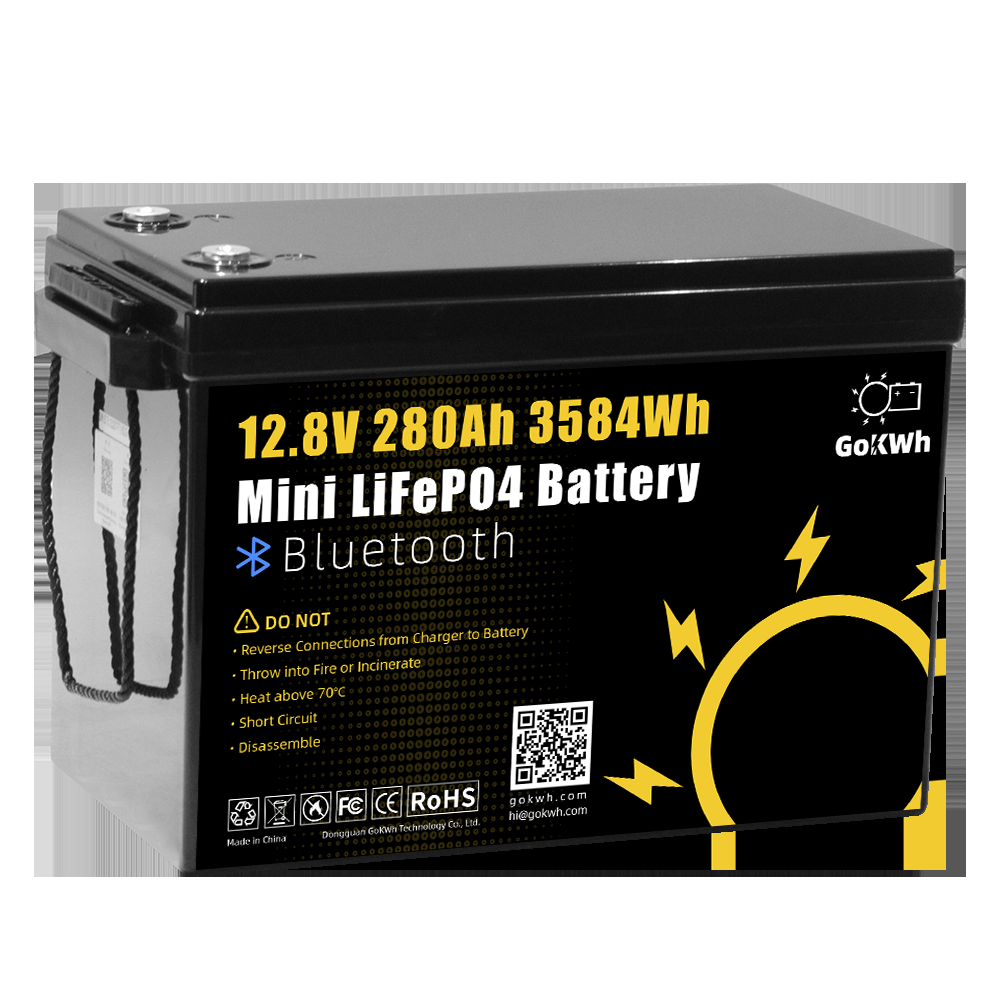
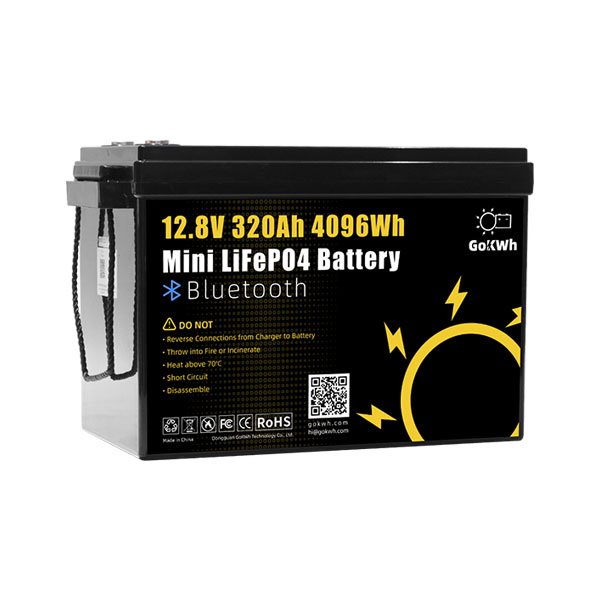
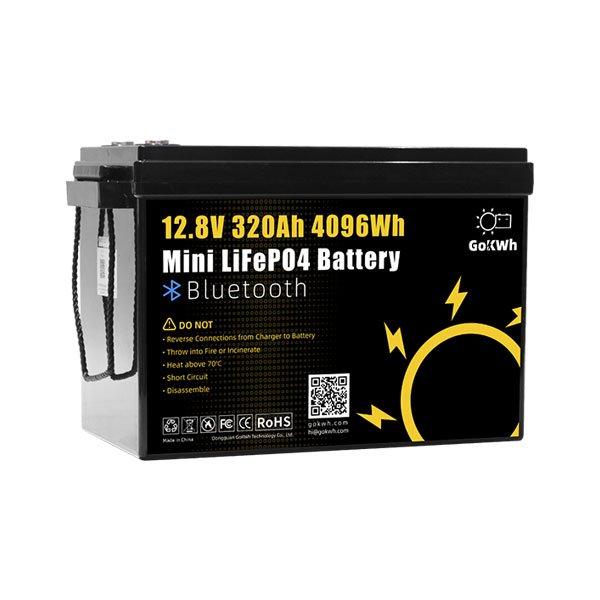
(affiliate link) · Data from the Amazon listing; offers may change.
Three things stand out from the listings:
- Bluetooth and low-temperature protection on all five, but none declares self-heating, so do not charge them below freezing.
- No published warranty or IP rating on any of them. For a lesser-known brand, that makes support worth checking before you buy.
- The two 100Ah listings publish identical specs: 1,280 Wh, a 100 A BMS, 4,000 cycles and 10.9 kg (24.0 lb). The 320Ah pair differs: the RV listing declares 8,000 cycles at 26.3 kg (58.0 lb), while the other lists 24.9 kg (54.9 lb) and no cycle count.
Which size should I buy?
100Ah suits a trolling motor, a weekend van or a small cabin; 280-320Ah suits full-time RV use and inverter-heavy systems. Density also favors the big batteries: 4,096 ÷ 24.9 ≈ 164 Wh/kg against 1,280 ÷ 10.9 ≈ 117 Wh/kg for the 100Ah.
For the full buying checklist, read how to choose a LiFePO4 battery. Then see:
- The best LiFePO4 batteries, ranked with pros and cons.
- Best LiFePO4 batteries for RVs and for trolling motors.
- All 12V 100Ah options, and 100Ah vs 320Ah head to head.
- Reviews: GOKWH 12V 100Ah and GOKWH 12V 320Ah.
- Practical guides: charging from the alternator, cold-weather charging and BMS cutoff troubleshooting.
To charge a battery bank from the sun or wind, pair it with portable solar panels or a small wind turbine.
All about lifepo4 batteries
Rankings and picks
- 12V 100Ah LiFePO4 Batteries: What 1,280 Wh Runs and Which to BuyWhat a 12V 100Ah LiFePO4 battery runs, how its 100 A BMS limits inverter size, and the two 100Ah models in our US catalog compared on published specs.
- The 5 Best 12V LiFePO4 Batteries of 2026The 5 best 12V LiFePO4 batteries of 2026, from 100Ah to 320Ah, compared on Wh, BMS current, cycles and weight, with runtime math for each.
- The Best LiFePO4 Batteries for RVs and Campers in 2026The best 12V LiFePO4 batteries for RV house banks, compared on Wh, BMS current, cycles and weight, with sizing math, charging tips and cold-weather advice.
- The Best LiFePO4 Batteries for Trolling Motors in 2026The best LiFePO4 batteries for trolling motors and small boats, with runtime math, 12V, 24V and 36V wiring, BMS limits and what the listings leave out.
Comparisons
Guides and calculators
Troubleshooting and care
- How to Charge a LiFePO4 Battery From Your Alternator (DC-DC Charger)How to charge a LiFePO4 house battery from your vehicle alternator safely with a DC-DC charger: sizing, charge-time math, wiring checklist and fixes.
- Charging LiFePO4 Batteries in Cold Weather: Rules and FixesCan you charge a LiFePO4 battery in the cold? Learn the 32 °F (0 °C) rule, low-temp protection vs self-heating, and how to keep charging in winter.
- LiFePO4 Battery BMS Keeps Cutting Off? Causes and FixesLiFePO4 BMS keeps cutting off? Find the cause: overcurrent, low or high voltage, cold charging, heat or cell imbalance, with a checklist and fix table.
Frequently asked questions
How many watt-hours is a 12V 100Ah LiFePO4 battery?
About 1,280 Wh. LiFePO4 batteries sold as 12 V have a nominal voltage of about 12.8 V, and 12.8 V × 100 Ah = 1,280 Wh.
What does the BMS rating mean?
The battery management system cuts the battery off above its current limit. A 100 A BMS allows about 12.8 V × 100 A = 1,280 W continuous; a 200 A BMS about 2,560 W.
Can I charge a LiFePO4 battery below freezing?
Not safely unless it has self-heating. Low-temperature protection only stops charging in the cold; it does not warm the cells. None of the batteries we list declares self-heating.
Is a LiFePO4 battery better than a power station?
It is better for fixed 12 V systems in an RV, boat or cabin, where you add your own charger and inverter. A power station is simpler if you want to plug in 120 V devices with no wiring.
Can I connect LiFePO4 batteries in series or parallel?
Yes, if the maker allows it. Series adds voltage and parallel adds capacity. Every battery in our US catalog lists up to 4 in series and 4 in parallel.