
Jackery HomePower 3000 vs Anker SOLIX F3000: Which 3 kWh Backup?
- Data from official spec sheets
- Public scoring formula
- No paid placements
Choose the Jackery HomePower 3000 if you want the lighter unit (27.0 kg) with a declared 20 ms UPS, 7,200 W surge, 4,000 cycles and a 132-minute AC charge. Choose the Anker SOLIX F3000 if you charge mainly from solar: it declares 2,400 W of input and expands to 24 kWh. Both store 3,072 Wh and output 3,600 W.
On this page (9)
Need to move it and protect electronics? Choose the Jackery HomePower 3000. Building a solar-powered backup that will grow? Choose the Anker SOLIX F3000. Both store 3,072 Wh of LiFePO4, output 3,600 W and carry a 5-year warranty. They differ on almost everything else. All figures come from the official Amazon listings, checked on September 26, 2026; we have not run either unit ourselves.
| Model | Capacity (Wh) | AC output (W) | Surge (W) | Max solar input (W) | Weight (kg) | UPS (ms) | Full wall charge (min) | Cycles | Expandable to (Wh) | Warranty (years) | WilderWatt score | Best for | |
|---|---|---|---|---|---|---|---|---|---|---|---|---|---|
| 3,072 | 3,600 | 7,200 | — | 27 | 20 | 132 | 4,000 | — | 5 | 9 | Movable backup for sensitive devices | ||
| 3,072 | 3,600 | — | 2,400 | 41.5 | — | — | — | 24,000 | 5 | 9 | Solar-first, expandable home backup |
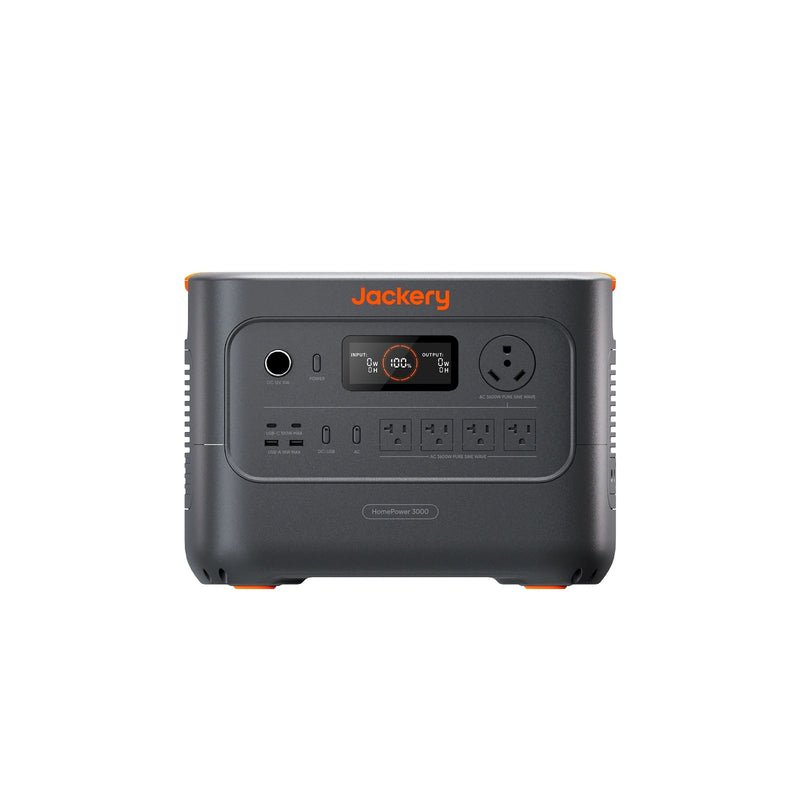
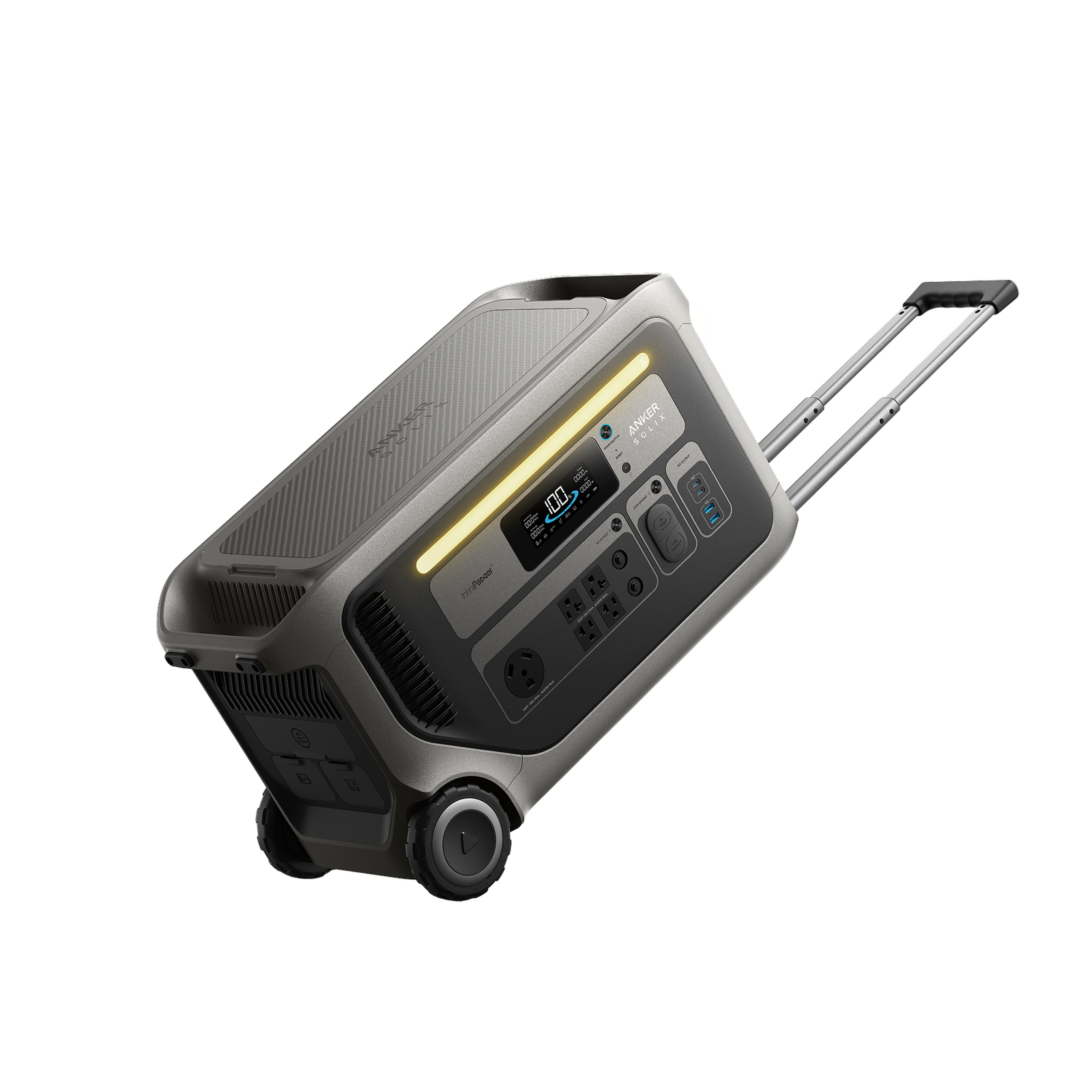
(affiliate link) · Data from the Amazon listing; offers may change.
Do they run your home for the same time?
Yes: same capacity, same runtime. After a 15% allowance for inverter losses, both give 3,072 × 0.85 = 2,611 usable Wh.
- Fridge at 60 W: 43.5 hours.
- Fridge + router + LED lights at 95 W: 27.5 hours.
- Window AC at 500 W: 5.2 hours.
- Space heater at 1,500 W: 1.7 hours.
Capacity does not decide this matchup. Weight, charging and UPS do.
Which one is easier to move?
The Jackery, by a wide margin: 27.0 kg against 41.5 kg. That is 14.5 kg, about 32 lb, less for the same energy.
Energy density shows it clearly: 3,072 ÷ 27.0 = 113.8 Wh/kg for the Jackery, 3,072 ÷ 41.5 = 74.0 Wh/kg for the Anker. If you carry the unit upstairs when the power goes out, the Jackery is the realistic choice. The Anker is best left in one place.
Which is better at protecting electronics?
The Jackery, because it declares a UPS switchover within 20 ms. The Anker listing does not declare a switchover time.
For fridges and lights, any short gap is harmless. For desktop PCs, NAS drives and some CPAP machines, a declared switchover is what you want. If 20 ms is not enough margin, the EcoFlow DELTA 3 Ultra Plus declares 10 ms (see below). Our home backup picks rank stations by this spec.
Which handles motor loads better?
The Jackery publishes a 7,200 W surge rating; the Anker listing does not publish a surge figure. At 120 V, both offer 3,600 W continuous, or 30 A across their outlets.
Surge matters for fridge compressors, sump pumps and window AC units, which spike at start-up. With a declared 7,200 W, the Jackery gives you a number to check against your appliance’s starting watts. For the Anker, confirm it in the manual.
Which recharges faster?
From solar, the Anker; from the wall, only the Jackery publishes a time.
- Anker F3000 solar, 2,400 W array: 3,072 ÷ (2,400 × 0.75) = 1.7 peak sun hours.
- Anker F3000 solar, 800 W array: 5.1 peak sun hours.
- Jackery HomePower 3000 wall: 132 minutes declared, about 1,400 W on average (3,072 ÷ 2.2 h).
The Jackery listing does not state a solar input, so you cannot size an array from it. During rolling outages, its fast wall charge is useful. In a long grid-down event, the Anker’s solar input keeps you going. See how many solar watts you need.
Which lasts longer and grows further?
The Jackery declares 4,000 cycles; the Anker expands to 24,000 Wh. Neither listing covers the other point.
At one cycle per day, 4,000 cycles is about 11 years. Fully expanded, the Anker gives 24,000 × 0.85 = 20,400 usable Wh, which runs a 95 W essentials load for about 9 days. Both carry 5-year warranties.
Full detail is in our Jackery HomePower 3000 review and Anker SOLIX F3000 review.
How would a two-day outage play out?
Both cover the first day of essentials; the second day depends on how you recharge. A 95 W essentials load uses 95 × 24 = 2,280 Wh a day, or about 2,682 Wh from the battery after losses. That is just above either unit’s 2,611 usable Wh.
- Jackery: if the grid returns briefly, 132 minutes on the wall refills it for another day.
- Anker: with 800 W of panels on a 5-peak-sun-hour day, you harvest 800 × 0.75 × 5 = 3,000 Wh, enough to run day two on sunshine.
So the Jackery suits rolling outages, and the Anker suits long grid-down events with sun.
Is there a middle option?
Yes: the EcoFlow DELTA 3 Ultra Plus. It stores the same 3,072 Wh with 3,600 W, 7,200 W surge, a declared 10 ms UPS and expansion to 11,000 Wh, at 33.6 kg.
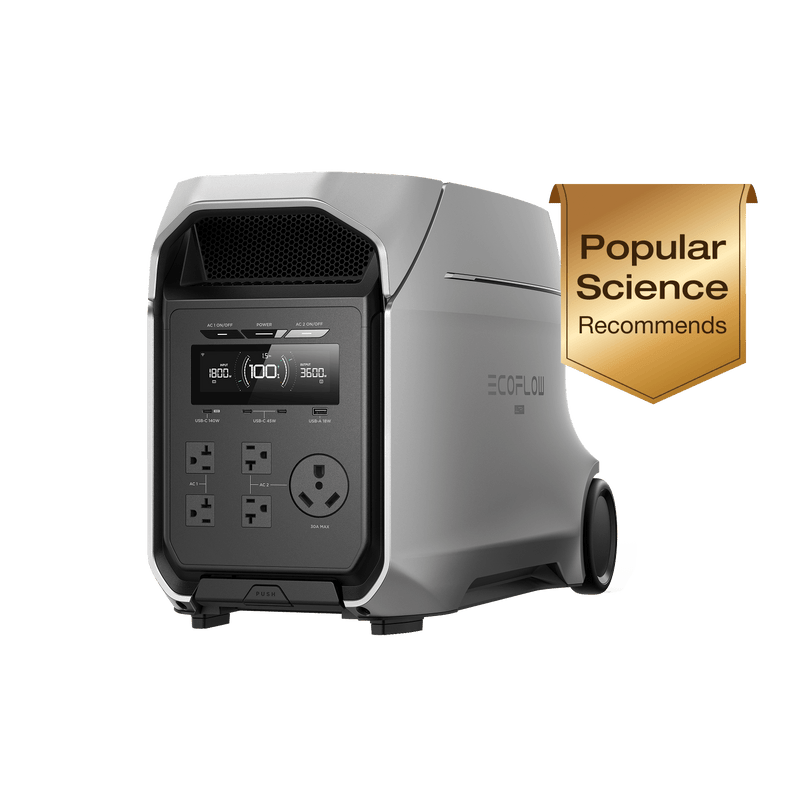
The DELTA 3 Ultra Plus combines the Jackery’s surge rating with a faster declared switchover and adds expansion to 11 kWh. It sits between the two on weight, at 33.6 kg. Its US listing does not publish a solar input or cycle rating, so it shares the Jackery’s weak spot for solar planning. Choose it if you want seamless backup for computers and the option to add batteries later.
Pros
- Declared 10 ms UPS, the fastest of the three
- 7,200 W surge and 3,600 W continuous
- Expandable to 11,000 Wh, 5-year warranty
Cons
- No published solar input or cycle rating
- 33.6 kg, 6.6 kg heavier than the Jackery
- Best for
- Sensitive electronics plus moderate expansion
- Skip it if
- Solar-first setups that need a published input limit
Specifications
| Capacity (Wh) | 3,072 |
|---|---|
| AC output (W) | 3,600 |
| Surge (W) | 7,200 |
| Chemistry | LiFePO4 |
| Weight (kg) | 33.6 |
| UPS (ms) | 10 |
| Expandable to (Wh) | 11,000 |
| Warranty (years) | 5 |
Which should you buy?
Pick by how you will charge and whether you will move it.
- Moving it between rooms, protecting a PC or CPAP, grid charging: Jackery HomePower 3000.
- Large solar array, permanent spot, future expansion: Anker SOLIX F3000.
- Fastest UPS plus expansion: EcoFlow DELTA 3 Ultra Plus.
For more options, see the best portable power stations.
Frequently asked questions
Which is lighter, the Jackery HomePower 3000 or the Anker SOLIX F3000?
The Jackery, at 27.0 kg against 41.5 kg. That is 14.5 kg (about 32 lb) less for the same 3,072 Wh.
Which one has a UPS?
The Jackery declares a UPS switchover within 20 ms. The Anker F3000 US listing does not declare a switchover time.
Which charges faster from solar?
The Anker, which declares a 2,400 W solar input and can refill in about 1.7 peak sun hours with a full array. The Jackery listing does not publish a solar input.
Can either be expanded?
Anker states the F3000 expands to 24,000 Wh. The Jackery HomePower 3000 listing does not mention expansion.
How long do they run home essentials?
Both run a 95 W essentials load (fridge, router, LED lights) for about 27.5 hours: 3,072 Wh × 0.85 ÷ 95 W.
Based on official spec sheets, manuals and published owner feedback. We have not physically tested every model. How we review.