
EcoFlow DELTA 3 Ultra Plus
3,072 Wh · 3,600 W. Review the available facts and what still needs checking before deciding whether it fits.
Not confirmed: Cycles · AC outlets · USB-C ports and 2 more.
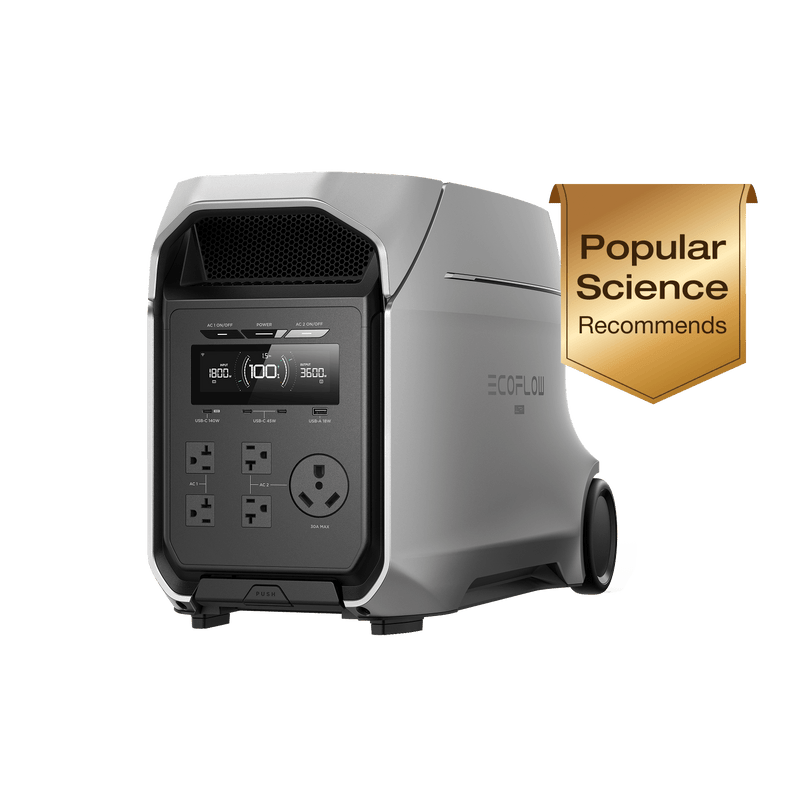
Review, specifications and verdict
Editorial analysis based on published specifications; we have not physically tested this product.
The EcoFlow DELTA 3 Ultra Plus is a 3,072 Wh LiFePO4 station with 3,600 W of output, 7,200 W of surge and a declared switchover under 10 ms. On paper, it is the best-protected 3 kWh unit in our US catalog for sensitive electronics. We have not run it ourselves: all figures come from the official Amazon listing, checked on September 26, 2026, plus our own math.
The DELTA 3 Ultra Plus is built for outages. Its 3,072 Wh battery covers a day of essentials, and 3,600 W of output handles almost any single 120 V appliance. The 7,200 W surge rating gives headroom for pumps and compressors at start-up. Its 10 ms switchover is the fastest among the 3 kWh stations we track, and expansion to 11 kWh lets it grow with your needs. EcoFlow backs it with a 5-year warranty. The weak points are weight and data. At 33.6 kg, it is a semi-permanent appliance. The US listing also does not publish solar input or cycle life, which makes solar planning harder.
Pros
- 3,600 W continuous and 7,200 W surge for motor loads
- Declared UPS switchover under 10 ms
- Expands from 3 kWh to 11 kWh, 5-year warranty
Cons
- 33.6 kg, heavy to move alone
- No published solar input or cycle rating in the US listing
- Best for
- Home backup with a desktop PC, NAS, CPAP or other sensitive devices
- Skip it if
- Buyers who want to plan a solar array from the listing, or carry the unit regularly
Specifications
| Capacity (Wh) | 3,072 |
|---|---|
| AC output (W) | 3,600 |
| Surge (W) | 7,200 |
| Chemistry | LiFePO4 |
| Weight (kg) | 33.6 |
| UPS (ms) | 10 |
| Expandable to (Wh) | 11,000 |
| Warranty (years) | 5 |
| Capacity (Wh) | 3,072 |
|---|---|
| AC output (W) | 3,600 |
| Surge (W) | 7,200 |
| Chemistry | LiFePO4 |
| Weight (kg) | 33.6 |
| UPS (ms) | 10 |
| Expandable to (Wh) | 11,000 |
| Warranty (years) | 5 |
How long will it keep your home running?
Assume about 2,611 usable watt-hours. We apply a 0.85 factor for inverter and conversion losses: 3,072 × 0.85 = 2,611 Wh. Runtime = usable Wh ÷ load in watts.
| Load (typical draw) | Math | Approximate runtime |
|---|---|---|
| Full-size fridge, 60 W average | 2,611 ÷ 60 | 43.5 hours |
| Fridge + router + LED lights, 95 W | 2,611 ÷ 95 | 27.5 hours |
| Essentials + CPAP, 135 W | 2,611 ÷ 135 | 19.3 hours |
| Window AC unit, 500 W | 2,611 ÷ 500 | 5.2 hours |
| Space heater, 1,500 W | 2,611 ÷ 1,500 | 1.7 hours |
Fridges and pumps cycle on and off, so real runtime is usually longer than the continuous figures above. For your own list of devices, use the solar calculator.
Is 3,600 W with 7,200 W surge enough?
For almost any single household appliance at 120 V, yes. 3,600 W equals 30 A of total output, shared across several outlets. Each outlet is still limited by its own rating.
The 7,200 W surge figure is the useful part for motors. A well pump, a fridge or a window AC can draw several times its running watts for a moment at start-up. Twice the continuous rating gives real margin, but check your appliance’s starting watts first.
Our spec data does not confirm 240V output. If you need to run a 240V well pump or dryer, confirm it with EcoFlow. Any connection to your home panel needs a transfer switch or inlet installed by a licensed electrician.
Why does the 10 ms switchover matter?
Because it is short enough for most computers to ride through a grid failure. Fridges and lights do not care about a gap. Desktop PCs, NAS drives and some CPAP machines can reboot if the gap is too long.
Among the 3 kWh stations we track, the Jackery HomePower 3000 declares 20 ms and the Anker SOLIX F3000 listing does not declare a figure. The DELTA 3 Ultra Plus is the safest choice on paper for this job. Our home backup picks rank this spec.
How fast can it recharge from solar?
The US listing does not state a maximum solar input, so we cannot give a minimum charge time. That is its main gap next to the Anker SOLIX F3000, which declares 2,400 W.
The panel watts it takes to fill 3,072 Wh, using capacity ÷ (panel watts × 0.75):
- 400 W of panels: 10.2 peak sun hours, about two summer days.
- 800 W of panels: 5.1 peak sun hours, about one summer day.
- 1,200 W of panels: 3.4 peak sun hours.
Check the manual for the real input limit before buying panels. For US sun hours by region, see how many solar watts you need.
How far does the expansion go?
Up to 11,000 Wh, about 3.6 times the built-in capacity. Fully expanded, usable energy is 11,000 × 0.85 = 9,350 Wh.
On a 95 W essentials load, that is 9,350 ÷ 95 = 98 hours, or about 4 days without any recharging. If you need more than that, the EcoFlow DELTA Pro 3 expands to 48,000 Wh; we compare them in EcoFlow DELTA Pro 3 vs DELTA 3 Ultra Plus.
How portable is it?
At 33.6 kg (74 lb), it is portable in name only. Energy density is 3,072 ÷ 33.6 = 91.4 Wh/kg, just above the 90 Wh/kg bar in our review method.
For the same capacity, the Jackery HomePower 3000 weighs 27.0 kg and the Anker SOLIX F3000 weighs 41.5 kg. The EcoFlow sits in the middle.
9/10 · WilderWatt scoreHow does it compare with the Anker SOLIX F3000 and Jackery HomePower 3000?
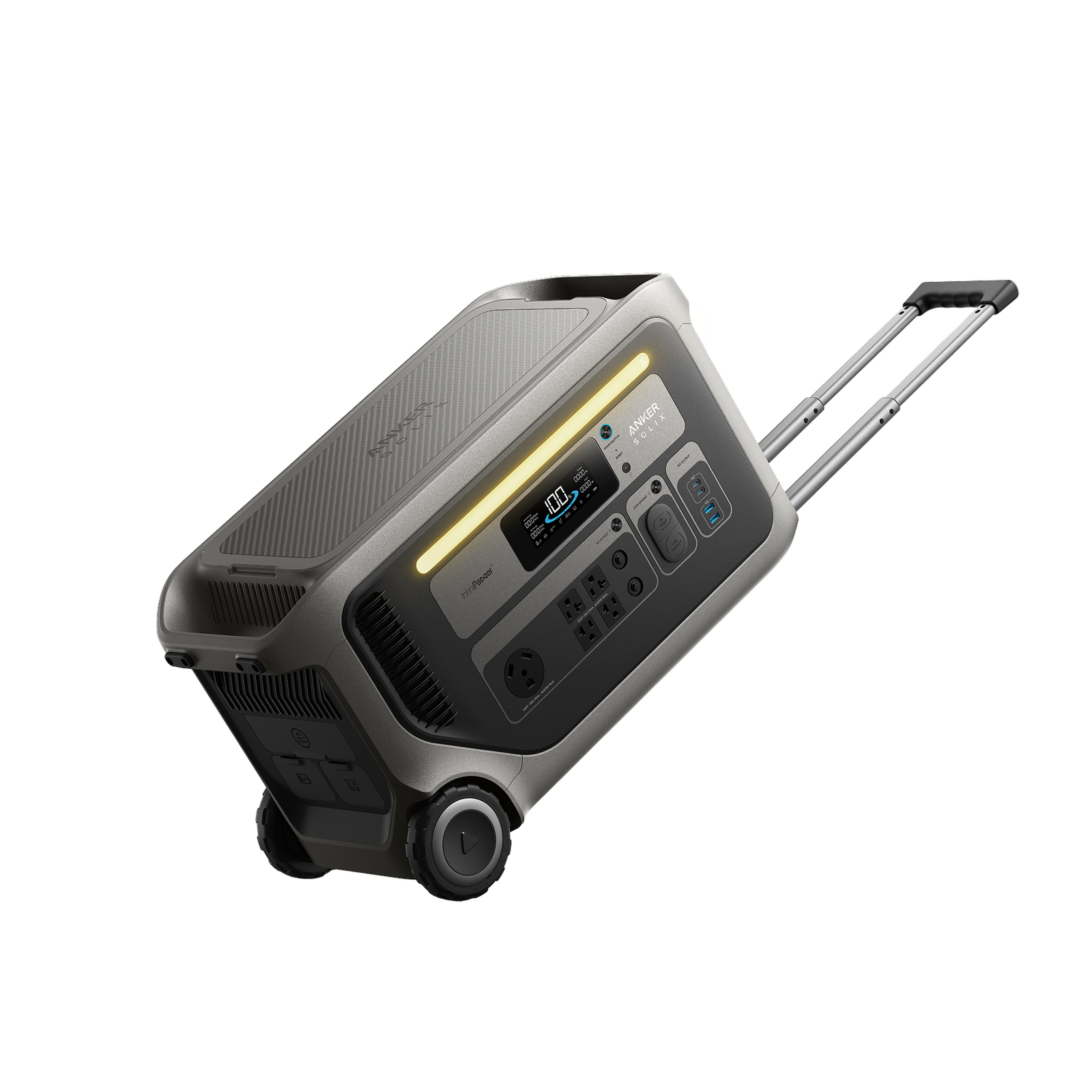
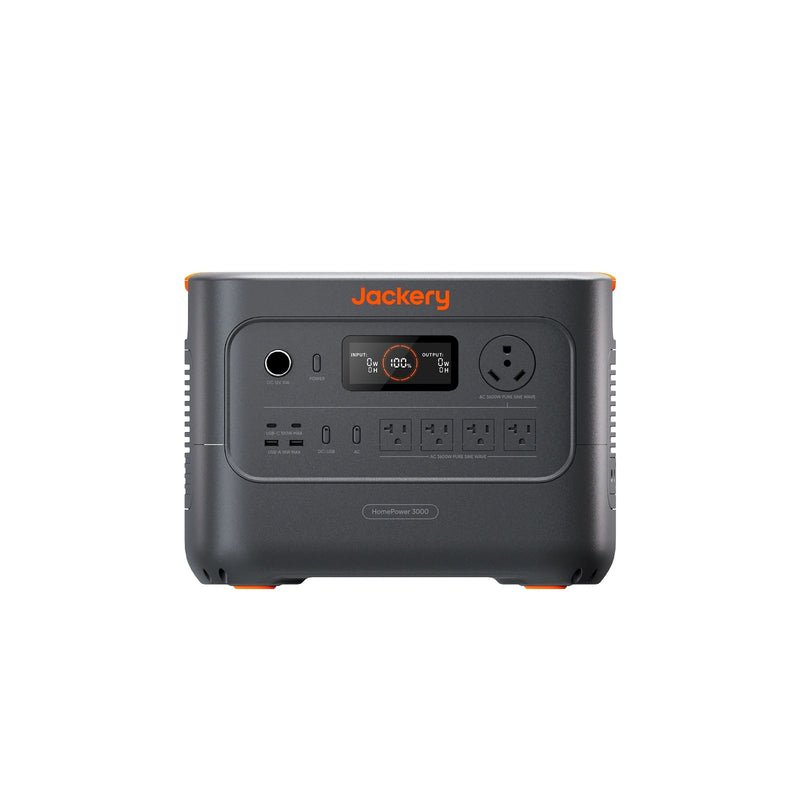
All three store 3,072 Wh and output 3,600 W; they split on UPS speed, solar input and weight.
| Model | Capacity (Wh) | Surge (W) | Max solar input (W) | Weight (kg) | UPS (ms) | Expandable to (Wh) | WilderWatt score | |
|---|---|---|---|---|---|---|---|---|
| 3,072 | 7,200 | — | 33.6 | 10 | 11,000 | 9 | ||
| 3,072 | — | 2,400 | 41.5 | — | 24,000 | 9 | ||
| 3,072 | 7,200 | — | 27 | 20 | — | 9 |
(affiliate link) · Data from the Amazon listing; offers may change.
- Anker SOLIX F3000: a 2,400 W solar input and expansion to 24,000 Wh. The catch is 41.5 kg and no declared UPS switchover. See EcoFlow DELTA 3 Ultra Plus vs Anker SOLIX F3000.
- Jackery HomePower 3000: 27.0 kg, a 20 ms UPS, 4,000 declared cycles and a 132-minute AC charge. The catch is that the listing omits solar input and expansion. Read our Jackery HomePower 3000 review.
Who should buy the DELTA 3 Ultra Plus?
It suits households that value seamless backup over solar-charging speed.
Buy it if you:
- Protect computers, network gear or a CPAP during outages.
- Want motor headroom for pumps and compressors.
- Plan to expand toward 11 kWh.
Skip it if you:
- Want the fastest solar refill; the F3000 declares far more input.
- Need to carry the unit often.
- Only need 2 kWh. See the best portable power stations.
Frequently asked questions
How long can the EcoFlow DELTA 3 Ultra Plus power essentials in an outage?
A fridge, router and LED lights drawing about 95 W run for roughly 27.5 hours: 3,072 Wh × 0.85 ÷ 95 W. Heating or cooling cuts that to a few hours.
Does the DELTA 3 Ultra Plus have a UPS function?
Yes. EcoFlow declares a switchover under 10 ms, the fastest figure among the 3 kWh stations in our US catalog.
How much can the DELTA 3 Ultra Plus be expanded?
EcoFlow states the capacity expands from 3 kWh to 11 kWh with extra batteries, which are sold separately.
What is the surge rating of the DELTA 3 Ultra Plus?
EcoFlow lists 3,600 W continuous and 7,200 W surge, which helps with motor loads such as pumps and compressors.
How heavy is the EcoFlow DELTA 3 Ultra Plus?
It weighs 33.6 kg, about 74 lb. Treat it as a unit that stays in one place.