
Jackery Explorer 2000 v2
2,042 Wh · 2,200 W. Review the available facts and what still needs checking before deciding whether it fits.
Not confirmed: Surge (W) · Cycles · USB-C ports and 2 more.
Review, specifications and verdict
Editorial analysis based on published specifications; we have not physically tested this product.
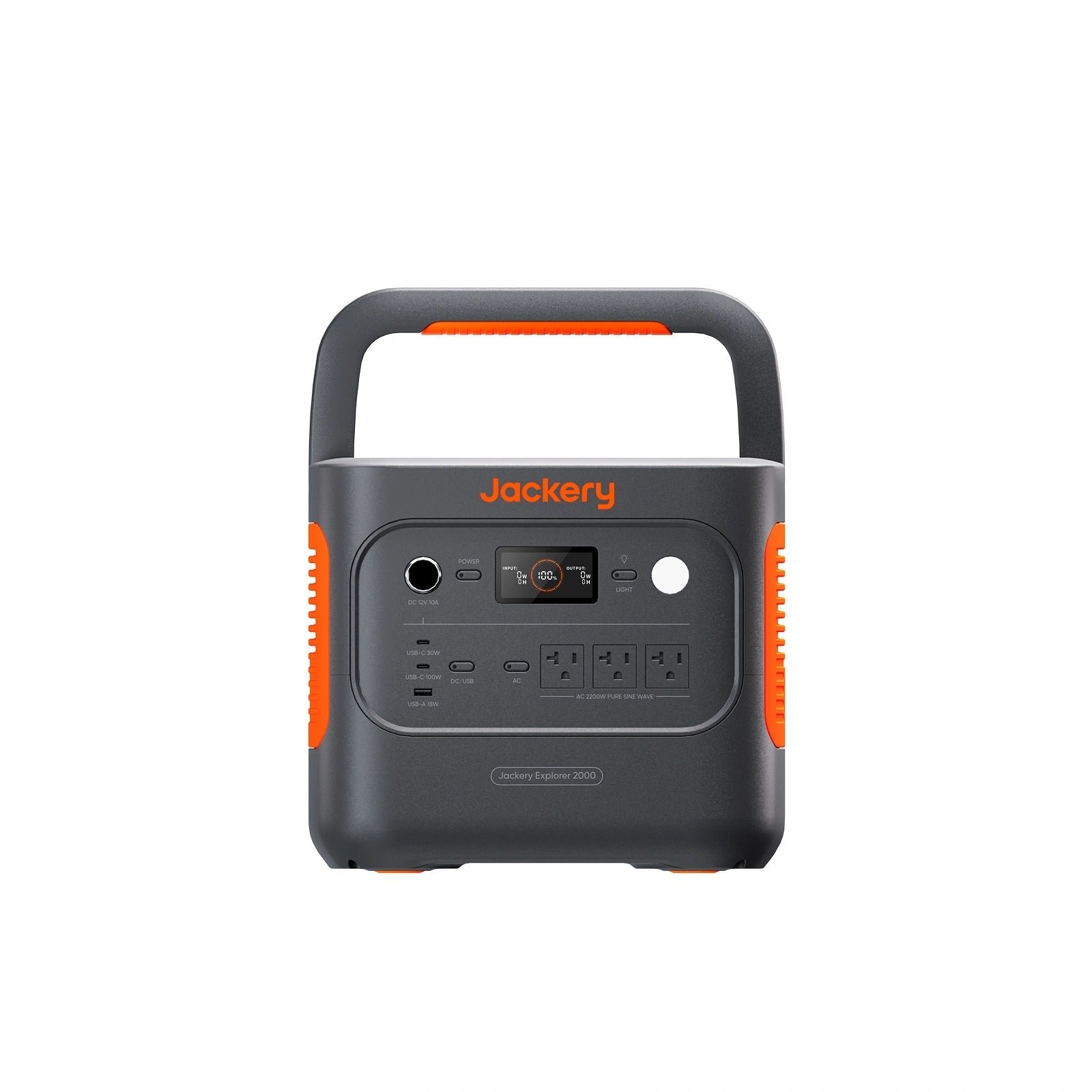
The Jackery Explorer 2000 v2 is a 2,042 Wh LiFePO4 station that weighs only 17.9 kg. It adds 2,200 W of AC output and a declared 20 ms UPS switchover. On paper, that makes it one of the most portable ways to get 2 kWh of backup. We have not run this unit ourselves: the figures below come from the official Amazon listing, checked on September 26, 2026, and our own math.
The Explorer 2000 v2 doubles the capacity of a typical 1 kWh station without doubling the weight. At 2,042 Wh and 17.9 kg, it delivers about 114 watt-hours per kilogram. That is the best ratio among 2 kWh stations in our US catalog with a published weight. Jackery declares a 20 ms UPS switchover and a 102-minute wall charge in emergency mode, both useful when a storm is coming. The 2,200 W output handles a microwave or a space heater. The weak points come from what the listing leaves out: no surge rating, no maximum solar input, no cycle count and no expansion option. It also has just 3 AC outlets. For outages and road trips where you lift the unit often, it is a strong candidate.
Pros
- 2,042 Wh LiFePO4 at 17.9 kg, about 114 Wh/kg
- Declared 20 ms UPS switchover for outages
- 102-minute emergency wall charge and a 5-year warranty
Cons
- Only 3 AC outlets for 2,200 W of output
- No published surge, solar input or cycle figures in the listing
- Best for
- Home backup and RV trips where you move the unit often
- Skip it if
- Running several AC devices at once or 240V loads
Specifications
| Capacity (Wh) | 2,042 |
|---|---|
| AC output (W) | 2,200 |
| Chemistry | LiFePO4 |
| Weight (kg) | 17.9 |
| AC outlets | 3 |
| Full wall charge (min) | 102 |
| UPS (ms) | 20 |
| Warranty (years) | 5 |
| Capacity (Wh) | 2,042 |
|---|---|
| AC output (W) | 2,200 |
| Chemistry | LiFePO4 |
| Weight (kg) | 17.9 |
| AC outlets | 3 |
| Full wall charge (min) | 102 |
| UPS (ms) | 20 |
| Warranty (years) | 5 |
How long does the Explorer 2000 v2 run typical appliances?
Count on about 1,736 usable watt-hours. We apply a 0.85 factor for inverter and conversion losses: 2,042 × 0.85 = 1,736 Wh. Then runtime = usable Wh ÷ load in watts.
| Device (typical draw) | Math | Approximate runtime |
|---|---|---|
| Full-size fridge, 60 W average | 1,736 ÷ 60 | 28.9 hours |
| Wi-Fi router + modem, 15 W | 1,736 ÷ 15 | 115.7 hours (about 4.8 days) |
| CPAP without humidifier, 40 W | 1,736 ÷ 40 | 43.4 hours (about 5 nights) |
| Fridge + router + LED lights, 95 W | 1,736 ÷ 95 | 18.3 hours |
| Window AC unit, 500 W | 1,736 ÷ 500 | 3.5 hours |
| Microwave, 1,200 W draw | 1,736 ÷ 1,200 | about 87 minutes |
| Space heater, 1,500 W | 1,736 ÷ 1,500 | about 69 minutes |
These are typical draws, not measurements of your devices. Enter your own appliances in the solar calculator for a tailored number.
The practical takeaway: essentials such as fridge, internet and lights last most of a day. Heat and cooling drain it in hours.
Can it handle big appliances at 2,200 W?
Yes, one at a time, within 2,200 W continuous. At 120 V, 2,200 W is about 18 A, a bit more than a standard 15 A household circuit.
The listing does not publish a surge rating. That matters for motors: fridges, well pumps and air conditioners draw a short spike at startup. Without a declared figure, check your appliance’s starting watts and leave a generous margin.
The 3 AC outlets are the other limit. A fridge, a CPAP and a router already fill them. A power strip works, as long as the total stays below 2,200 W.
How fast does it recharge?
From the wall, Jackery declares a full charge in 102 minutes in its Emergency Super Charging mode. That implies an average input of 2,042 ÷ 1.7 h = about 1,200 W, or roughly 10 A at 120 V. Use an outlet without other heavy loads on the same circuit.
From solar, the listing does not publish a maximum input. Jackery does sell this station in a kit with two 200 W panels, so 400 W is a pairing it supports. Using capacity ÷ (panel watts × 0.75):
- Two 200 W panels (400 W): 2,042 ÷ (400 × 0.75) = 6.8 peak sun hours.
- One 200 W panel: 2,042 ÷ (200 × 0.75) = 13.6 peak sun hours, about 2–3 good days.
To size panels for your region, see how many solar watts you need. Kit options are compared in our best solar generators.
Is the 20 ms UPS good enough?
For most home electronics, a declared 20 ms switchover is enough. Routers, modems, lights and fridges do not notice a gap that short.
Desktop PCs and some medical devices are more sensitive. If a reboot would cost you, look at the EcoFlow DELTA 3 Max Plus, which declares 10 ms. Our home backup guide compares switchover times across the category.
How portable is it?
At 17.9 kg (39.5 lb), one adult can carry it, and the ratio is the standout. Energy density is 2,042 ÷ 17.9 = 114.1 Wh/kg, well above the 90 Wh/kg bar in our score.
Compare that with the EcoFlow DELTA 3 Max Plus: 2,048 ÷ 22.2 = 92.3 Wh/kg. For the same 2 kWh, the Jackery is about 4.3 kg lighter. The Growatt INFINITY 2000 Pro does not publish its weight, so we cannot compare it.
How long will it last, and what is missing from the listing?
LiFePO4 chemistry and a 5-year warranty are good signs, but Jackery’s listing does not publish a cycle rating. LiFePO4 stations in our catalog typically declare 3,000–6,000 cycles; we cannot confirm where this one falls.
Four specs are absent from the listing we reviewed: surge rating, maximum solar input, cycle count and expansion. None of them is a flaw on its own. Together, they make it harder to plan a solar setup or judge motor loads. Our LiFePO4 vs NMC guide explains why chemistry still matters when cycle data is missing.
How does it compare with the DELTA 3 Max Plus and Growatt INFINITY 2000 Pro?
The Jackery wins on weight and declared charging speed; the rivals win on output and expansion.
| Model | Capacity (Wh) | AC output (W) | Weight (kg) | UPS (ms) | Expandable to (Wh) | Warranty (years) | WilderWatt score | |
|---|---|---|---|---|---|---|---|---|
| 2,042 | 2,200 | 17.9 | 20 | — | 5 | 9 | ||
| 2,048 | 3,000 | 22.2 | 10 | 10,000 | 5 | 9 | ||
| 2,048 | 2,400 | — | 15 | 6,144 | 5 | 8.5 |

(affiliate link) · Data from the Amazon listing; offers may change.
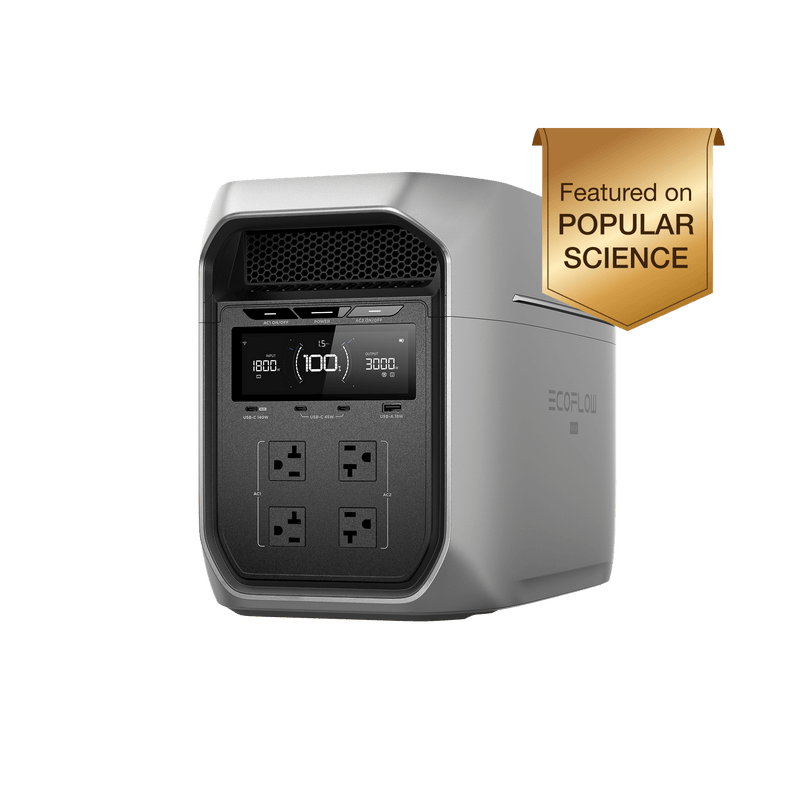
- EcoFlow DELTA 3 Max Plus: 2,048 Wh, 3,000 W, a declared 10 ms UPS and expansion to 10,000 Wh. The catch is 22.2 kg. See the full Jackery Explorer 2000 v2 vs EcoFlow DELTA 3 Max Plus comparison.
- Growatt INFINITY 2000 Pro: 2,048 Wh, 2,400 W, a declared 15 ms switchover, 4,000 cycles and expansion to 6,144 Wh. The catch is that the listing omits weight and solar input.
Who should buy the Explorer 2000 v2?
It suits buyers who want 2 kWh of backup that is easy to move.
Buy it if you:
- Want to keep a fridge, internet and lights running through a day-long outage.
- Move the station between the house, the garage and an RV.
- Value a declared UPS and fast wall charging before a storm.
Skip it if you:
- Need many AC outlets or more than 2,200 W at once.
- Plan to grow your storage later; the listing does not mention expansion.
- Want a published solar input figure before buying panels.
For more options, see the best portable power stations and our RV camping picks.
9/10 · WilderWatt scoreFrequently asked questions
How long will the Jackery Explorer 2000 v2 run a refrigerator?
A full-size fridge averaging about 60 W runs for roughly 29 hours. The math is 2,042 Wh × 0.85 usable ÷ 60 W = 28.9 hours.
Does the Jackery Explorer 2000 v2 have a UPS function?
Yes. Jackery declares a 20 ms switchover time. That covers routers, lights and most appliances, but check your PC or medical device manual for its tolerance.
How fast does the Explorer 2000 v2 charge from the wall?
Jackery states a full charge in 102 minutes using its Emergency Super Charging mode. That implies an average input of about 1,200 W from the outlet.
How much solar can the Jackery Explorer 2000 v2 take?
The listing we reviewed does not publish a maximum solar input. Jackery sells it in a kit with two 200 W panels; with 400 W of panels, a full refill takes about 6.8 peak sun hours in theory.
How heavy is the Jackery Explorer 2000 v2?
It weighs 17.9 kg, or about 39.5 lb. That is about 114 Wh/kg, the best energy density among the 2 kWh stations in our US catalog with a published weight.
How many outlets does the Explorer 2000 v2 have?
It has 3 AC outlets sharing 2,200 W. If you need to plug in many AC devices at once, you will need a power strip within that limit.