
EcoFlow DELTA 3 Max Plus
2,048 Wh · 3,000 W. Review the available facts and what still needs checking before deciding whether it fits.
Not confirmed: Cycles · AC outlets · USB-C ports and 2 more.
Review, specifications and verdict
Editorial analysis based on published specifications; we have not physically tested this product.
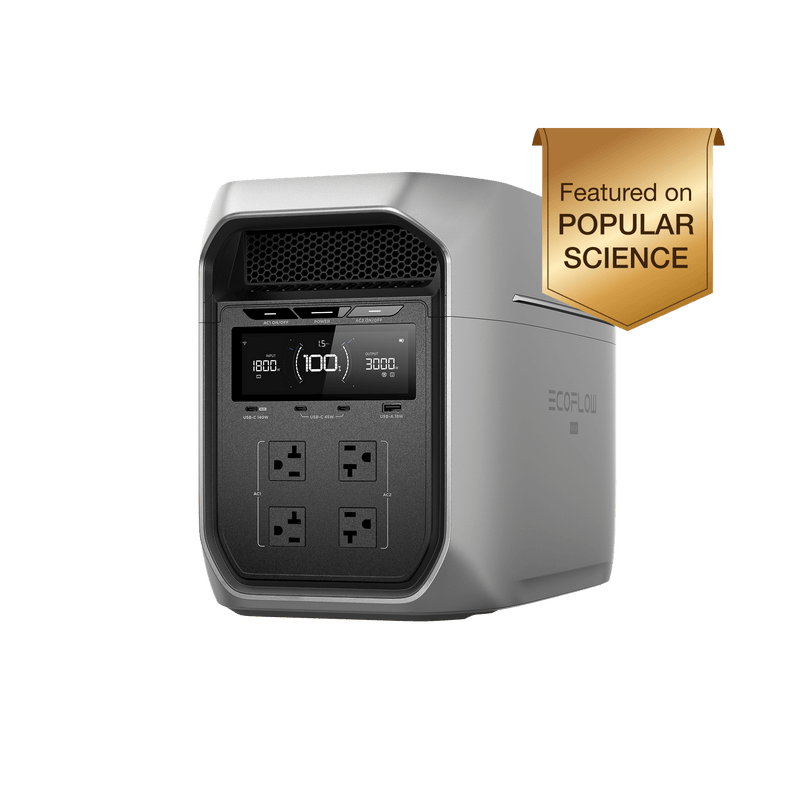
The EcoFlow DELTA 3 Max Plus is a 2,048 Wh LiFePO4 power station with 3,000 W of AC output, a declared 10 ms UPS switchover and expansion to 10,000 Wh. On paper, it is the most output you can get in the 2 kWh class of our US catalog. We have not run this unit ourselves: the figures come from the official Amazon listing, checked on September 26, 2026, and the math is ours.
The DELTA 3 Max Plus pairs a 2 kWh LiFePO4 battery with 3,000 W of output, enough for a microwave and a coffee maker at the same time. EcoFlow also lists a 3,800 W X-Boost figure, which lets some resistive loads run at reduced power. The 10 ms switchover protects desktop computers and network gear when the grid drops. Expansion up to 10 kWh means it can grow from a weekend unit into a multi-day backup system. The 5-year warranty matches its main rivals. The downside is missing data: the US listing does not state solar input, wall-charging time or cycle life. At 22.2 kg, it is also not the lightest 2 kWh option.
Pros
- 3,000 W continuous output, the highest in the 2 kWh class we track
- Declared UPS switchover under 10 ms
- Expandable from 2,048 Wh up to 10,000 Wh, 5-year warranty
Cons
- No published solar input, wall-charging time or cycle rating
- 22.2 kg, about 4.3 kg heavier than the Jackery Explorer 2000 v2
- Best for
- Home backup with heavy appliances and sensitive electronics, with room to expand
- Skip it if
- Buyers who want to size a solar array from the listing, or carry the unit often
Specifications
| Capacity (Wh) | 2,048 |
|---|---|
| AC output (W) | 3,000 |
| Surge (W) | 3,800 |
| Chemistry | LiFePO4 |
| Weight (kg) | 22.2 |
| UPS (ms) | 10 |
| Expandable to (Wh) | 10,000 |
| Warranty (years) | 5 |
| Capacity (Wh) | 2,048 |
|---|---|
| AC output (W) | 3,000 |
| Surge (W) | 3,800 |
| Chemistry | LiFePO4 |
| Weight (kg) | 22.2 |
| UPS (ms) | 10 |
| Expandable to (Wh) | 10,000 |
| Warranty (years) | 5 |
How long does the DELTA 3 Max Plus run your devices?
Plan on about 1,741 usable watt-hours. Inverter and conversion losses typically take 10–15% of the battery, so we multiply by 0.85: 2,048 × 0.85 = 1,741 Wh. Runtime = usable Wh ÷ load in watts.
| Load (typical draw) | Math | Approximate runtime |
|---|---|---|
| Full-size fridge, 60 W average | 1,741 ÷ 60 | 29 hours |
| Fridge + router + LED lights, 95 W | 1,741 ÷ 95 | 18.3 hours |
| CPAP without humidifier, 40 W | 1,741 ÷ 40 | 43.5 hours |
| Window AC unit, 500 W | 1,741 ÷ 500 | 3.5 hours |
| Microwave, 1,200 W | 1,741 ÷ 1,200 | about 87 minutes |
| Space heater, 1,500 W | 1,741 ÷ 1,500 | about 70 minutes |
These draws are typical figures, not measurements of your appliances. Our solar calculator lets you plug in your own list.
What can 3,000 W actually run?
Almost any single 120 V household appliance, and two large ones together. At 120 V, 3,000 W is 25 A of total output. A 1,200 W microwave plus a 1,000 W coffee maker adds up to 2,200 W, well inside the limit.
Motors are the harder case. Fridges, pumps and power tools pull a short spike at start-up. EcoFlow lists 3,800 W in X-Boost mode, which our spec table files under surge. X-Boost lowers the voltage for resistive devices such as kettles; it is not the same as a true motor-start surge rating, so check the starting watts of any pump or compressor.
How fast does it recharge?
The US listing does not publish either a solar input limit or a wall-charging time. That is the biggest gap in this listing, because solar sizing depends on it.
What we can do is show how many panel watts the battery needs, using capacity ÷ (panel watts × 0.75). Portable panels usually deliver 70–80% of their rating in real conditions.
- 400 W of panels: 2,048 ÷ (400 × 0.75) = 6.8 peak sun hours.
- 800 W of panels: 2,048 ÷ (800 × 0.75) = 3.4 peak sun hours.
- 1,200 W of panels: 2,048 ÷ (1,200 × 0.75) = 2.3 peak sun hours.
Confirm the station accepts that many watts before you buy panels. Our guide on how many solar watts you need gives US peak sun hours by region.
Is it a real UPS?
Yes, on paper: EcoFlow declares a switchover under 10 ms. That is among the fastest figures in our US catalog, matched by the Grecell H1200, the Bluetti AC200PL and the DELTA 3 Ultra Plus.
For a fridge, any switchover time is fine. For a desktop PC, a NAS or some CPAP machines, a short gap can mean a reboot, so 10 ms gives useful margin. Keep the station plugged into the wall and your devices plugged into the station.
How far can the expansion take you?
Up to 10,000 Wh, almost five times the built-in capacity. EcoFlow sells the extra batteries separately.
Fully expanded, usable energy is 10,000 × 0.85 = 8,500 Wh. On a 95 W essentials load, that is 8,500 ÷ 95 = 89 hours, or about 3.7 days without recharging. That turns a portable unit into a serious outage plan. See our home backup picks for larger options.
How portable is it?
At 22.2 kg (about 49 lb), it is a two-hands, short-distance unit. Energy density is 2,048 ÷ 22.2 = 92.3 Wh/kg, just above the 90 Wh/kg bar in our review method.
It rolls into an RV or a garage without drama. It is not something you carry to a campsite far from the car.
9/10 · WilderWatt scoreHow does it compare with the Jackery Explorer 2000 v2 and Growatt INFINITY 2000 Pro?
All three hold about 2 kWh of LiFePO4; the EcoFlow leads on output and expansion.
| Model | Capacity (Wh) | AC output (W) | Weight (kg) | UPS (ms) | Expandable to (Wh) | Warranty (years) | WilderWatt score | |
|---|---|---|---|---|---|---|---|---|
| 2,048 | 3,000 | 22.2 | 10 | 10,000 | 5 | 9 | ||
| 2,042 | 2,200 | 17.9 | 20 | — | 5 | 9 | ||
| 2,048 | 2,400 | — | 15 | 6,144 | 5 | 8.5 |

(affiliate link) · Data from the Amazon listing; offers may change.
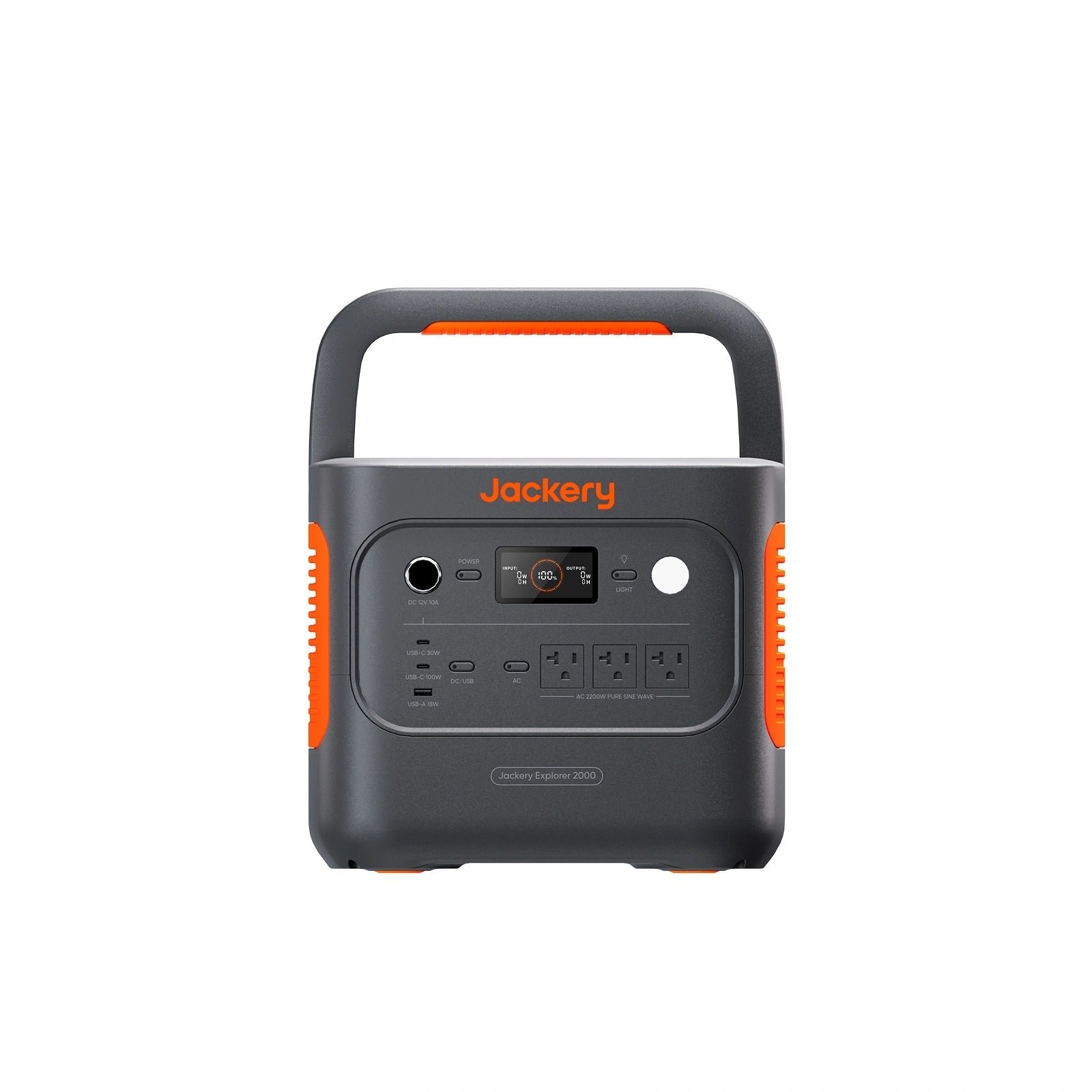
- Jackery Explorer 2000 v2: 2,042 Wh, 2,200 W, 17.9 kg, a 20 ms UPS and a declared 102-minute emergency wall charge. The catch is no expansion and no surge figure. We compare the two in detail in Jackery Explorer 2000 v2 vs EcoFlow DELTA 3 Max Plus.
- Growatt INFINITY 2000 Pro: 2,048 Wh, 2,400 W, a 15 ms switchover, 4,000 declared cycles and expansion to 6,144 Wh. The catch is that its listing omits weight and solar input. Read our Growatt INFINITY 2000 Pro review.
Who is the DELTA 3 Max Plus for?
It is for buyers who want strong output and a clear upgrade path in one box.
Buy it if you:
- Want to run a microwave, coffee maker or window AC during outages.
- Need a fast UPS for computers and network gear.
- Plan to add batteries later instead of buying a bigger station now.
Skip it if you:
- Want to design a solar setup from published input limits.
- Carry your station often; the Jackery is lighter.
- Only need a weekend of camping power. The best portable power stations list smaller options.
Frequently asked questions
How long will the EcoFlow DELTA 3 Max Plus run a refrigerator?
A full-size fridge averaging 60 W runs for about 29 hours: 2,048 Wh × 0.85 usable ÷ 60 W. A newer, efficient fridge will last longer; an old one less.
Does the DELTA 3 Max Plus work as a UPS?
Yes. EcoFlow states it switches to battery in under 10 ms, fast enough for most desktop PCs, routers and NAS drives.
How far can the DELTA 3 Max Plus be expanded?
EcoFlow states it expands from 2 kWh up to 10 kWh with extra batteries, which are sold separately.
What is the solar input of the DELTA 3 Max Plus?
The US listing we reviewed does not publish a maximum solar input. Check the manual before sizing a panel array.
How heavy is the EcoFlow DELTA 3 Max Plus?
It weighs 22.2 kg, about 49 lb. That works out to about 92 Wh/kg.