
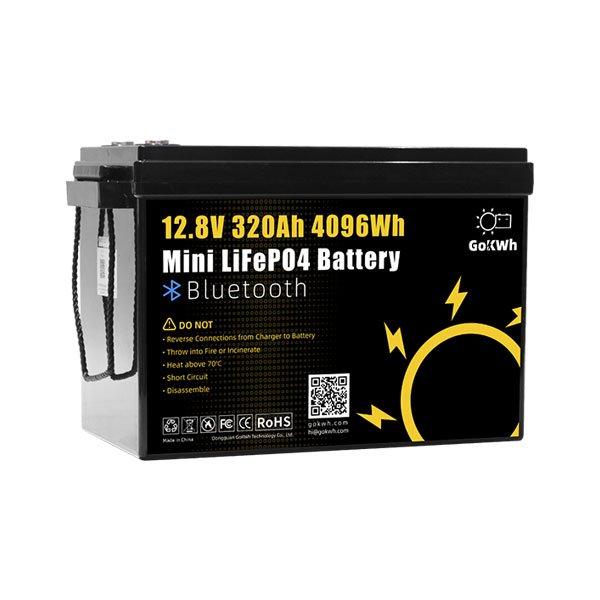
GOKWH 12V 320Ah Bluetooth
12 V · 320 Ah · 4,096 Wh. Review the available facts and what still needs checking before deciding whether it fits.
Not confirmed: Cycles · Self-heating · IP rating and 1 more.
Review, specifications and verdict
Editorial analysis based on published specifications; we have not physically tested this product.
The GOKWH 12V 320Ah Bluetooth is a 4,096 Wh LiFePO4 battery with a 200 A BMS, Bluetooth monitoring and low-temperature protection, at 24.9 kg. On paper, it replaces three or four 100Ah batteries with one box and one set of cables. We have not used it ourselves: the specs come from the official Amazon listing, checked on September 26, 2026, and the math is ours. GOKWH is a lesser-known brand, so check the manual and warranty terms with the seller.
The 320Ah packs 4,096 Wh into one 12V case, enough for several days of RV essentials. Its 200 A BMS supports about 2,560 W of DC output, which covers a 2,000 W inverter at full load. Bluetooth lets you watch state of charge and cell data from a phone, and low-temperature protection helps guard the cells in cold weather. At 24.9 kg, it has a strong energy density of about 164 Wh/kg. The problem is the listing: it does not state a cycle rating or a warranty term. The separate GOKWH 320Ah RV listing declares 8,000 cycles, which makes that version the better-documented buy.
Pros
- 4,096 Wh in a single 12V battery
- 200 A BMS for inverters up to about 2,000 W
- About 164 Wh/kg, with Bluetooth and low-temperature protection
Cons
- No cycle rating, warranty term or self-heating in this listing
- 24.9 kg in one piece; a two-person lift into tight compartments
- Best for
- RV and van house banks, off-grid cabins and solar storage with a 12V inverter
- Skip it if
- Inverters over 2,000 W on one battery, or winter charging in unheated spaces
Specifications
| Voltage (V) | 12 |
|---|---|
| Capacity (Ah) | 320 |
| Capacity (Wh) | 4,096 |
| Chemistry | LiFePO4 |
| BMS (A) | 200 |
| Bluetooth | Yes |
| Low-temp protection | Yes |
| Weight (kg) | 24.9 |
| Max in parallel | 4 |
| Max in series | 4 |
| Voltage (V) | 12 |
|---|---|
| Capacity (Ah) | 320 |
| Capacity (Wh) | 4,096 |
| Chemistry | LiFePO4 |
| BMS (A) | 200 |
| Bluetooth | Yes |
| Low-temp protection | Yes |
| Weight (kg) | 24.9 |
| Max in parallel | 4 |
| Max in series | 4 |
How long will 4,096 Wh last?
For DC loads, plan on about 3,686 Wh after a 10% reserve: 4,096 × 0.9. Through an inverter, we use 0.85 for losses: 4,096 × 0.85 = 3,482 Wh of AC.
| Load (typical draw) | Math | Approximate runtime |
|---|---|---|
| 12V compressor fridge, 45 W | 3,686 ÷ 45 | 82 hours |
| RV essentials (fridge, lights, pump, fan), 80 W | 3,686 ÷ 80 | 46 hours |
| Laptop + monitor via inverter, 120 W | 3,482 ÷ 120 | 29 hours |
| Microwave via inverter, 1,200 W | 3,482 ÷ 1,200 | 2.9 hours |
| RV roof AC via inverter, 1,300 W | 3,482 ÷ 1,300 | 2.7 hours |
That is two to three days of van life between recharges, or an afternoon of air conditioning. Run your own numbers with the battery calculator.
What does the 200 A BMS allow?
About 2,560 W continuous: 200 A × 12.8 V. That is less than the battery could deliver in theory, since 320 Ah at a 1C rate would be 320 A.
In practice, a 2,000 W inverter at full load pulls 2,000 ÷ 0.85 ÷ 12.8 = 184 A. That fits. A 3,000 W inverter would trip the BMS on heavy loads. For more AC power, add a second battery in parallel or move to a 24V or 48V system. When a BMS trips, here is what to check.
How do you charge a battery this big?
With solar, a DC-DC charger and shore power, each sized to the battery. Small chargers make it a multi-day job.
- Solar, 400 W of panels: 4,096 ÷ (400 × 0.75) = 13.7 peak sun hours, about three summer days.
- Solar, 800 W of panels: 4,096 ÷ (800 × 0.75) = 6.8 peak sun hours.
- 40 A DC-DC charger while driving: 320 Ah ÷ 40 A = 8 hours from empty.
Always charge from a vehicle through a DC-DC charger; see charging from an alternator. For panel choices, see the best solar panels for RVs.
Is it safe in cold weather?
It declares low-temperature protection, not self-heating. Our spec data does not include the cutoff temperature, so read it in the manual.
The rule for LiFePO4: do not charge below 32 °F (0 °C) unless the battery heats itself. In a winter RV, install it inside the heated space, not in an outside bay. More in cold-weather charging.
How far can you expand it?
GOKWH states 4S4P: up to 4 in series and 4 in parallel. Four in series give 51.2 V; four in parallel give 1,280 Ah at 12.8 V, or 16,384 Wh.
For large systems, moving to 24V or 48V is usually cleaner than stacking 12V batteries in parallel, because current and cable sizes drop. Our off-grid system guide covers that choice.
7.5/10 · WilderWatt scoreHow does it compare with the GOKWH 320Ah RV and 280Ah?
Same family, same 200 A BMS; the other two listings declare 8,000 cycles.
| Model | Capacity (Ah) | Capacity (Wh) | BMS (A) | Cycles | Weight (kg) | Low-temp protection | WilderWatt score | |
|---|---|---|---|---|---|---|---|---|
| 320 | 4,096 | 200 | — | 24.9 | Yes | 7.5 | ||
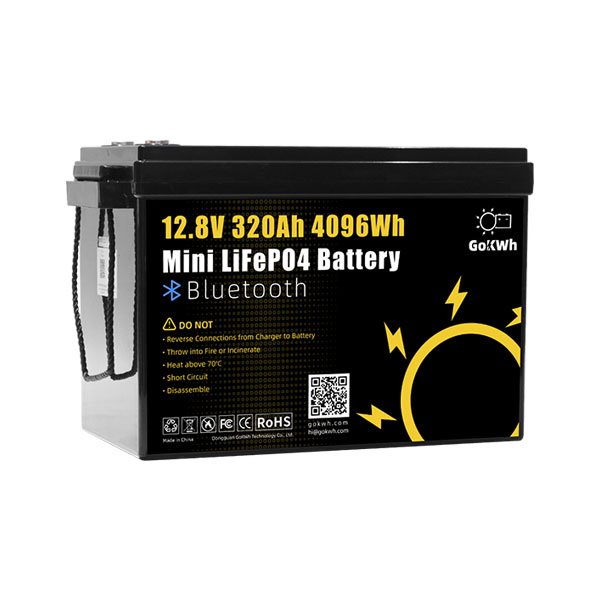
| 320 | 4,096 | 200 | 8,000 | 26.3 | Yes | 8.5 | ||
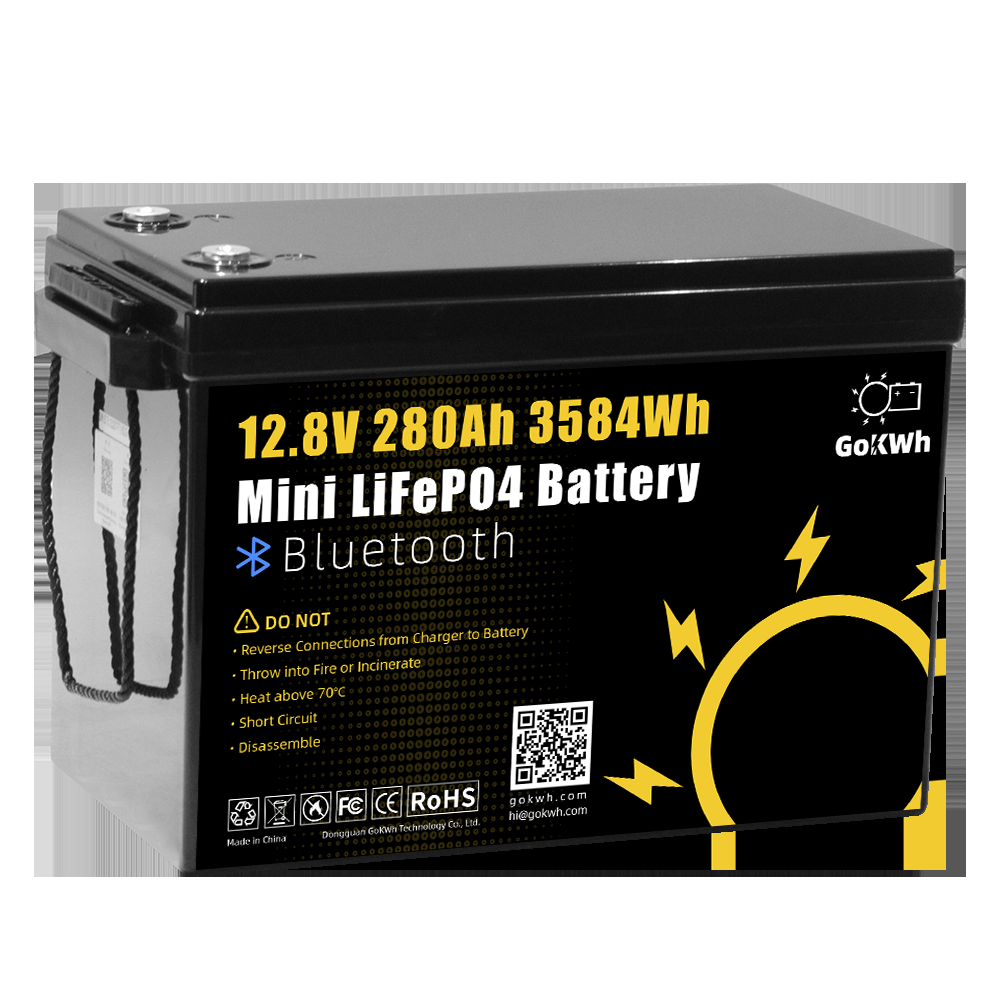
| 280 | 3,584 | 200 | 8,000 | 26.3 | Yes | 8.5 |
(affiliate link) · Data from the Amazon listing; offers may change.
- GOKWH 12V 320Ah Bluetooth (RV): the same 4,096 Wh and 200 A BMS, with 8,000 declared cycles, at 26.3 kg. The catch is 1.4 kg more weight on paper.
- GOKWH 12V 280Ah Bluetooth: 3,584 Wh, 8,000 cycles, 26.3 kg. The catch is less energy for the same weight.
If you only need a day of power, the GOKWH 12V 100Ah review covers the smaller option, and 100Ah vs 320Ah compares them directly.
Who should buy the GOKWH 320Ah?
RV, van and cabin owners who want days of 12V storage in one box.
Buy it if you:
- Run a fridge, lights, fans and electronics off-grid for several days.
- Use an inverter up to about 2,000 W.
- Have the space and help to install a 24.9 kg battery.
Skip it if you:
- Want a stated cycle rating; buy the RV version instead.
- Need 3,000 W of AC from a single battery.
More options in the best LiFePO4 batteries for RVs.
Frequently asked questions
How many watt-hours is the GOKWH 12V 320Ah?
4,096 Wh: 12.8 V nominal × 320 Ah. That equals about 3.2 of the common 12V 100Ah batteries.
What size inverter can the GOKWH 320Ah run?
Its 200 A BMS allows about 2,560 W of DC at 12.8 V. After inverter losses, a 2,000 W inverter at full load draws about 184 A, close to the limit, so it is the practical maximum.
How long does the GOKWH 320Ah run an RV fridge?
A 12V compressor fridge averaging 45 W runs about 82 hours: 4,096 Wh × 0.9 ÷ 45 W. That is more than three days.
How many cycles does the GOKWH 12V 320Ah last?
This listing does not state a cycle rating. The separate GOKWH 320Ah RV listing declares 8,000 cycles, so check which version you are buying.
How heavy is the GOKWH 12V 320Ah?
It weighs 24.9 kg, about 55 lb. That gives about 164 Wh/kg, much lighter than lead-acid for the same energy.